
HEARTset Leadership Podcast
Season 1
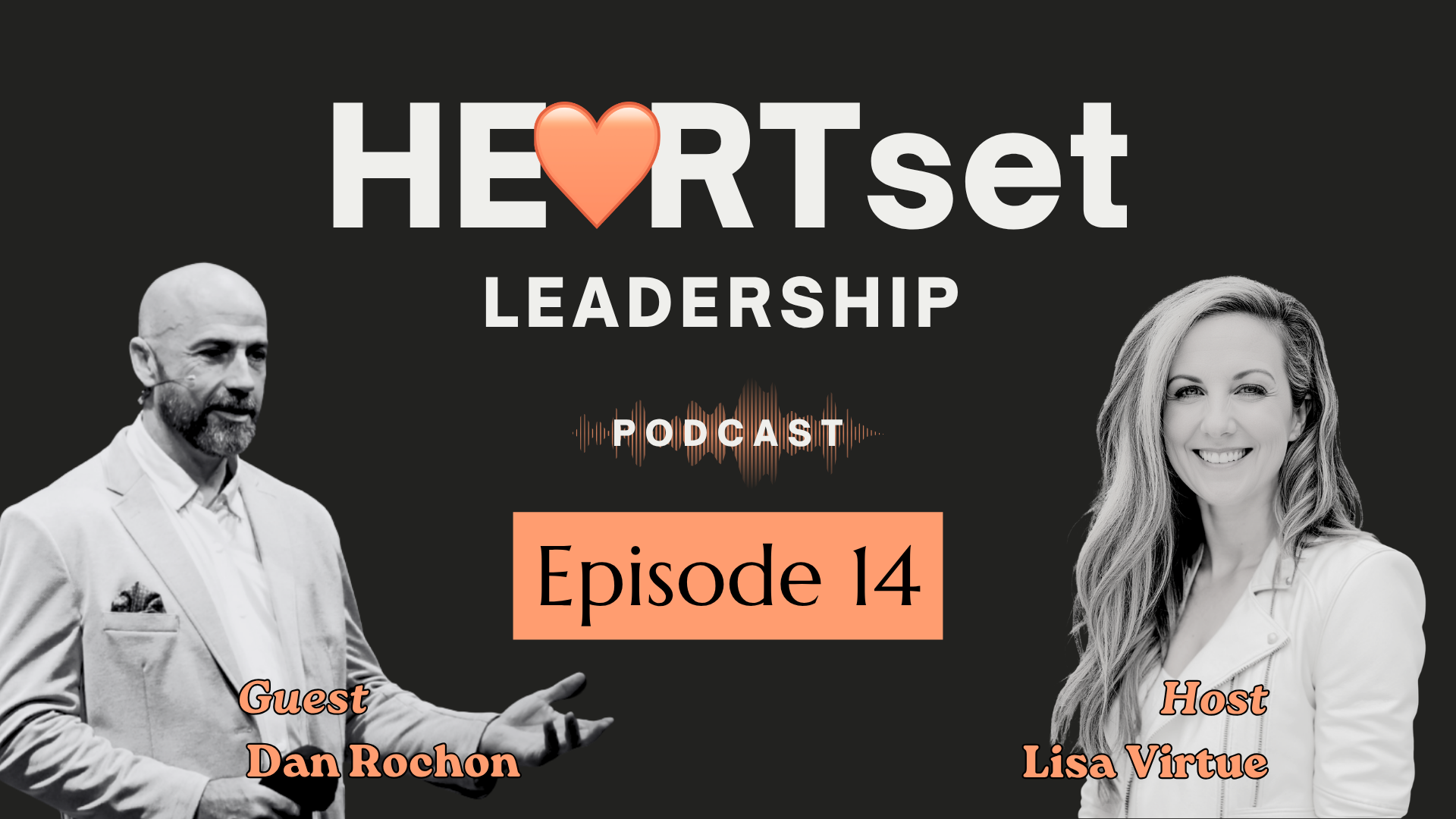
Ep 14: Leading With Heart: Ethical Influence and Building High-Performing Teams w/Dan Rochon
Listen on any preferred podcast platform:
Episode Summary
Bringing Your Heart into Leadership: A Guide to Ethical Influence
In today’s fast-paced business world, leaders are often tasked with navigating complex relationships, motivating teams, and driving results. However, to truly excel in leadership, integrating emotional intelligence and ethical influence is essential. This blog post explores how bringing your heart into leadership can transform your approach, enhance team dynamics, and lead to sustainable success.
Understanding Ethical Influence
Ethical influence is the art of persuasion rooted in empathy and integrity. It differs significantly from manipulation, where manipulation prioritizes personal gain, ethical influence focuses on mutual benefit. Dan Roshan, a seasoned real estate agent and entrepreneur, emphasizes that the key to ethical influence is to always consider the other person’s needs first. By doing so, leaders not only foster trust but also create an environment where team members feel valued and understood.
The Role of Self-Influence
Before leaders can effectively influence others, they must first understand themselves. Self-influence involves self-awareness and emotional regulation. Dan suggests a practical exercise to enhance self-awareness:
1. Check-In Regularly: Five to seven times a day, pause and ask yourself:
- What am I thinking right now?
- What am I feeling right now?
- What actions am I about to take?
This simple practice can anchor your thoughts and feelings, allowing for greater clarity and intentionality in your actions. Dan points out that being aware of your mental state can guide your interactions with others, leading to more meaningful connections.
Building Rapport with Your Team (Team Influence)
Once self-influence is established, the next step is to build rapport with your team. Rapport is the emotional connection that fosters trust and open communication. Here’s how to cultivate it:
1. Be Present: Show genuine interest in your team members by actively listening and engaging in conversations.
2. Ask Deep Questions: Move beyond surface-level inquiries. For instance, instead of merely asking about project status, inquire about team members’ challenges and aspirations.
3. Create a Safe Environment: Encourage open dialogue where team members feel comfortable sharing their thoughts and feelings.
The CPI Communication Model
Dan introduces the CPI (Consistent and Predictable Income) Communication Model, which consists of three key components:
1. Rapport: Establish a strong emotional connection to facilitate open communication.
2. Adept Questions: Ask insightful questions that delve into team members' needs and desires.
3. Active Listening: Pay attention not just to words but also to non-verbal cues and emotions.
By mastering these components, leaders can effectively guide their teams toward shared goals while ensuring everyone feels heard and valued.
Applying Ethical Influence in the Marketplace
As leaders, your influence extends beyond your immediate team to the marketplace. Ethical influence is crucial in building relationships with clients and stakeholders. Here’s how to apply it:
1. Focus on Value Creation: Instead of pushing for a sale, emphasize how your product or service can solve a problem or fulfill a need.
2. Be Transparent: Honesty fosters trust. Share information openly and be clear about your intentions.
3. Follow-Up: After a sale, maintain communication to ensure customer satisfaction and address any concerns.
Bringing your heart into leadership is about more than just results; it’s about fostering genuine connections, both with your team and with your clients. By practicing self-influence, building rapport, and applying ethical influence, leaders can create a positive impact that resonates throughout their organizations.
As you move forward, consider how you can integrate these principles into your leadership style. Remember, the more value you provide to others, the more successful you will become.

Connect with Dan here:
About Our Guest:
Dan Rochon is a passionate entrepreneur and leader who approaches every aspect of his life with total commitment. Years ago, he overcame a serious struggle with addiction, making a firm decision to channel his intense, “all-in” energy away from destructive habits and toward building a meaningful, purpose-driven life. Dan views his personal and professional endeavors—spanning spirituality, health, fitness, and business—as interconnected opportunities for growth.
He believes setbacks are valuable lessons, and that success is a blend of skill, effort, timing, and sometimes luck. With over twenty years of sobriety, Dan embodies perseverance, resilience, and a refusal to ever give up, inspiring everyone around him to treat adversity as a stepping stone to greater achievements.
Transcript
Lisa Virtue [00:00:01]:
Dan, welcome to Heartset Leadership. Thank you so much for being here today.
Dan Rochon [00:00:06]:
You're welcome, Lisa. Thank you for hosting me.
Lisa Virtue [00:00:08]:
Of course. Well, let's start with telling the audience a little bit about you and how you came to do the great work that you do.
Dan Rochon [00:00:15]:
Now, my name is Dan Rochon. I'm a real estate agent by trade. I started this. I remember I was waiting tables at one of the highest end steakhouses in D.C. about 20 years ago, and I was a big addict. You know, I, I drank too much and did all kinds of too much and I became sober about 21 years ago and, and I was still waiting tables at that time, but I didn't know what was next for me. Right. So I, I was scared.
Dan Rochon [00:00:46]:
I was broke. I didn't know what to do. I got my real estate license and from there I developed multiple businesses, had many setbacks, had many successes. And that brings me to where I am today, which is, you know, I'm still in real estate sales. I help others to give the guide them how they can have consistent, predictable income. And I do so through a philosophy called teach to sell.
Lisa Virtue [00:01:09]:
Right. Oh, the amount of stories you have, I know we won't be able to dig into all of them today, but I can't wait to get started with some storytelling. This journey that you had, I hear so often entrepreneurs, we tend to be a little bit of a different breed in some ways. Right. Or we went through a lot of hardship. We're okay with risk and jumping forward. Do you see that as your journey with the addiction and getting sober? Is that kind of a pattern for you too?
Dan Rochon [00:01:41]:
Well, I would say with the addiction, you know, the way that shows up in the business world and even my personal, you know, you look at like, what are the assets that we have. We have our spirituality, we have our health, our fitness. You know, there's so many different boxes, right. But what they're. The common theme for me within any of those boxes is that I'm all in, right. So, you know, whether, if it's all in that I'm going to have, you know, I haven't done this in 21 years, but 12 beers and two bottles of wine on a daily basis or all in to say I'm never going to give up and I'm going to understand that any setbacks of learning opportunity and any success is, is just evidence of good timing, good effort, good skills, good luck, whatever it may be.
Lisa Virtue [00:02:26]:
Great segue because we're talking today about bringing your heart into leadership. And I know you focus on the sales side. So we're going to talk about how that relates to leadership and different levels of leadership because we have to influence people. Right. When we're leaders, it's helping bring people along with us and help them get on board. And, and when you bring your heart to work, it tends to be that you are all in. Right. There's this element of, okay, I'm going to show up with my all for the people.
Lisa Virtue [00:02:55]:
And leaders can often lose themselves in that or get burnt out. Right?
Dan Rochon [00:03:01]:
Yeah. And it also depends on what type of leader that you are. Right. Because there's some leaders that are more empathetic and feeling than others. Right. But I think that it all takes heart and logic, both, you know, and action.
Lisa Virtue [00:03:15]:
Yeah, for sure. Action. That's one of my framework acronyms. I love it. Okay. We talked a little bit about this concept of ethical influence and how to have this journey as a leader. And I know we see it a lot with founders, too, and they're. They're all in and they're trying to get a company going off the ground.
Lisa Virtue [00:03:36]:
What is your definition of ethical influence? You want to tell us a little bit more about that?
Dan Rochon [00:03:41]:
Yeah. So. So, so persuasion is. Is what it is. Right. And persuasion can show up in. In different verbs or adjectives, rather not a verb. I guess it could be verbs, whatever the adjectives, what I was looking for.
Dan Rochon [00:03:56]:
And so persuasion can show up as ethical influence, and it can also show up as manipulation. It's. What is the, what's the meaning and what's the intention of, of, of you like when you're intending to influence? And so the difference between manipulation and ethically influence is to ethically influence. For persuasion. It's about you, Lisa. It's not about me, Dan, where with manipulation, the. You put yourself first before the other person. Okay.
Dan Rochon [00:04:26]:
So it's just sitting there saying, am I going to use these persuasion skills to be able to help Lisa or whoever I'm communicating with, or am I going to use these persuasion skills to help me? Now, unfortunately, the person who thinks about themselves first is very, very limited because what they. They fail to recognize is, you know, going back to Zig Ziglar, the more people, the more value that. The more people that you help, the more people are going to help you. The more value that you provide to the marketplace, the more that the marketplace is going to provide value to you. And so if you're looking for your own yourself first, you're sort of screwing yourself up because you'll end up actually not getting as Much as if you give to others first and you think about others first.
Lisa Virtue [00:05:08]:
Mm, love it. That's the whole concept of heart set to. It's like how you show up for other people. And at the very beginning of that though, we also need to understand ourselves, right? And like understand and to your point, like understand where our motives are and how we're coming across and where our strengths are in communication. So you mentioned to me there's like self influence so that, that work on self. Then it goes into team influence. We're showing up for others and then there's the marketplace, which we'll get into too. And how you show up as a business, as a leader of trying to get KPIs, get your products sold, whatever it is.
Lisa Virtue [00:05:46]:
So let's start with that self influence and what you mean by that.
Dan Rochon [00:05:51]:
Well, for you to be able to show up to serve others, you have to first set yourself up to be the best version of yourself. And so for you to be able to be the best version of yourself, you know, a lot of times you hear these gurus, you know, quote unquote, you know, they show up and they say just believe in yourself, do better, do more, 10 exit, whatever the case may be, but they don't really give you like a framework of how do you do that. Okay. And so in my book Teach Yourself, I give you, here is how to do that and I'll give you, I don't have time to really dive into it deeply but I can just sort of brush stroke over top of it. When you're looking at yourself, it's understanding like how do you process information? Right? So, so for example, Teach a cell is embedded with neuro, linguistic programming, hypnotic techniques, psychology. And so when you understand that, you say, okay, well if I can understand myself and others first, then how do we perceive the world? And so if you understand, there's a framework called the self coaching model. And in the self coaching model, it's the circumstance, you're going to perceive that through your senses of something that's happening and then you're going to assign meaning to it. And then once you assign meaning to it, then you're going to have a thought and then that thought is going to lead to a feeling, the feeling is going to lead to an action, the action is going to lead to a result, and the result's going to feed back into the circumstance.
Dan Rochon [00:07:10]:
Now what I just gave you Lisa, is a very broad brushstroke of what I explained deeply in the, in the book. But the, but even what I just gave you. I may have just lost a few people. So let me give you the Cliff Notes and let me give you, like, here's something that you can do and rewind this and listen to that, you know, so you can understand it better. But simply, I'm going to give you a hack. And the hack is five to seven times a day. I want you to check in, I'm going to tell, I'm going to give you an anchor for that. In a moment, I want you to check in with yourself to say, what am I thinking right now? What am I feeling right now? What am I about to do? In that order.
Dan Rochon [00:07:45]:
Those three questions are designed because it's within that self coaching model that I just taught you. And so now when I check in with myself, I say, what am I thinking right now? I'm thinking, man, I'm so excited to be on, you know, on Lisa's podcast. Then my feeling is going to be excitement and then my actions are going to be bam. There's this excited energy, right? And so that's the way that this works. Now what's the anchor? We all have a natural biological alarm clock, which means that we're going to use the restroom five to seven times a day. When you go wash your hands and please go wash your hands and that water hits your, hits your hands. I want that water to be an anchor to remind yourself, to ask yourself this, to ask those three questions, what am I thinking? What am I feeling? What am I about to do? So that's the most condensed version of what I can share with you, Lisa, without going through the entire book with you, but of how you can be able to have a hack to get, you know, to, to set yourself up to influence yourself better. Because it's all about having awareness.
Dan Rochon [00:08:50]:
So you have to have tools to bring that awareness to you. Because we operate through the world 80% of the time we're in our subconscious state, which is why we keep getting the same results over and over again. So we have to program that subconscious. And I just gave you a hack of how you can program it five to seven times a day.
Lisa Virtue [00:09:05]:
Love it. I love a good hack. I love quick tips. I also love diving myself into the theory behind it. But for purposes of the podcast, thank you. It's really great. And I've seen this model in so many different ways. And you're right.
Lisa Virtue [00:09:18]:
A lot of times it's the theory and the research comes forward and then it kind of falls flat. It's like, okay, well now how do I Apply that in my day to day life. So. That was beautiful. I love it. I love the washing up. Like we have a biological clock. Use that well.
Dan Rochon [00:09:32]:
And I'm serious, Lisa. I used to set my alarm, I had it on my alarm and it didn't work because I'd be on a podcast or.
Lisa Virtue [00:09:39]:
Exactly.
Dan Rochon [00:09:40]:
And I can't, you know, do that, you know, so I was like, okay, how do I get this done where I know I'm gonna be alone?
Lisa Virtue [00:09:45]:
Right?
Dan Rochon [00:09:45]:
Yes, I know I'm gonna have the time to do it. Boom. Hand washing.
Lisa Virtue [00:09:49]:
Yeah. I hope everyone listening. Next time you wash your hands, you're gonna think of this. What are you thinking? How are you feeling? I love it. Okay, so this self influence, of course the awareness is key. And then it's making movements to really in the neuroscience tells us we can, you know, shift our neural pathways to create new behavior, new reactions, squelch some of those triggers we might be having, whatever it is we're working on. And then it comes to, okay, we're very self aware and now we have a team that we need to influence in some way. So let's talk about that.
Dan Rochon [00:10:23]:
Okay, so I'm gonna. Because we're gonna talk about the team and then we're gonna talk about the, the marketplace. And so what I'm going to teach you is I'm going to teach you how to accommodate both and to be able to accommodate the marketplace, it's to teach your team to be able to do what I'm about to teach you.
Lisa Virtue [00:10:39]:
Okay.
Dan Rochon [00:10:39]:
Okay. So, all right, so with your team, with anybody, with your spouse, with your partner, with your child, with your best friend, this is where the ethical influence comes in.
Lisa Virtue [00:10:51]:
Right?
Dan Rochon [00:10:51]:
Here's the, here's the actual step by step of how do you ethically influence. And so in Teach a Cell, I outline a model called the CPI communication model. CPI stands for consistent and predictable income. The CPI communication model has three parts to it. Part number one is to be in rapport. I'm going to talk more about that here in a moment. Part two is to ask adept questions. And then part three is to actively listen.
Dan Rochon [00:11:20]:
And so when you understand that and you say, well, first of all, what is rapport? Rapport is a connection. What's a connection of? It's a connection of energy. According to Pierre Tolar de Chardin is the most I researched. It's going back in the early 1900s. He was a French philosopher and a priest. The first that I could find documented where he teaches us that we are spiritual beings manifested in this human condition. Now, if I just challenged anybody listening to this, I want to respect you very much. Don't get attached to what I just said, because I find that around 8 to 10% of the population does not align with what I just said.
Dan Rochon [00:12:02]:
And that's fine for the 90% aligned with this great. And even the rest, you know, just take it and take what's, what's good for you and leave the rest. So we're spiritual beings in this human manifestation. So that when that spiritualness, when there's energy between you and I, for example, Lisa, when we connect our energies, then we're in a deep level of rapport. You have to do that first now that you're in a deep level of rapport. So number one is to, is to be in rapport. Number two is to ask adept questions. What is an adept question? Adept question is simply a deep diving question.
Dan Rochon [00:12:40]:
So, so instead of the surface level question, which would be, you know, what are you looking for in my product? What are you looking for in my service? You know, what are the widgets that you want? It's deep diving to say, well, what would happen when you receive this service? What would happen if you don't receive this service? What challenges will you have? And you're really looking for the pain in the deep diving questions because as a, to persuade, it's about taking somebody's pain and understanding their desire. And you get that through asking the adept questions. And then you're the bridge between their pain and their desire to be able to either through your service or your product or your, your company, service or product. So number one is to be in rapport. Number two is to ask adept questions. And number three is then to actively listen. And what you're actively listening to and for is the energy that are back in step one. And you're paying attention to the energy of the other person.
Dan Rochon [00:13:36]:
Because a lot of times, you know, I was on an appointment earlier today, I was on an appointment and I'm talking to the lady. I just looked across from her and she's saying every, she's saying, yes, yes, yes, yes, yes. But she was scared. If I would have went for the clothes at that time, it wouldn't have, it would not have happened. So instead, her name's Morell, an interesting name. So I said to her, I said, morales. And I hear that you're, you're, you're, you know, you're saying you don't have any questions. I get that.
Dan Rochon [00:14:03]:
But I also, I'm sensing that maybe there's something that, that maybe you may be struggling with or maybe something that you're maybe afraid of. Is there, Am I hitting the mark? Right? And then she just looked up at me, she said, yeah, I just, I know my family's, she's 75 years old, she has an older brother that still treats her like she's eight years old. Right. She's got, she's got all these family members that she's going to be answering to. And ultimately she does not want to disappoint them. She doesn't want to let them down. And more than that, she doesn't want to look stupid to them. Okay.
Dan Rochon [00:14:38]:
And so then, now I understand what is the real fear? It's not, the fear isn't. Can I help her with this? The fear isn't what, can we get this done? The fear is she doesn't want to be judged by her 80 year old brother. Okay, Right now I can understand what to work with. So now I can say, well, I understand that. Would it help you if I had a conversation with your brother? Right? And she's like, oh, absolutely, you're a godsend. And so now you start to unravel, like, how can I be able to really, truly understand what's important to the person that I'm working with and how can I guide them? And that's, that's again, that's how you ethically influence.
Lisa Virtue [00:15:17]:
So this concept of five fatal fears, I've been digging into a lot lately and that one about being wrong or making a mistake, those, those are two of them come up so often when it comes to what we're talking about and at the workplace, right.
Dan Rochon [00:15:34]:
So often it's judgment and the fear of not being good enough is, is off, is often there as well.
Lisa Virtue [00:15:40]:
Right. And so visceral. So the fact that it comes from her brother, who she's known her whole life, I mean, that makes a lot of sense, right?
Dan Rochon [00:15:46]:
And not only that, but I looked at her, I said, I, I said, morel, I said, I bet right now you feel like the eight year. At first. I said, what did your brother call you when you guys were kids? She's like, he called me Morel. Okay. I bet right now you feel like your 8 year old version. She's like, and she looks, she's like, yeah, absolutely. I said, well, you're older than eight right now. She's like, yeah, I'm 75.
Dan Rochon [00:16:06]:
Like, I wasn't gonna guess her age.
Lisa Virtue [00:16:07]:
Right, right.
Dan Rochon [00:16:10]:
Well, you know, now, now you can also shed light on not that Our fear is silly. Right. But it's, it's, it's like a, like she doesn't know what she's afraid of.
Lisa Virtue [00:16:21]:
Right.
Dan Rochon [00:16:21]:
Okay. Right. And so now I can help her discover what she's really afraid of. And she's got all these smoke screens, like, I think this may go wrong in the transaction, I think this may go wrong in the transaction, et cetera. And none of that is valid or I mean, anything can be valid, but none of that is really the true concern. And so if I'm addressing all the things that go wrong with a transaction, but really she's worried about being judged by her brother. I'm the sword spinning wheels at that point.
Lisa Virtue [00:16:49]:
Yeah, this is that, like we were saying earlier, the heart and logic. Right. So there's often. And then your soul that you bring to it, which has so many layers and complexity because of how we were raised in our experiences through life. So, yeah, this, this idea of like you can logically try to convince or influence someone and there's going to be so much going on underneath the waterline that, to your point, if you can figure out how to bring that conversation up, build that trust with someone to share that.
Dan Rochon [00:17:19]:
And it's really about paying attention to their energy. Right. So it's like being rapport with them, ask them in depth questions, but then it's paying attention to the energy because the words are not always going to give you the information, but the energy always will. But you. Only when you pay attention.
Lisa Virtue [00:17:33]:
Yes, so true. So you mentioned talking about how to get your team to know how to do that. What are your recommendations for leaders on this part?
Dan Rochon [00:17:44]:
Have them listen to this show, have them get teach to sell the book, and you'll know exactly how you can lead your people. And so it's really about putting them in an environment such that they understand that influence is not about talking, it's about listening. And the best salespeople are the best listeners. Okay, so I just gave you a framework. Here's a framework. But even if you forget about the framework, or maybe you struggle with gaining rapport, and there's lots of hacks to do that, and I go through all that in the book, but even if you struggle with it, you still, as long as you remember that the best salesperson will never talk somebody into buying from you, but instead listen and then ask questions and then pay attention to the response of the energy and that again is how you actually influence. So I would, if, if I'm going to give my, my team members those that I Lead and say, listen, if you just go out there and, you know, and you're not great at these three steps, but they are three simple steps. But nonetheless, just ask questions, keep your mouth shut, and guide them through the questions rather than chat, chat, chat, chat, chat, chat.
Dan Rochon [00:18:59]:
Because that won't work.
Lisa Virtue [00:19:02]:
Oh, why is it so hard for people to listen? Why is it so. Yeah, What'd you say?
Dan Rochon [00:19:10]:
Yeah, I almost got you. I could have gotten you on that one.
Lisa Virtue [00:19:13]:
That was good. Have you uncovered this, Dan? What. What's going on for people? I have some theories of my own, but I want to, you know, respect you as a guest to respond to that.
Dan Rochon [00:19:24]:
Yeah, I. I think it's. It's, you know, we. There's duality in life. Everything in life is duality, right? And so in anything, it's like. So. So the reason why I mentioned that is that we believe as human beings or spiritual beings, we believe that we are the most significant thing in the universe. And that is somewhat a true statement.
Dan Rochon [00:19:48]:
We are significant and we are simultaneously insignificant. And so what happens is we lose sight of the fact that we're not important. We're the most important thing in the world and the least important thing in the world simultaneously. And so we forget that we are the least important. So I think if you're not aware of that, then what happens is that you just. It's like you feel as though if, like, I can guide Lisa because I have the knowledge or the skill or whatever, and she should trust me. But maybe that may be true. But if I don't know what Lisa's, you know, internal pain is, if I don't know what your external pain, if I don't know what your internal and external desires are, and the difference between the two is, like, I don't have enough money.
Dan Rochon [00:20:39]:
Well, that's an external pain. But I feel like a deadbeat because I can't feed my kids because I don't have enough money. That's a very, very real internal pain. And then what is it that your product or service would provide for them? That there's a. There's a internal and external for that as well. Like when. When you get this widget, then you're going to be able to feed your kids. Oh, my goodness.
Dan Rochon [00:21:03]:
Great. I got the widget that's external. I can now feed my kids because I have something that's going to allow for me to make more money. Easy. Whatever the case may be. I'm just making this all up. But the fact of it is, now I feel like I'm a proud dad. Right.
Dan Rochon [00:21:17]:
Like I feel worthy. I feel like this is freaking amazing right now. I just went through all that relatively quickly and I went through it earlier today as well, but I just want to hide it again. So it's what is their internal and external pain? What is their internal, external desire? You get that through asking the in depth questions after you're in rapport and then you actively listen. And then if we understand what's their pain, what's their desire, the, the vehicle, the bridge in between that pain and desire is you, your product or your service.
Lisa Virtue [00:21:49]:
Yep. So some people are really good listeners. And then that next step of how to communicate or be clear with a potential. Well, a team member could be leaders that sit and listen a lot, but then their action is slow or they don't know what to do. Right. So I know that your book has a lot of tips too, just like pract practical strategies and how to say things and in the sales. So when you see people clam up on the other end. So okay, I listened.
Lisa Virtue [00:22:20]:
I understand. Now I'm having a hard time moving the needle or being clear in my communication. Where do you see that coming in for people? And any recommendations there?
Dan Rochon [00:22:32]:
So help me understand the question. So when you say from the, from the perspective of the, of the person I'm communicating with or from my perspective.
Lisa Virtue [00:22:42]:
From your perspective. Yeah. As leader or salesperson. And you're trying to, trying to show that, gosh, this does align my product or service aligns with exactly what you're telling me is the reason we're talking today. Right. And you've listened, listen, listen. But maybe you get stuck communicating clearly like I just did with my question.
Dan Rochon [00:23:04]:
Well, the, the answer, the answer to, to your. The same answer as when you're asking the adept questions, they're giving you the answers to how to be able to make the sale. Okay. Right. Like they're giving you the answers. Right. Like the Morel, who I was with earlier today, as I'm going through this process with her, she's giving me the answers when I'm able to make sure that her brother feels comfortable. And there were some other family members as well.
Dan Rochon [00:23:32]:
I just mentioned one of the family members. But when I'm able to make sure that her brother feels important and heard and confident and comfortable and the other family members, that in this case is the sticking point. But I only get to understand that sticking point by doing what we've already discussed. So now that doesn't mean that I'm going to make every Single sale. Because there could just be that for whatever reason, timing is off, they don't have the money, whatever the case may be. Right. There may be something that. So this is the difference between an objection and a circumstance.
Dan Rochon [00:24:10]:
Okay. So a circumstance is something that's not going to change. Like, I'm going to make this. I'm going to go on a world vacation when my daughter graduates from high school. That would be a circumstance. Well, how long until your daughter graduates high school? Four years. And so if you're the vacation person now, I can maybe it will try to talk you into, well, you should do it now. Whatever, whatever.
Dan Rochon [00:24:31]:
Right. But that's really not in anybody's best interest. Again, that goes into the difference between manipulation and ethical influence. So that would be an example of a circumstance. An example of an objection would be, you know, I got to ask my wife, I got to ask my partner, whatever the case may be right now that now you're starting to be able to guide them. Right? Because you're paying attention to the difference between the two. Okay. But ultimately the key ingredient to this is you owe it as a business owner, a salesperson or a business leader to be able to be consistently looking for new business.
Dan Rochon [00:25:05]:
Because if I'm in that situation where, okay, I can sell you a vacation, a world vacation, four years from now, well, I'm going to keep in touch with you. I'll call you 12 times over the next four years, every 90 days. Or I'll send you a text, or I'll have AI send you a text right then, you know, as we get closer to that four year mark, I'll be a little bit more proactive. But the reality of it is is that my job is then go find somebody else that wants to use my services today. And when I have an abundance of prospective clients, it allows me to have the energy where I'm not even, I'm not even like, like, it doesn't even occur to me that I should try to close somebody that clearly has a circumstance that makes it that it's not. Like right now is not the appropriate time. But the only way I can feel comfortable and confident for myself to do that is I got another 12 people to talk to today because yesterday I did my job by either marketing or prospecting or networking or however I'm going to get my business
Lisa Virtue [00:26:06]:
of that. The difference between circumstance and objection, it's great. So when it comes to going to Marketplace, so now we're at this place where we're in the conversations, we're leading A team. We're giving them resources and development, giving them your book, listening to this podcast, those kinds of things. Maybe it's a coach who knows whatever they're needing, and we're helping them discover what their needs are because it's about them, not us. Now we're going to Marketplace, and I talk to a lot of, you know, startup founders in the Bay Area and people that are trying to launch their own business or their coaching or consulting or. Or they're trying to reinvent their organization. Organization development.
Lisa Virtue [00:26:46]:
I do that work, too. So when people are in this place and I hear a lot from founders where they've tried to hire salespeople and they're like, oh, we don't even know what our product market fit is. It's really hard to have someone else go out there and have these relationships and talk about it. And we need the passion behind it. Marketplace influence can be daunting for a lot of people. So I'd love to hear your thoughts on how to. How to begin, maybe, and how to elevate your team when you're going to market.
Dan Rochon [00:27:18]:
Yeah, I think it really depends on the size of your company, the product and the service. And so, you know, because the answer that's going to be different for a solopreneur than it would be for a founder that's raising capital to be able to launch, you know, with infrastructure, people, systems. But the bottom line of it is, Lisa, is that no matter what you do, you've got to find business. It's about understanding, like, what's the first domino? And I'll give you an example. I was talking, so one of my businesses, real estate sales, I have multiple businesses. And I was talking to my director of operations earlier today. I told her, I said, listen, there's two things I want you to do. I want you to continue finding us recruiting talented agents.
Dan Rochon [00:28:01]:
By the way, if you're in the DMV area and you're looking for, like, what. We use AI to find business for our people. And we, like our. Our agents only have to focus on relationships. That's all they have to do. Everything else is done for them. Right. So I was telling Leslie earlier today, I was like this, continue recruiting agents.
Dan Rochon [00:28:19]:
Continue recruiting inside sales agents. And we already have the client care and the. In the AI infrastructure there. So understanding that for us to continue to grow this company, there's only one key ingredient. Go find me more agents that we can serve those agents so that then those agents can serve the marketplace. Okay, so it really depends on, like, you're asking, like, how to influence the marketplace. It depends on how you know what your infrastructure is and how large, large it is. But ultimately it's about asking yourself.
Dan Rochon [00:28:50]:
There's a great book called the One Thing by Gary Keller and Jay Papas on. And in that book, they asked the defining question, which is, what's the one thing I could do such that by doing it, everything else becomes either easier or unnecessary. And so it's about asking that question over and over and over again because it's not necessarily influenced the entire marketplace. That's a grand scale of things. You gotta refine that. You gotta get granular on that, say, well, what's the one thing that when I do it in my business, it's the one thing is, is having three appointments tomorrow with somebody that would potentially be, you know, somebody to join my company, one of my companies, Right? Like, that's it. I do that. Everything else behind that becomes easier.
Dan Rochon [00:29:36]:
And now we can be able to infiltrate the marketplace because we have. We have the people, we have the resources, we have the infrastructure. Okay. So I would say that that's probably the best way to sort of ingrain yourself to the marketplace is understanding what's the first domino in your business and freaking hammer on that like nobody's business. Then you hammer the second domino. And in business, those two dominoes are going to be, number one, where do I find customers and clients? Number two, where do I find talented people so that they can then go find customers and clients? Okay. And then on top of that, it would be to. To train those people so they can reach your goals.
Dan Rochon [00:30:17]:
Lead those people so they know how to think so they can reach your goals and then motivate those people so they can reach their goals. It's about serving your people so then they can serve the marketplace.
Lisa Virtue [00:30:27]:
Yeah, it changes so much, doesn't it, when you start scaling? It's about. You've got.
Dan Rochon [00:30:31]:
Absolutely. Yeah.
Lisa Virtue [00:30:32]:
Help others.
Dan Rochon [00:30:33]:
Some people are starting. I mean, if you're raising capital, you may start at a point that a solopreneur will never get to in their business. If you got a million dollars in capital or 10 million or whatever it is that you've raised. And you know, like, you just may have a starting point that the one person, the one woman or one man show will never get to.
Lisa Virtue [00:30:52]:
I think you're also honing in on something I see very often, and especially with the solopreneurs and coaches and people that are providing this service, is that niching down is so critical when you're Starting. And so the one thing, like the one task or thing that you do. I hear you completely. And I would say it's also the one part of the market, like one slice. Don't look at the marketplace as your oyster, like your whole oyster. Right. It's like, find that little pearl, start there. And then when you get good at that, maybe there's an expansion possibility.
Lisa Virtue [00:31:27]:
But I do see people try to. And a lot of us that are entrepreneurial minded are like, we could do this thing. I can go after this niche and this niche and then we get bogged down. And then we don't do that one domino because we're so spread out too. Right.
Dan Rochon [00:31:42]:
So, yeah, I, I refuse to take on a task until I'm, until I'm done with whatever I'm working on. I mean, at least, at least 80%, like, I will do one project at a time. And I know if this is going to take me four months to do, I just have to be aware of if I want to do anything else, I've got to do it through others. Now, now, that depends on, are you a solopreneur or do you have a small team or do you have an organization? You could get more than one thing done at a time, but you as an individual, I would say you don't want to be stretched thin. For sure.
Lisa Virtue [00:32:14]:
Yeah. And then when we talk about leaders like in corporate or founder like yourself, and you have so many other people, like you said, doing business through others too, that becomes the job. Right. Is to be a multiplier and delegate.
Dan Rochon [00:32:29]:
Yeah. And the five things that a leader would want to do, and I go through this in a book, so the five activities a leader will want to do is to recruit talented people to you select the right people to be in business with, train those people so they can reach your goals, lead those people so they know how to think so they can reach your goals and motivate those people so they can reach your goals. And then there is a sixth thing that is manage the money. You do those five activities and then the management of money is. I look at that as sort of like a separate thing. Then you do those six things and as a leader you say, like, what are the highest priority things? I just gave you the six of them. Do those first and then everything else works itself out.
Lisa Virtue [00:33:10]:
Yeah. You know what my favorite phrase is? Someone reminded me years ago, you know, the definition of priority is singular. It's, we only have one priority. And I think I bring this up often when I'm talking To leaders and with people like you, four leaders to give them tips and reminders. One is that when you have a team under you and you start saying priorities and then you start throwing a bunch of actions at them or responsibilities, requirements, whatever, expectations, now all of a sudden they get bogged down and confused and what do people do? They end up picking one priority for themselves in their day. So if you're not clear about what that main priority is as a leader, you could have a lot of people running in different directions. Right? Yeah.
Dan Rochon [00:33:58]:
And it is your responsibility as a leader to tell them, you know, for example, I've got inside sales agents. Your job today is to book me two appointments. I've got client care managers. Your job today is to have a conversation with every single one of our clients and make sure that twice a week I have a conversation with every one of our clients so that we get 85% of our clients give us a five star review and 15% of our clients give us no review. And we only get five star reviews. Right. Now, there was more than one in that, but it was simple enough that that person right there could say, okay, here's what I got to do today. Have a conversation with every single client.
Dan Rochon [00:34:36]:
As a result of that, we'll know how good of a job I did based off of, did I get 85%, five star reviews?
Lisa Virtue [00:34:43]:
Yep, exactly. You gave them a focus and then also how to measure it. Yeah. Which is beautiful. I think that if leaders hear only one thing today, be clear with your teams and give them. And then you got to follow up with, did you achieve those goals? Right.
Dan Rochon [00:34:59]:
I do that on a daily basis. I, I do well, almost like on Mondays and Fridays I provide training for my team. I do that personally. That's 30 minutes. And then Tuesday, Wednesdays, Thursdays, we do accountability. And the accountability is like, what is your most important thing and where are we with that today? And it's not punitive. It's not. When you get the right, when you get the wrong team, they show up like they feel like they're being judged.
Dan Rochon [00:35:23]:
But when you get the right team, they use that data to start saying, oh goodness, I was supposed to sell three widgets yesterday and I sold zero. Now what's the opportunity? Like, how can I get from 0 to 3? And then maybe as a coach, as a leader, you're going to help them with that. But when you have the right people, they start self selecting and finding their own, their own solutions. When you, when you highlight and when you have the wrong people, they feel judged and they hide and they don't want that sort of accountability. And that's really just you as a leader. Do you want an accountable team or do you want a team that's just going to do whatever they're going to
Lisa Virtue [00:35:59]:
do when what you said earlier in the conversation is making me think of this right now too. That energetic alignment needs to be there as well. When you're hiring people, being able to really think this person's going to understand the clear expectations I'm giving them and they're bought in. Right. They're passionate about it and they're going to be on board. Yeah. Beautiful. Dan, thank you so much for all your tips today and the great conversation.
Lisa Virtue [00:36:26]:
I love your energy. Speaking of energy, I think it's great. I can tell you're excited. Tell people how they can find your book and reach out to you and get connected. Yeah.
Dan Rochon [00:36:37]:
Well, first of all, who, who would want to read the book would be anybody that if you're in the sales, if you're a business owner, if you are a business leader and you're, you're, you're tired of having inconsistencies. I've taken 20 years of study to be able to put teach to sell, why top salespeople never sell and what they do instead together so that you can have faith that you have consistent, predictable income. And it's a blueprint. Just like a recipe. Like it's a recipe. If you want to make chocolate chip cookies, follow this recipe and you're gonna have a nice, rich, gooey chocolate chip cookie. It is a recipe and it's based off of your strengths, not mine. And so I go through every single one of these with a process in a way that is going to demonstrate to you exactly what to do based off your strengths and behaviors and then how to supplement your weaknesses.
Dan Rochon [00:37:25]:
And people can visit www.teachtocellbook.com that's teacherselfbook.com and that book is the pathway from your pain of oh my goodness, I'm not so sure of what to do next to your desire of I just built a business I can be proud of. My spouse can rely on me, my kids can rely on me, and I could be just freaking excited to be a business owner.
Lisa Virtue [00:37:49]:
I love it. You know, by the way you mentioned, and I've heard this with other sales professionals as well recently using AI to free up our team members so they can build those relationships and have the human connection more. Please keep it up. So much fear about AI but that I believe is where it adds the most value in all, not just salespeople, but all of our team members. Right.
Dan Rochon [00:38:15]:
I know we're, we're done on time, but just one last comment on that is when you recognize, first of all, we can't do anything about the circumstance.
Lisa Virtue [00:38:23]:
Okay.
Dan Rochon [00:38:24]:
What, what we do like about that happening, it's, it's how we respond to it is what we can do. And we understand what's the one thing that AI will never take away and that's that human connection. So let AI take away every single thing else that's not a human connection so that it allows for you to, to be able to be in relationship and then still have certainty and predictability in your business.
Lisa Virtue [00:38:48]:
Yeah. 100% agree. Use those tools so that we can have more of this, more human connection, heart and soul bringing to the workplace. Love it. Thank you again, Dan. And. Thank you again, Dan, for your time today. I really appreciate all your insights and I encourage people to look you up and connect with you.
Dan Rochon [00:39:14]:
God bless you.