
HEARTset Leadership Podcast
Season 1
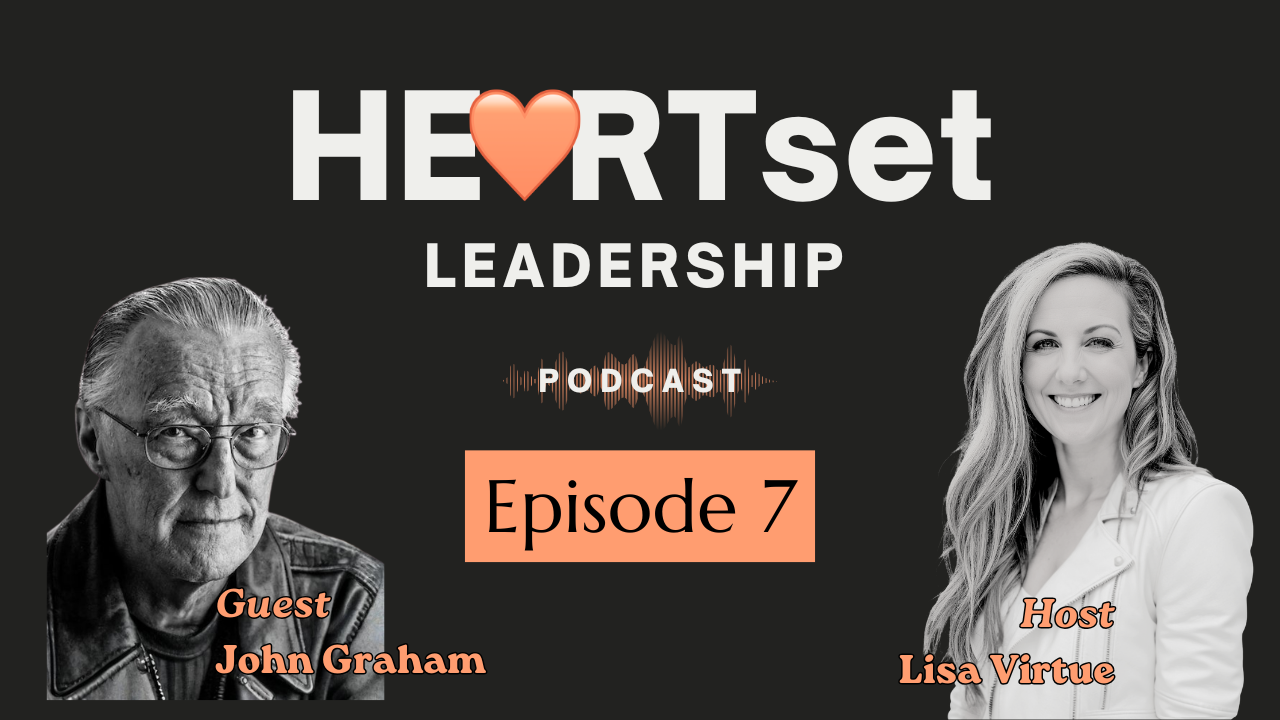
Ep 7: Sticking your neck out as a leader in today’s world w/Badass Granddad John Graham
Listen on:
Episode Summary
Are You Ready to Stick Your Neck Out and Lead With Purpose?
In this episode of the HEARTset Studio Leadership Podcast, Lisa Virtue welcomes John Graham—executive director of the Giraffe Heroes Project, global peacebuilder, bestselling author, and social media’s “Badass Granddad”—to challenge everything leaders think they know about risk, meaning, and making a difference.
Episode Highlights:
How Do You Find True Fulfillment as a Leader?
John Graham shares his extraordinary journey from being an adrenaline-fueled adventurer and US Foreign Service officer to discovering that real courage is about self-examination and serving others, not just chasing the next thrill 00:24.What Does ‘Sticking Your Neck Out’ Really Mean in Today’s Corporate World?
Learn practical ways leaders can take meaningful risks—whether it’s challenging the status quo, advocating for workplace humanity, or navigating the disruptive challenges of AI and layoffs. John Graham connects these high-stakes decisions to the ethos behind the Giraffe Heroes Project, where honoring those who “stick their necks out” inspires others to act boldly for the greater good 18:10.Leadership Lessons for Modern Times:
Discover why storytelling is a critical tool for cultural change, how to build trust starting with small steps, and why leaders who focus on meaning and service—not just money, power, or corporate goals—create truly lasting impact 23:03.Influencing With Integrity:
As an influencer with 120,000 loyal followers on social media, John Graham demonstrates how authenticity, vulnerability, and service transcend trends and help leaders build real communities—online and off 15:05.Honest Conversations About Masculinity, Adversity, and Change:
Reflecting on his transformation—from seeking manhood in action, danger, and toughness to learning the power of vulnerability and compassion—John Graham offers a roadmap for any leader ready to look inward and lead outwardly with heart 16:32.
Why Listen?
This episode is packed with actionable leadership strategies, honest discussions about risk and courage, and inspiring stories that will help you:
Lead with meaning and purpose even when it challenges your comfort zone
Build trust and influence in polarizing environments
Model courageous leadership to inspire your teams and communities
Shift from success defined by power, to significance defined by service
Whether you’re a CEO, manager, or emerging leader, this episode will equip you with the mindset and motivation to lead with impact—by sticking your neck out for what truly matters.
Listen now for a masterclass in values-driven leadership, storytelling for change, and finding your purpose in and beyond the workplace.
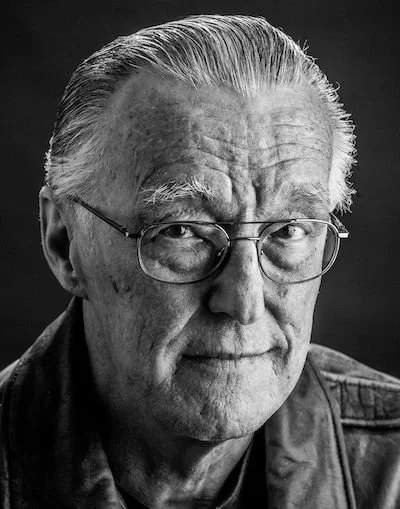
Connect with John here:
https://www.youtube.com/@badassgranddad
About Our Guest:
"My experience is that a full life demands passionate involvement, and that often means taking risks. The most significant risks for most of us challenge not the body but the soul. They’re about finding what makes our lives truly meaningful and then going for it with everything we've got." —John Graham
John Graham is an author, adventurer, former diplomat, and citizen activist. No guru and no saint, he's repeatedly sought the meaning of his life in many places where it wasn't. He finally found the purpose he sought in service—in helping solve significant public problems, and in making life better for other people. Making and implementing this discovery hasn't only brought him enormous satisfaction—it's been the adventure of his life.
Transcript
Lisa Virtue [00:00:02]:
Welcome, John. Our Badass granddad. Thank you so much for joining me today on the Heartset Studio podcast.
John Graham [00:00:09]:
I'm happy to be here. I really have. It's fun.
Lisa Virtue [00:00:13]:
It's so much fun. I am excited to have this conversation with you. Just for the listeners, why don't you tell our audience, which is made up of leaders, what you do now?
John Graham [00:00:24]:
Well, I do all kinds of stuff. I'm 83 years old and 83 is the new 60 or whatever. I'm fully involved. I'm executive director of the Giraffe Heroes Project, a global movement that teaches people how to stick their necks out and get involved in solving public problems from here to Mozambique. That's part of it. I've written four books. My biggest thing now, the thing is the most fun, and I will turn to immediately after this broadcast is my short form video series called and you mentioned this Badass Granddad I love started at a suggestion by a grandchild of mine who looked at my life and said, man, grandpa, you're a real badass. So I said, oh yeah, that's a perfect title.
John Graham [00:01:17]:
So I started short form videos. None of them are longer than three minutes and two minutes is one of my adventure stories. And believe me, I have a lot of them. I'm lucky to be alive, either hanging from ropes on mountains or dodging bullets or whatever. So two minutes is an adventure story. And then there's some life lesson that's tied to that. It could very well be a life lesson on leadership, on passion, on conflict resolution, on courage, whatever, something that fits with the story and then a call to action. The whole purpose of this is not just to be an entertainer, but to try to get some messages across to people, especially young people, because I'm dealing with TikTok, Instagram and YouTube, that there's a whole full rich life out there that goes beyond money and power and giving back is the best way to find it.
John Graham [00:02:15]:
So Badass Granddad is a long answer to your story. And I'm going to do. What I'm going to do this afternoon is I, I gotta do one in Iran. I was in jail in Iran at one point in my life. It's a great adventure story. So I'm gonna tell it to the world this afternoon. Yeah, whatever.
Lisa Virtue [00:02:35]:
So I, this is so fascinating to me. I love storytelling and I love getting into life lessons from others. I feel like our culture really misses that. So I love the fact that one of your grandchildren called you a badass, because I had some badass grandparents myself. And I think A lot of people don't realize that they do have so much to tell. So thank you for sharing your stories and I encourage everyone to go check you out on TikTok too. So let's, let's do a little preview for people before they go do that. And why don't you tell us a little bit about where you started your career and how you ended up with your wife doing the giraffe project, which we'll get into and talk about too.
John Graham [00:03:17]:
Oh, wow, man. That's the full hour right there. But I want. Basically, I grew up in Tacoma, Washington, a small city. Most people may have heard of it. Nothing much ever happens in Tacoma. Nothing much ever happened in my family. I was expected to grow up and go to the University of Washington like my dad and my sister did, come back, marry the girl next door, start some kind of a career, have kids and die.
John Graham [00:03:44]:
I mean, that's what people did. And it was nothing ever much happened. What happened to me, however, though, was that through a strange confluence of events, I ended up getting a job on a freighter, a large ship in 1959. Now, freighters, cargo ships then weren't container ships. They were just big boats run by 50 or 60 really tough guys. I mean, guys with big muscles and tattoos and stuff. And these guys took one look at me, this little kid, this is the 17 year old kid, and I was just 17, and said, man, we got some life lessons to teach this kid. And they did.
John Graham [00:04:26]:
This being a family station, I won't go into detail, but there are plenty of life lessons. The big lesson for me though, and this gets closer to answering your question, was that I was really bullied as a little kid. As a kid, as a teenager, preteen high school, and I was desperate, looking for a model of manhood, someone who would help me fight back and didn't have any models. I mean, I love my dad, but he was a very, very passive guy, constantly being bullied himself by at work or in the community or whatever. And so I was like, oh man, I really, I want to be a man. I want to grew up. I want to be, you know, instead of being kicked around, so I go on this, get this job for the summer on this cargo ship and with these big tough guys. And the very first night out on deck, one of the crewmen comes up to me and starts making, you know, sexual advances.
John Graham [00:05:23]:
Another crewman, big black guy named Roy. He must have weighed 250 pounds, built like a football linebacker. He grabs this first guy, slams him up against the bulkhead beats the shit out of him. And then. And there was a stream of cussing that was just magnificent. This first man goes slinking down, slinking away. I go back down in my cabin and I say, that's it. That's it.
John Graham [00:05:48]:
That's what a real man does. Roy is a real man. So I practice beating up an imaginary foe in front of the mirror and thinking, oh, yeah, that's it. I never saw that before. I'd never seen violence. I'd never heard that kind of real cussing. And so that it changed my life. And, of course, I spent the whole summer in the Far east with these seamen all over the Far east and these wild places in the Philippines and whatever, in Japan, Hong Kong, wherever.
John Graham [00:06:20]:
And I saw a world that was way more colorful than Tacoma, Washington. Man, there's a huge world out there full of adventure, full of excitement. And I came back, and I wanted to do nothing more than I go back out to sea and be a seaman, because that's where real men were. Well, my parents, of course, had other plans for me. But a few years later, I found myself hitchhiking in Europe, and I saw a newspaper in a youth hostel, I think, in Switzerland, telling me about a war going on just south of there in Algeria, where the rebels were taking control of. Of the country from the French, who had run it as a colony. And so I said, oh, man, a war that's really where real men are. So I hitchhiked down to Morocco.
John Graham [00:07:07]:
I went across the border. There was no border guards because this was, after all, a war. But at least I was smart enough to put an American flag on my chest so the rebels wouldn't shoot me, as a Frenchman shouldn't have worried, because the rebels were really helpful. Helpful. They would stop cars going in my direction at gunpoint and tell the drivers to tell me where I wanted to go. So that was like, oh, man. And I stayed for a while with some French legionnaires again. Big guys with muscles and tattoos and wild stories to tell.
John Graham [00:07:40]:
I'm sitting there, I was then, like, 1920 with my mouth open, like, oh, man, this is what real men are. I want to be like that. So people like John Wayne in the movies became my heroes. And the next summer after that, I was with a group that made the first direct descent of the north wall of Denali, Mount McKinley, as a climb that was so dangerous, so frigging dangerous, that no one had ever done it before, and no one's done it since because of the avalanche dangers. Well, it took us 36 days we went right at the center of this fearsome face, a face bigger top to bottom than anything on Mount Everest. And we made that first ascent and had all kinds of close calls and scrapes, but we walked away from all of them. So I became convinced not only that I had found the path to manhood, but that I was indestructible. So that's a dangerous combination.
John Graham [00:08:34]:
So I end up then, after college, hitchhiked around the world reporting on wars for the Boston Globe, places like Cyprus, Laos, the beginning of the war in Vietnam. And then I realized that I had to make a living. And the only thing I wanted to do was to be John Wayne. How do I get paid for doing that? Well, I joined the US Foreign Service and they were happy to have me because I was then big and tough. I was no longer bully able. I rode crew at Harvard, so I put on 30 pounds of muscle and I was six and a half feet tall, so nobody messed with me. And. And so my life as an adventurer was set.
John Graham [00:09:15]:
And I told the State Department that. So they didn't send me the embassies in Europe, but they sent me to jungles and deserts. I was in the middle of the revolution in Libya, for example. And then I went, I asked them to send me to the most dangerous spot they had in the war in Vietnam. And they did. And I was the advisor to the city of Hue in the northern part of what was in South Vietnam, a really dangerous place to be was only 50 miles south of the then DMZ that divided the two parts of Vietnam at the time. And then it was in about. That's where my life changed and changed in the sense that I finally realized, and it was the middle of a terrible battle in Vietnam, a so called easter offensive in 1972, that the NVA, the North Vietnamese, were trying to take over the whole country in 72 and failed.
John Graham [00:10:13]:
They succeeded, of course, as we know three years later. But in 1972 they poured across the DMZ, all but surrounded Hu. And I was trapped in the city. And there was a huge battle going on. And it was a long. It was incredible. But at a certain point I realized in that battle, the only reason I was in Vietnam wasn't. I wasn't a patriot, I didn't.
John Graham [00:10:39]:
I knew the war was lost. It was stupid, it was immoral. I was only there for the adrenaline rush. I was only there because it was the biggest adventure I could find after all this mountain climbing and stuff. And this was now like a decade after Roy and the original freighter. So I realized how shallow my life had become. That's all that mattered to me. People didn't matter.
John Graham [00:11:06]:
Community didn't matter. Issues of peace and justice didn't matter. All that mattered was me. It was an incredibly selfish life. And it took that battle for me to understand that. It turned out, once again, my life was saved. This time by American fighter bombers that finally were able to fly through the clouds and blast the North Vietnamese just six miles from the city gates. And I came back to California.
John Graham [00:11:36]:
Plenty of ptsd. I mean, I walk on the shadow sides of the street in Palo Alto to avoid sniper fire. But more to the point, it wasn't just ptsd, it was crawling out of this self centered hole. I went to a bunch of what were then called encounter groups where you sort of spilled your guts and other people tried to help you see the truth about yourself. Well, the truth I found about myself was that way back when I had nailed like a heavy piece of plywood over my heart. I couldn't feel my heart, I couldn't feel my feelings. Whatever compassion I had was completely covered up. All that mattered to me was being John Wayne.
John Graham [00:12:16]:
The next adrenaline rush. And it was a horribly shallow way to live my life. And it was the worst point of my life. I didn't know if I could climb out of that hole or not. But I did. Took a long time. Three steps forward, two steps back. Ended up at the United nations.
John Graham [00:12:34]:
And I was by then a new person. I mean, then I was looking at issues of peace and justice in the un, which there were plenty, especially in Africa and Asia, and realizing that I could use my skills and my experience to do good in the world and that I did care and that I could be compassionate, that I could really give a damn about other people. And I began to become a more complete human being. And I began to have a real impact on some important issues. I helped end apartheid in South Africa, for example, which is a really big deal. And some other issues. So my life had changed by then and I'm going to stop now because that's enough of an answer to your question. You ask for background and that is a kind of like the elevator speech, whatever, it's the short form.
John Graham [00:13:31]:
Allow the first part of my life happen. And I was like well into my 30s before I understood what was important in life. It wasn't adventure. Adventure was great and I was good at it. What was important was finding the meaning of my life and finding it and giving back and looking out and using whatever leadership qualities I had to do good in the world to help end apartheid, for example, or to deal with other peace and justice issues, dealing with poverty and disease and violence in Africa and Asia. And I did, I did some remarkably good things at the United Nations. And finally I realized that I could no longer stay in the US Government because they were now not very friendly to me because I was going way past where they wanted to go. US Government then was only concerned about the Cold War, and I was concerned about bringing justice and peace to billions of people in Africa and Asia.
John Graham [00:14:35]:
And I was outrunning the US Government. So they got, they were. I was about to get fired and I quit. And then the whole second part of my life started with the giraffe project and everything else. And that was in, that was like in 1980.
Lisa Virtue [00:14:52]:
Oh, amazing. So that was a good preview and overview of seeing where your stories will dive in. When people go check you out on TikTok, they'll be able to hear some really specific components of your story.
John Graham [00:15:05]:
Let me add, by the way, Lisa, it's TikTok is one way to do it, but TikTok now is in all kinds of deep shit, as we know. So you can also reach all my stories on Instagram and YouTube just go to Badass Granddad. Badass is all one word and granddad has two D's in the middle. And go to the search box and you'll find it. I've done about 65. 65, 66 episodes so far, so all of them about three minutes.
Lisa Virtue [00:15:32]:
Oh great. Thank you.
John Graham [00:15:33]:
And by the way, I do lots of other stuff too, but you asked what was really consuming me and Badass Granddad is so I've got 120,000 followers now. Would you believe it?
Lisa Virtue [00:15:42]:
Amazing.
John Graham [00:15:43]:
It's like I'm now, I'm now being chased by producers that want to put ads on my session and I'm now, I'm told this is making me laugh. I'm told I'm now an influencer. Just like those young women that go on YouTube and show you how to put nail polish on correctly. I'm a, I'm an influencer.
Lisa Virtue [00:16:08]:
Love it. Could you imagine telling that 17 year old is what I'm going to be doing as a grandpa. It's beautiful. So you, you were an adrenaline junkie. You were trying to find out what it was like to be a man at a young age and then you went through so many near death experiences and harrowing experiences that shook you to your core. How did your definition of what it was to be a man. Change when you went through all of that?
John Graham [00:16:38]:
Well, I mean, the stories tell, tell what happened. I thought at first a man was like the. The Roy on the. On that ship where the French Foreign Legionnaires were John Wayne. Being a man was being violent. Being a man was pushing other people around. Being a man was. Yeah.
John Graham [00:17:00]:
And the fact that I kept walking away from all these adventures without a scratch really convinced me that I was on the right track. And then that battle in Vietnam, when I realized that the risks I was taking, the physical risks, were the easy ones, the risks that were hardest to take, I never did face at that time. And they were the risks that, for want of a better word, I'll call them spiritual risk or psychological risk. They were the risk of looking deep inside me, realizing who I was, and then, then forming a life, despite all the opposition, dedicated to providing justice and equity and peace to the peoples of the world. And I started. Once I started doing that, I realized I was really on the right track then I had changed completely. So, yeah, it was like the transition was. It began in that battle in Vietnam, and then it got firmed up, if you will, at the United Nations.
John Graham [00:18:10]:
And for the last 45 years now, I and my wife, Ann Medlock, have been running the Giraffe Heroes Project, where we operate a global movement dedicated to the same principles. We call it Giraffe because we're looking for people who are sticking their necks out, hence the metaphor, giraffe, long neck. And we're storytellers. We tell their stories just like the troubadours in the Middle Ages or maybe the Neanderthals hundreds of thousands of years ago. If you want people in your culture to change, to be. If you want people in your culture to be brave, you don't appreciate them. You give them role models, examples, and that's what we do. So in 45 years, we found thousands of people now and told their stories and their men and their women and their every color in the rainbow in 60, 70 different countries.
John Graham [00:19:03]:
We tell their stories. And the impact on other people is really profound. Other people, many of them see and hear our stories, and they say, what the hell? Why am I sitting on my couch and pissing and moaning and blaming other people for nothing happening? I should be out there and do something. Here's a guy or here's a woman who's just like me, no smarter, no bigger, no smaller. And he, she is doing something to make a difference, so I can do that, too. Very simple strategy. And it's all Motivated by storytelling, we now, of course, do more than storytelling. I've written four books now on issues of civic engagement and leadership and all of that helping people learn how to stick their necks out without getting their heads cut off.
John Graham [00:19:52]:
So we not only move people to stick their necks out, we give them tools to succeed in their courageous actions.
Lisa Virtue [00:20:00]:
Love it. Well, one of the reasons I wanted to talk to you is because I see a lot of parallels with what leaders are going through right now in leading in a corporate environment, an environment that feels like the goals are not matching, elevating others and treating them with humanity. And you do such a beautiful job elevating other people telling their stories. But also, there's such a parallel with how can leaders stick their neck out for treating their teams with humanity if it feels at odds with, like, a corporate goals, corporate environment, bringing AI in and having to lay off team members. What are your thoughts about what's happening in the current climate and how leaders can stick their necks out in a way that makes sense at their organization?
John Graham [00:20:48]:
Well, everything you've described takes a risk as far as I'm concerned. If you want to stand up in a board meeting and say, hey, wait a minute, wait a minute. We're going full in on AI But I'm a little concerned because we're going to have to, first of all, lay a whole lot of people off. Second of all, I think we're losing the capacity to think. I mean, we got these damn machines doing everything for us. Third, it just doesn't seem, you know, and that takes a lot of guts to do that when your board of director is saying, oh, the future is AI you're like the people who thought telegraphs were evil 150 years ago. No. Okay, so it's risky.
John Graham [00:21:25]:
First of all, AI Is only one example. A lot of our giraffes, for example, are whistleblowers. And this is way before AI Something's going on in your government agency or your company that's crooked or really stupid or whatever, and no one's blowing the whistle, because if you blow the whistle on it, you'll get fired. And so you just put your head down, do your job. Well, a giraffe, someone who's a giraffe hero, someone we honor, doesn't do that. They stick their necks out. So whistleblowing is a part of it. A lot of other giraffes take risk as well.
John Graham [00:22:03]:
They could be community risk. All your friends telling you to shut up and sit down. And. And this is true in business, too. So the answer to your question, I think, is complicated. Of course it's complicated. But a huge part of it is helping people understand that to do the right thing takes risk. I speak a lot to business audiences, for example.
John Graham [00:22:23]:
They're my main audience because basically they're a tough audience. They're naturally skeptical. There's no point in me preaching to the converted. So I talk to a lot of business audiences, and I talk to them about the risks involved in doing stuff that they know is the right thing. But, damn, they could lose their jobs or they could be ostracized by their fellow workers or whatever, but they have to do it anyway. So how do you do it? And that's what I teach. And a lot of it gets to the second part of your question. A lot of what starts from the basic principle that there's nothing more important than anyone.
John Graham [00:23:03]:
You, me, anybody, than to live a life that's meaningful. That is to say, that aligns with the deepest personal passions we have in our heart, that when we're doing it, it just feels right. So you look for a life that's meaningful. And that is to say that when you. In the morning, when that image looks back at you from the mirror, you want to know that you're on the planet for a reason. You're not just here marking time. It'd be like a Swiss watch with no hands on it. You're here on the planet for a purpose.
John Graham [00:23:36]:
I thought my purpose as a young man was physical adventure. I was wrong. I have a lot of friends now who are convinced the purpose of their lives is corporate advancement, is money, is power, is that third house in the Hamptons or whatever. And I know from experience at 83 that a lot of them find out that that isn't worth that either. So where does meaning come from? And I can tell you from my own experience, from these thousands of people, the Giraffe Heroes Project is honored that for a lot of people, the most stable, most powerful source of meaning in their lives is giving back, is service, is looking at what you're doing and finding out how it helps other people, rather than the opposite. Now, I'm not. Especially when I talk to business audiences, I'm quick to add, I'm not talking about sackcloth and ashes. I'm not talking about you becoming Mother Teresa.
John Graham [00:24:37]:
I'm talking about you looking around, taking a look at where you are. Take a look at your skills, your resources, your context, and then see how you can do something that makes the world around you better rather than worse. For example, For a business person or an entrepreneur, inventing or building or shipping or whatever, a product, a good product, one that works at a fair price, fair labor conditions, good environmental conditions, as a good neighbor in the community where your factory operates, all of that, that's a service, but keep doing it. But be aware that it's not just about making money. It's about the fact that your product is helping a whole lot of people do stuff they couldn't do before and they're grateful for that. So, you know, there's a way to find that service component in all of our lives. Whether you're a businessman or a neurosurgeon or a barber, there's some way to be of service. You look around, figure out who you are, what talents you have, and then start looking at what you might be doing differently or what a few things you might be doing for the first time, and then seek doing them.
John Graham [00:25:56]:
Because I can guarantee you at 83, if you think money and power is where it's at when you're 83, you're up for a rude surprise.
Lisa Virtue [00:26:06]:
Beautiful. Best advice. Everyone knows it logically, right? And so many people before you have said it. But for some reason, as humans, we still have to figure this out on our own and hopefully some people will listen.
John Graham [00:26:22]:
Well, yeah, and you're right. Having trusted friends and people that love you to talk with is great. But the ultimate thing is alone. It's like looking out at a starry sky or taking a walk in the local park and just saying, you know, something doesn't seem right, something's off. I'm 48 years old, I'm 53 years old and I'm going to work tomorrow without a lot of enthusiasm. And I'm also looking at all the problems around isn't just Gaza and Ukraine and Iran. It's like someone wants to ban the books in my kids school. That's only four blocks away.
John Graham [00:27:00]:
I mean, what can I do? I mean, so there's that kind of confusion and sometimes you can clarify that just by shutting up and being quiet, listening to trusted friends, taking stock of your own capacities. I mean, for example, if you were born with a natural capacity and a head for doing figures, then maybe you know, something to do in the area of engineering and science. If in fact you're a great musician, well, providing wonderful music that calms and enriches other people's lives, that's a tremendous service, whatever. So you look at where you can be of service. Again, not being Mother Teresa, not sackcloth and ashes, just practical Things you can do that will get you off the couch and let you to stick your neck out and do something. Whether it's showing up at a school board meeting where somebody, including your neighbors, want to ban books and raising your hand and saying, no, I don't think so. I don't see what's wrong with Ulysses. I don't see what's wrong with Huckleberry Finn.
John Graham [00:28:10]:
I don't want those books to be banned or whatever. So you start small. Sometimes you start with your own grandkids, just loving your own kids, Getting in touch with. Getting in touch with that part of you that is naturally loving and compassionate and ripping off. Perhaps just like that piece of plywood, I ripped off my own heart. If you've got a piece of plywood over your heart, male or female, then. Then start ripping it off. See what's underneath.
John Graham [00:28:40]:
And what you find underneath is. Could be a remarkable shift in your perspective, if not in your life.
Lisa Virtue [00:28:49]:
Oh, I'm right there with you. The number one way to get started with anything is look inside, right? Look at ourselves. And sounds like you had a community to help you do that, too. But as you said, it's work. We have to do it ourselves. We can't. No one else can do it for us. Looking inside and understanding what it is that we can contribute, how we can show up, making those moves.
Lisa Virtue [00:29:13]:
It's a very personal responsibility, isn't it?
John Graham [00:29:15]:
Yeah, it is. And I remember, like I said, those encounter groups in California. I thought these other guys were in one particular climactic session. There were 15 guys in the room. We've been spending a week talking about what it meant to be a man. And I told them my view that being a man was being John Wayne. And they just looked at me politely and said, you know, we got no doubt at all that you're big and tough and that you think you're John Wayne. And there's no question that your adventures are real.
John Graham [00:29:49]:
But we see something else that you don't see. We can see beneath that piece of plywood. We see a guy, John Graham, who, in fact, is compassionate, is capable of love and being loved, who can make a real difference in the world. And the fact that you don't see it is like, come on, man. And I remember just getting really angry and stomping out of the room like, oh, man, you guys don't get it. I've done more adventuresome stuff than the whole ruler you put together. I'm a real man, and you guys are wimps. And then I went for a walk in the woods.
John Graham [00:30:25]:
And I realized after about half a mile that these guys were absolutely right. And I just sat down on the trail. It was in the Santa Cruz mountains, south of San Francisco. I just sat down on a trail and cried and wept when I realized that these men were absolutely right, that I had not been in contact for 30 years with a huge part of me, and that I was suffering and that I was becoming a monster and the world was suffering, My colleagues and family were suffering, and I needed to make a change. Like I say, it was two steps up and three steps up and two steps back, but it was those encounter groups. I mean, people laugh at them, but damn, these things were really important to me because it finally brought me into contact with the truth about myself.
Lisa Virtue [00:31:21]:
So powerful. You had such a good mirror in that group to reflect back.
John Graham [00:31:26]:
And I talk about courage. It took a lot of courage for them to stand up to me because, like I say, I'm big and tough. And I was shouting back, and they stood their ground and said, no, you don't understand. Damn it. We're trying to pay you a compliment and you're taking it as a threat. Grow up, man.
Lisa Virtue [00:31:45]:
Wow. Amazing. So if you're seeing leaders trying to stick their neck, neck out and influence others, where do you see this go well? And where have you seen it not go well? What. What can you draw upon with your own experience and what you've seen that leaders. And this is in. Now you're an influencer. That's what we're talking about.
John Graham [00:32:11]:
I'm an influencer.
Lisa Virtue [00:32:12]:
You're an influencer in the global world. But like in the workplace, where have you seen leaders get it wrong when they're trying to influence others and leaders that get it right?
John Graham [00:32:24]:
I think one of the major things, and there are many, but one of the major things is the difficulty in establishing trust because you can actually have turned your life around. You could be convinced that the doing good is a wonderful thing. So the first thing you think about is, I got to have everyone else believe, like me, I got to shout to the rooftops that being a good guy is really important. And people that just. That just pushes people away. You've got your own example, and you use your own example to build trust. And building trust isn't going up to the. To the.
John Graham [00:33:02]:
Standing up at a meeting of your senior board of directors and telling them what the company should be doing and they should trust you because you've been at the company longer than anybody else. No, building trust starts small. Building Trust starts with small stuff. I always tell people, if they're saying, look, I got this horrendous problem at work. I'm trying to lead a team, and there's so much malfunction. There's been so much distrust in my company, no one believes anybody else. It's polarized. Well, you don't just try to work one day and saying, hey, it's Tuesday.
John Graham [00:33:39]:
We're going to start trusting each other. No, you start building trust at the lowest, most. The lowest possible level. That is to say, maybe someone at work. You also is in your community, and you see that person, I don't know, shopping in a local supermarket, and you're in the same aisle and you bump into them, and you know damn well that you're on opposite sides of some big issues at work. Well, you don't bring up those issues. You start talking about your grandchildren. You start talking about the fact that, wow, look what the Seahawks did.
John Graham [00:34:18]:
Look what the Mariners did. I'm from Seattle. And knowing that the other person is a sports fan, you start doing small. You start establishing trust at the lowest possible level, and you work up from there. And when you've established enough trust to talk about something substantive, and only then do you start talking about something more substantive. So building trust means patience. It means starting small, starting in an area where you begin to see each other as human beings. And that means talking about stuff that may seem trivial but is not really trivial at all, because you're dealing with at least the edges of the other person's heart and your own heart.
John Graham [00:34:58]:
So trust building is important. And trust building starts small. And all of it is aimed at. For both of you. It is aimed at helping each of you find more meaning in your own life by finding that meaning in giving back, in looking at your company's product or processes and saying, how can they be improved? So that what we do in the world, the product we make, the way that our company operates in the community, our philanthropic arm in the company, whatever, that it all works better. And people look at us and our company and say, yeah, Company X, those are. Those are good guys. Yeah.
John Graham [00:35:38]:
Yeah. Good. Those are good people. Yeah. That's. That's huge. Huge.
Lisa Virtue [00:35:43]:
Love that. I love what you said about starting at kind of the out, outside edges of the heart. And I'm thinking about that plywood that you were talking about on your heart and how in order to help pull the plywood off and build the trust of someone else's heart, it's like sanding it, not ripping it apart. Right. We can only rip our own plywood off, but to get to someone else's, it's like sanding those edges. I love that.
John Graham [00:36:07]:
Yes. And sometimes, though, sometimes, like I say, I. In that encounter group in California, I got really angry and went and screamed insults and ran out of the room because it was such a tough truth. Okay. So those guys were doing more than sand. They were letting me have it. So it takes both, Right?
Lisa Virtue [00:36:29]:
So it's got to be in a safe space, for sure.
John Graham [00:36:32]:
Yeah, it's got to be a safe space. But also, you have one thing going for you, and that is, I'm utterly convinced that male, female, long, short, whatever, there's nothing more important than finding meaning in our personal lives that I'm convinced of. Where you find that meaning, well, that's a different question. And like I say, there are all kinds of radical wrong roads and rabbit holes you can go down. Adventure, money, power, whatever. So you need to find that real source of meaning, which is some kind of giving back. And when you find it, your life changes and you feel it. You feel it's like a lifting off of your heart, and your life becomes.
John Graham [00:37:19]:
Your life becomes just more enjoyable. You. You see other people looking at you with not only respect, but maybe love and looking at you as an example, and you realize that, damn it, that person looking back for me from that mirror in the morning, that is a good person. When they finally put me in a pine box and bury me, I'll have looked out. I could look back and say, yeah, I ended up anyway, doing the right thing, Right?
Lisa Virtue [00:37:48]:
And service can mean so many things, but it's doing something for others. That's what I keep hearing you say over and over. It's looking outside ourselves and how are we in service of others.
John Graham [00:37:59]:
Yeah. And also, I'm a very practical person. I keep saying. I know this is the 10th time I've said this. I'm not talking about sackcloth and ashes. I'm talking about practical living of life and finding ways you can be of service, finding a way to make your life better, your company's product, your role in the community, your political activity, whatever. In a country now that's so polarized, as we all know, America is so polarized. At least try not to make it worse by talking to people.
John Graham [00:38:31]:
Maybe in that line, in the produce line, in the grocery store and talking about the Seahawks or your grandchildren or something, even though you know perfectly well you're going to go and vote the other way. That person does. I mean, I have a. I do political blogging. And I'm pretty, pretty, pretty adamant in my opposition to the Trump White House and a lot of stuff going on in the country today. But I've, I know perfectly well that simply getting up and shouting my opposition isn't going to do a lot of good. It just stiffens the resolve of all those people shouting back. So I'm looking for ways to establish some real trust and helping people look at what's going on in the world and find some common ground.
John Graham [00:39:16]:
And it's there. It's there. I mean, issues like immigration, for example, there's definitely common ground. Sure, we do need immigrants, but we also don't want open borders. Well, there's something between those two extremes. Right. If only we weren't so polarized we could find it. We have found it in the past.
John Graham [00:39:35]:
And then it's got put into a shelf, into a desk drawer because Congress couldn't agree on the particulars.
Lisa Virtue [00:39:43]:
I'm right there with you being able to talk to people that could be on the complete other end of the spectrum as us. That's another way of being of service, is to be able to engage in those conversations in a way that is listening and not yelling, like you said, and not trying to beat someone with a stick of our own opinion. There's other ways to stick your neck out.
John Graham [00:40:09]:
Oh, absolutely. Yeah. I've got, I'm not on social media, as all we. All or all of us are, I suppose. And for years now, I've had a foreign service friend. He's always been a friend, but he's a MAGA Republican and he really believes it. I mean, like, he's like drunk the Kool Aid. He really believes it.
John Graham [00:40:32]:
I started back and forth and he's another person where sports was the way in. He's also a keen. He lives in Florida, so we have bets all the time between his Florida teams and my Washington State teams. Luckily, the last year or so, I've been winning the bets, but we send $10 bills back and forth depending on who's won or lost the bet. And then we start talking about some other stuff. Some stuff, man, we just don't talk about, but other stuff. I mean, for example, it turned out that in our discussions on tariffs, he's a business person and he has come to the conclusion that tariffs trump tariffs anyway are a very bad idea. So we've established some common ground about what to do with all this tariff stuff and the fact that it's undermining all kinds of elements of our economy, especially for Example now our farming communities and stuff.
John Graham [00:41:28]:
So we found some agreement. And so we're back and forth and back and forth and we find other forms of agreement too. He understands perfectly well that shutting off all immigration is a really stupid thing because we need those people. We need them to buttress our own economy. And we need them because immigrants for 250 years have been a vital source of energy and creativity in this country.
Lisa Virtue [00:41:57]:
Well, you just illustrated how instead of cutting off that relationship, you embraced it and you continue to have trust build and conversation and you're not afraid of it and neither is he. And that's a beautiful thing, I think, in this country when people can embrace differences and continue the conversation.
John Graham [00:42:17]:
Yeah. And you, you there, there are setbacks. I mean, he, he said something the other day. I said, leo, that's the stupidest thing you've ever said in your life. He was saying that the Attorney General of the United States, Ms. Bondi. Is that her name? Pat Bondi was. She's a great Attorney General because she's a hot chick.
Lisa Virtue [00:42:39]:
Oh, gosh.
John Graham [00:42:40]:
I said, leo, that is so stupid. I would erase that comment from Facebook because it makes you look like an utter fool. He didn't like that.
Lisa Virtue [00:42:50]:
I agree with you in this case. I love it. I'm glad you called him out.
John Graham [00:42:56]:
Well, I'll call me out too, you know. Hey, June. Hey, John. Have you ever thought about, you know, some of those people that, that, that, that are protesting immigration? They really have a point. I mean, Biden may have gone too far. So I said, oh, okay, yeah, Biden may have gone too far. The borders may have been a bit too open in those years. But anyway, we go back and forth and back and forth and damned if we aren't coming together on lots of stuff.
John Graham [00:43:27]:
Some of it like women's right to choose. We'll never come together on. Well, that's okay.
Lisa Virtue [00:43:33]:
Yeah. Well, John, I love your stories. I'm gonna have to wrap us up now. I would love to give you the opportunity at the end here to say anything that you feel like the audience should hear from you or ways they can get a hold of you. Anything that you want to share.
John Graham [00:43:49]:
Yeah, I think it's like the core of it is, is finding that meaning in your life and then, and then boring in as to what that really meanings for you means for you. And I guarantee you that at some point you'll find that it's some kind of giving back. So just keep looking, Just keep looking. And what I also find is that when you're doing something that's meaningful, and you're facing a mighty challenge, an ethical challenge, a company challenge, whatever. In the beginning, it looks like you're facing a mountain. The challenge is so big. But if you find that in dealing, trying to counter that challenge, you're dealing with something that's meaningful to you, the challenge recedes. It becomes more like a speed bump.
John Graham [00:44:34]:
You get so involved in doing something that's meaningful, you almost forget you're climbing a mountain. It's more like you're going up and around a speed bump. And I know this sounds kind of trite, but it's true. I think all of us feel that when you're doing something that's really meaningful, you kind of forget the odds. You kind of just do it because there's that special feeling of being in the right place at the right time.
Lisa Virtue [00:44:59]:
Love it. Thank you so much for joining me today, and I look forward to continuing to follow you at Badass Granddad and also the Giraffe Project and see all the heroes that you're featuring there with the stories.
John Graham [00:45:12]:
Yeah, we're@giraffe.org by the way, so the URL is really simple. Giraffe.org
Lisa Virtue [00:45:20]:
well, thank you so much for being here.
John Graham [00:45:23]:
Oh, my pleasure.