
HEARTset Leadership Podcast
Season 2
Ep 20: w/Judi Neal
Listen on any preferred podcast platform:
Episode Summary
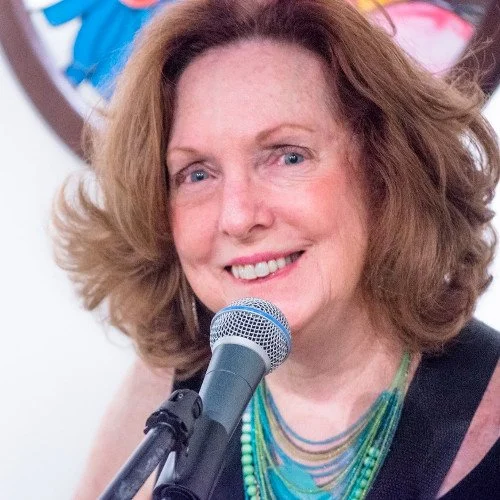
Connect with Judi here:
About
Judi Neal, Ph.D. is the Founder and CEO of Edgewalkers International. Edgewalkers International was founded by Dr. Judi Neal in 2006, the year her book Edgewalkers: People and Organizations that Take Risks, Build New Bridges, and Break New Ground was published. Judi was also the founding director of the Tyson Center for Faith and Spirituality in the Workplace at the Sam M. Walton College of Business/University of Arkansas. Dr. Neal is recognized internationally as an expert on spirituality in the workplace.
She earned her Ph.D. in Organizational Behavior from Yale. Judi was a co-founder of the Management, Spirituality and Religion Interest Group at the Academy of Management, as well as co-founder of the Journal of Management, Spirituality and Religion, and the International Association of Management, Spirituality and Religion. She has consulted with major organizations such as Pfizer and General Electric, as well as with small entrepreneurial companies and with non-profits.
Transcript
Lisa Virtue [00:00:01]:
Welcome to the podcast, Judi. Thank you so much for being here.
Judi Neal [00:00:05]:
Oh, thank you, Lisa. I'm really looking forward to this.
Lisa Virtue [00:00:09]:
Me too. When I found out you had a whole concept and business around the concept of edge walkers, kind of walking the edge between— you can call it 2 worlds. I'll let you explain it a little bit more. But I was so fascinated. And then to find out we have a lot of similar connections in common and passion for the work and leading with heart and how do you show up and the gut check and the intuition we need to follow as leaders. So anyway, I'm really excited to dig into all of that with you because you have so much insight. So thank you again for being here.
Judi Neal [00:00:45]:
Oh, thank you for inviting me, Lisa. You have so much energy and so much wisdom. And so I think I'm going to learn just as much from you. Oh, yeah. And, you know, you look where you put your hand. So much heart.
Lisa Virtue [00:00:57]:
I could feel it when you said that. I could feel it in my heart. So thank you. Very sweet. Well, let's just start. I'm gonna have you introduce yourself to the audience and tell everybody a little bit about what you do now and how you came to be doing that work.
Judi Neal [00:01:10]:
All right. Well, I guess it helps people to know that I have a PhD from Yale because that's pretty weird.
Lisa Virtue [00:01:20]:
Or impressive.
Judi Neal [00:01:21]:
Well, it, you know, it gives legitimacy to weirdness.
Lisa Virtue [00:01:26]:
Mm.
Judi Neal [00:01:26]:
Ooh.
Lisa Virtue [00:01:27]:
Isn't that cool?
Judi Neal [00:01:28]:
You know, it's like, well, it gives me permission to follow my passion and to do things that aren't in the mainstream. But I think creativity is at the edge of the mainstream. The mainstream is so much about holding steady what is, keeping stability to what is. And on the edge of the mainstream, That's where creativity is. And that's where people try new things. And they have a foot in the mainstream and a foot in weirdness or creativity, whatever word you want to use. So, how did I come to this? For me, I've always been— considered myself a spiritual person, not in any particular religion, but really having a sense of being a part of something greater. and being guided by wisdom greater than mine that I can tap into.
Judi Neal [00:02:24]:
And as a scholar or somebody in academia, that's— you don't talk about that. It's like that undercuts your legitimacy. You're too woo-woo, you're too strange.
Lisa Virtue [00:02:38]:
Mm-hmm.
Judi Neal [00:02:38]:
And so, I kept very quiet about that until I had an event happen in my life that really changed my priorities about how I show up in the world. And that event was being a whistleblower in an ammunition plant.
Lisa Virtue [00:02:56]:
Oh, wow.
Judi Neal [00:02:58]:
That was, um, yeah, that was a wake-up call because I'm— I was the manager of organizational development for a Honeywell plant in Illinois that made ammunition for the Army and Navy and Air Force. So it was this military ammunition, and I learned through people, groups I worked with in the company, that, that they were being told to alter the reports on the data when the ammunition didn't pass quality tests. They were told how to, how to alter that data and send it off. Their attitude was, well, it's usually used for target practice, so it doesn't really matter if it meets quality standards.
Lisa Virtue [00:03:45]:
Wow.
Judi Neal [00:03:46]:
And so that whole attitude is that it's the manager's bonus was tied to production. The more production you get, the bigger your bonus. So that was what was driving that. And, uh, and then my life got threatened, which is what happens often to whistleblowers, sometimes subtly, sometimes not so subtle. And I, at that time, I would read something spiritual every night before I'd go to sleep to just kind of settle me in and give me a peaceful mindset for sleeping. And the night after I found out the wrongdoing, I read The Universe Is a Mirror.
Lisa Virtue [00:04:27]:
Mm-hmm.
Judi Neal [00:04:28]:
And there was this chapter on how you draw to yourself things you need to learn. And so I looked at, well, what was, you know, what does this mean for me? And Uh, I realized what I had drawn to myself was a lack of integrity.
Lisa Virtue [00:04:45]:
Mm-hmm.
Judi Neal [00:04:46]:
I was working in a company that did not— the leaders didn't have integrity, and they put our servicemen's lives in danger. And that's, that's just unacceptable. It's just horrible. And I was so outraged that I, I found a way to blow the whistle inside the company, which was Don't ever do that. Don't ever call the ethics hotline. That was a big mistake I made.
Lisa Virtue [00:05:15]:
Oh, wow.
Judi Neal [00:05:16]:
So, so at that point, that, that little guidance about the universe as a mirror, I said, oh, I see out there this lack of integrity. And for me, what does that mean if I've drawn this to me? Where's my lack of integrity. And I realized how I was a people pleaser, and that I avoided conflict, and I didn't speak my truth, and that I could no longer live that way. And that I had to really put spirituality and my trust in something greater front and central.
Lisa Virtue [00:05:57]:
Hmm.
Judi Neal [00:05:57]:
And to be my authentic self no matter what, and to follow my heart. And instead of trying to do what other people wanted me to do, is to really trust that I was being guided by my heart and by something greater. So that led me to leave the company, obviously, as soon as I could. And I went back into academia because I had been in academia before I went to Honeywell. And I said, I need to study this phenomenon of spirituality in leadership. And where's other leaders? I know I'm not the only person who's had this kind of wake-up call. And how does it affect their leadership? So, I began interviewing leaders. I had to find one, and they would recommend somebody else.
Judi Neal [00:06:49]:
And, you know, I'd read about them in a magazine and called them up. One time I was going down the hallway in an airport, you know, and they've got these big advertising giant posters. And there was a picture of a man in martial arts gear on top of a building in a beautiful tai chi pose, you know, standing. And it was New York City. And I'm going, that's an edge walker. That is a person that has integrated spirituality and being in a big city. And I find out He was a producer of major rock and roll stars.
Lisa Virtue [00:07:29]:
Oh, wow.
Judi Neal [00:07:30]:
So I called him up and I interviewed him.
Lisa Virtue [00:07:32]:
Love it.
Judi Neal [00:07:33]:
And so all of that led to a book that I wrote called Edgewalkers, because I was looking for people on the edge of a system that— on the— and walking the edge between spirituality and leadership and being practical. And so writing the book, and then people were interested in it. And so I ended up creating a community and various tools and things that helped them. And so, I don't know, I'm kind of rambling, but does that answer your question?
Lisa Virtue [00:08:06]:
It does. I mean, I have so many more questions about your background, but we will probably run out of time. So I'll contain myself a bit. And this doesn't have to be the only conversation either. What you were just describing reminds me of the 2 edge walkers that just climbed the Empire State Building in New York.
Judi Neal [00:08:26]:
Oh, I don't know about that.
Lisa Virtue [00:08:27]:
Oh, you should go look it up. So very trendy on social media. And I didn't know that this was so trendy until they made news. But it was a man and a woman. They're a couple. And they held up a sign at the very top. Of course, this is illegal, right, for them to do this. But they do it all around the world of walking on and doing acrobatics on top of buildings for publicity.
Lisa Virtue [00:08:54]:
Mostly they get sponsorship by companies and things, and usually it's on those organizations' buildings, so it's not illegal. They allow them to do it. But in this case, this was definitely illegal, and people were of course worried. How do people get on top of the Empire State Building? That there's a safety issue, yada yada. So they got arrested. But what they held up on the top was a quote about love. And he proposed to her at the very top of the Empire State Building.
Judi Neal [00:09:22]:
I did hear about this. I didn't know they climbed up there.
Lisa Virtue [00:09:25]:
Yeah, yeah, they climbed. So that's how they got up there. Anyway, it just— that reminds me of like the old— like a current version of this Edgewalker theory of what you're talking about. And sometimes you have to go out on a limb to make a statement, right? And so— Anyway, your work, you just kind of embodied all of that, what's going on in media and how it's such an interesting— you put your heart on the line, you put your income on the line to be courageous. And in our Heartset acronym, the H is be human and understand yourself. And wow, what introspection you had of just— that's that spirituality, right? Of understanding understanding who you are and, and not being a victim, but thinking, what can I learn from this? Where can I grow from this? And such a beautiful leadership trait. So thank you for sharing. Thank you.
Judi Neal [00:10:22]:
It's kind of like spiritual Aikido. You know, you take the energy that's coming at you, and instead of taking it in and having it hurt you, you pull it around and you, you transform it and make something good out of it, which is what this couple did by putting love at the top of everything they do. What a message to the world. That's such an incredible example of edge walkers.
Lisa Virtue [00:10:49]:
Wow.
Judi Neal [00:10:49]:
Thanks for sharing that.
Lisa Virtue [00:10:50]:
Yeah, of course. So let's dig into one of our primary topics today a little bit more. And, um, Judi, because you are on the edge, What do you see as far as the future of leadership? We talk about that here on the podcast all the time. Where are we going in society, in the world? And where do you think good leadership is headed right now?
Judi Neal [00:11:13]:
Well, you know, one thing to think about in that is what we're learning from bad leadership, because it's very easy to see the examples of bad leadership. And so we were— one of the things in the future is we learn what not to do. And certainly, judgment-filled or hate-filled leadership is very destructive. We see that, we feel that. And so, we need to look for the examples of heart-centered leadership, of heart-focused leadership, of love-focused leadership. And they're there once we start looking. I mean, that's what I was looking for. I called it spiritual, but you could— there are lots of different names for that.
Judi Neal [00:11:53]:
And so, to begin looking for who these leaders are. And I found, because I was looking specifically at spiritually centered leaders, I found 70 individuals when I was writing my book, Edgewalkers, but many, many more after that. And one person that I talked to shifted my ideas about the future of leadership. He could see it more than I could. And this was a person at Fetzer Institute, which is the largest foundation funding work on spirituality and consciousness for the good of the world. They're an amazing organization that practices what they preach. And the founder was John Fetzer, who was really a founder of radio business back in the '30s and '40s of the last century. And he he would call— like, he had a group of advisors that were deeply spiritual people, intuitives, religious leaders, and that's who he called on for his board of directors, was people who could see into other worlds essentially and see into the future.
Judi Neal [00:13:11]:
And when he passed away, another person became the CEO, and I got to meet that person when I was visiting Fetzer. And we were talking about the leadership of Fetzer because he had just retired and a new leader had come in. And he kind of leaned in really close and he said, this is what I learned from John. He said, John says the next leader is going to be the Sangha. And Sangha means community.
Lisa Virtue [00:13:45]:
Hmm.
Judi Neal [00:13:46]:
He said, it's not an individual anymore. It is the community that becomes a shared leadership. A collective leadership. And so I think that's where we're heading is I've been doing research on collective consciousness or global consciousness. And there's lots of organizations doing work on that and how we enhance our connection to one another. And you mentioned intuition earlier, and that's a big part of it. That's, you know, it's a huge category of things we can tap into where we know more than we think we know, to be guided by that kind of wisdom. And I just got finished writing a paper for the Journal of Management, Spirituality, and Religion about the history of a group we helped create.
Judi Neal [00:14:35]:
There was several of us 25 years ago that created the Management, Spirituality, and Religion Division of the Academy of Management, which means— The Academy of Management is where business professors, go for their professional development and growth. And we brought in— a group of us brought in the conversation around spirituality and religion, which was very edgy in the beginning. And now the academy will have annual conferences around the theme of compassion or oneness.
Lisa Virtue [00:15:09]:
Hmm.
Judi Neal [00:15:10]:
And so we've had an impact, and it's in the environment, it's in the collective consciousness. now to be heart-centered, to be love-centered. And so it's very exciting to see over these 25 years how things have shifted from being very head-driven, mind-centered to more something more holistic, more embodied, more heart-centered. So in that paper, I went back and thought about who we were as founders. There was 3 of us particularly that kind of kicked things off. And I realized not— you couldn't point to one person, one individual who was the leader. We would take turns doing different things based on our gifts, our passions, our availability. And so leadership became this shared leadership.
Judi Neal [00:16:06]:
So, so that's what I'm thinking is more the future as humanity evolves. We— the internet has made such a huge difference to us because we can contact people all over the world so easily. So I think we're having a greater sense of oneness and connectedness. That's— and that's my hope, is that we really honor that and bring that to our leadership.
Lisa Virtue [00:16:30]:
So collective leadership being the future of just humanity in general, but also within organizations, I can imagine. Because I study this too, where it can be really difficult. We have so many old systems in place. And even, you know, one question I always ask organizations when they have any kind of collective leadership goal or reporting structure is, okay, what do you write on the government papers about who the president is of the organization, right? Because when you have to submit a registration for an organization, there always has to be someone accountable. Right? There has to be someone to point to. Although corporations, there's a little bit of a different struggle with that. But even there, you name people, and they have to be in roles. So there's this old system, these old ways that we have to do some of this tends to be a barrier of progress of like, well, OK, we got this far.
Lisa Virtue [00:17:32]:
But now we're hitting this wall over here, or something bad happens, and everyone wants to point someone else to blame. Um, where, where are you seeing people doing this well, and how are they navigating all those little intricacies? What kinds of signals do you see when collective leadership seems to be moving forward?
Judi Neal [00:17:54]:
It's been a great question, and, and, you know, a real challenge because of the structures that you're talking about, and the reward systems are that way too. Um, yeah, I've I did a study when I was still a student at Yale on the local food co-op because they were this collective leadership. And I was at a board meeting where they were having the conversation of, like, if a journalist calls us and wants to talk to the leader, who's going to do that?
Lisa Virtue [00:18:24]:
Yeah.
Judi Neal [00:18:26]:
Or who's going to fill out the papers that go to the IRS at the end of the year? And so they actually figured different people would take on different roles depending on what the request was from the outside, because inside it was shared leadership.
Lisa Virtue [00:18:41]:
Mm-hmm.
Judi Neal [00:18:42]:
And so they had to actually figure out the boundary between inside and outside and how to fit what the outside needed. And so they worked it out. And it was, It was interesting to watch them do that because some people could then move into something that was natural for them. But they're going, well, only for a little while, because after a while you're going to rotate to something else because that's good for the company and it's good for you to learn other parts of the business. And so they did that kind of shared leadership. The same thing actually at the Honeywell I just talked about where I blew the whistle is they were actually a really innovative company in the social systems that they set up in the company. They used a sociotechnical systems model, which is a shared leadership model. And so everybody in the organization was in a team.
Judi Neal [00:19:40]:
And in the factory, which was the most people in the company— there was 200 people at that particular division— They Everybody was in a team and they learned everybody else's job over time. And the pay was based not on how long you've been there or your title. The more skills you learned, the more your pay was.
Lisa Virtue [00:20:08]:
Hmm.
Judi Neal [00:20:08]:
Because that gave everyone more flexibility to be able to respond when something needed response, whether it's an emergency in the factory or increase in production. or talking to a journalist. You know, it's like the more everyone was comfortable with that, the more resources you had available to handle issues and opportunities.
Lisa Virtue [00:20:33]:
Hmm.
Judi Neal [00:20:34]:
So those are a couple of examples. And I do think Fetzer Institute is also a very powerful example. They have that— I think it's 3 hours every week as a community meeting.
Lisa Virtue [00:20:48]:
Hmm.
Judi Neal [00:20:49]:
All employees come to the community meeting, and it's partly spiritual inspiration. They take turns who's running it, and they make decisions. You know, the board will bring decisions to this group and say, what does the community feel? What do they need? And I spoke at one of those, and the love that was there The energy, it was just, you could really feel it. And, you know, they'd been doing it for years. They were very comfortable in the oneness of all the members that they felt were there. They did spiritual practices as part of it, whether it was silence or walking in nature. They always incorporated that in. So it became a shared practice.
Judi Neal [00:21:37]:
And nature is a source of wisdom. So they, they practice what they preach, and it's just, it's a beautiful thing to be in and to feel.
Lisa Virtue [00:21:46]:
But so it sounds like I hear you say some of the indicators too of how can an organization or a leader, maybe there's a leader listening that's like, oh, not in my organization, but what can I do right for my team or move towards this? Um, reward systems, how are people rewarded? Always, we know that's That ends up being the driver of where action, especially when we're under stress or duress, what are those goals that we have to achieve? I always say crush goals, but don't crush souls.
Judi Neal [00:22:17]:
Like, there are ways to do that.
Lisa Virtue [00:22:21]:
So there's definitely this— I heard a few things. Like, for instance, there needs to be psychological safety.
Judi Neal [00:22:30]:
Yes.
Lisa Virtue [00:22:30]:
Obviously, a lot of trust between everyone.
Judi Neal [00:22:33]:
Yeah.
Lisa Virtue [00:22:33]:
Also, everyone has to pull their own weight, right? There's so many of us that team projects or school projects, we all have those stories where someone just seemed to be slacking off. So it sounds like communication is really key as well. And then you were mentioning some really great practices of bringing in not just like, here's your professional development class, here's another business meeting. Hey, we're all human. Let's bring in things that are going to help your soul.
Judi Neal [00:23:04]:
Yes. Yeah. To intentionally use what I call the S word, soul and spirituality. So you're reminding me of, um, a time when I did some strategic planning with Rockport Shoes out of Maine. Uh, they've been taken over by another shoe company now, but, uh, the, this was not an exercise I designed, but I've now since used it with other groups because it was such a brilliant idea. The woman in human resources was highly intuitive. She had crystals all around her room. I mean, she was very much a New Age kind of person and very professional and really good at what she did.
Judi Neal [00:23:41]:
And the design of what these people did, there was about 30 leaders from around the world in Rockport Shoes that day at a retreat center. And she gave every person a camera and sent them out in nature for 2 hours to take pictures of anything in nature that would be a guidance for the new headquarters they were going to build.
Lisa Virtue [00:24:08]:
Hmm.
Judi Neal [00:24:08]:
And so they wanted to build it on natural principles. And so they went with these digital cameras and then came back and the pictures were uploaded. During dinner, all these pictures of nature were playing. And then after dinner, the conversation was each person talking about what they saw and what that meant, means about what they wanted in the new headquarters, symbolically, from their heart, from that connection to nature. And that became the guiding principles in designing the new headquarters.
Lisa Virtue [00:24:44]:
Oh, so cool. What a great— yeah, what a great way to get everyone to be a part of something larger than their own little isolated section and slice of their responsibilities.
Judi Neal [00:24:55]:
Yeah. Instead of saying, I want a corner office and I want wall-to-floor-to-ceiling glass And I want my office to be bigger than everybody else's. It was, it was more like, what is the energy we want to have in our headquarters so we can be a real cutting-edge company?
Lisa Virtue [00:25:13]:
Oh, that's beautiful. I am such a fan of like a good forest bath.
Judi Neal [00:25:17]:
Yes.
Lisa Virtue [00:25:17]:
And taking a, you know, we could just call it a hike too, but it's the intentionality behind the hiking and understanding sometimes having a guide can really be Such a beautiful experience to— we have outdoor school here in Oregon, and it's 6th graders go for a week to cabins. So they have different camps around the state. And there's some movies about this, um, and people's experience there. It's such a— I used to be a counselor too, so I was a kid at outdoor school, and then in high school I was a counselor. Love it so much. And my mom had 5 kids. All 5 of us went through this program. And she— and it's through the public school system.
Lisa Virtue [00:25:55]:
And she said, every single time one of you came back from outdoor school, you were like a changed kid. You had a new energy about you, a lightness, just because you're immersed, like doing journaling, walking in the forest. You know, there's no screens. Anyway, it's one of those— we're about to go to family camp this summer while we're recording this. We're about to go to family camp to Silver Falls here in Oregon next week and very much looking forward. That's so cool. Yeah.
Judi Neal [00:26:22]:
Looking forward to coming back filled with light and lightness.
Lisa Virtue [00:26:26]:
Yes. Yes, absolutely. So yeah, that, those nature moments as a collective, um, if a community and an organization can do that together, even if you're not spiritually minded, like everybody feels the benefit, don't they?
Judi Neal [00:26:43]:
Absolutely. I have another example. I met, I became friends with the CEO of a company called MetServe, which is in New Zealand.
Lisa Virtue [00:26:52]:
Mm-hmm.
Judi Neal [00:26:52]:
And MetServe is the privatized weather service for the country. And so they needed to be profit-driven.
Lisa Virtue [00:27:03]:
Wow.
Judi Neal [00:27:03]:
And they got, they got this new CEO, a guy named John from Scotland. And he, um, he said, the first thing we're going to do is we are going to go on an advance, not a retreat. not retreating. We're going to go on an advance to some retreat center in nature. And in the months before, each week he would send them spiritual or inspirational audiotapes back then. We're talking now 30 years ago, probably. But he would send them little recordings or pieces of chapter out of a book to read. And it was all spiritual information or inspiration.
Judi Neal [00:27:51]:
And he said, I just want you to read these. You don't have to believe it. You don't have to, you know, change anything about who you are. But if there's something that inspires you, bring that to our advance as we look into the future of this company. And so that was another interesting way to draw on collective energy and collective wisdom. And again, spending time in nature because nature is their biggest client. You know, they're measuring nature and predicting nature. And so they had to really make friends with nature.
Judi Neal [00:28:29]:
And so that, that was very inspirational to hear what he had done.
Lisa Virtue [00:28:35]:
Oh, I love that word, an advance, not a retreat.
Judi Neal [00:28:38]:
Yeah, it's just a different mindset. And instead of drawing away from the world, you're actually drawing into the future.
Lisa Virtue [00:28:48]:
Mm-hmm.
Judi Neal [00:28:50]:
Walking into the future. That's a wonderful edge that edge walkers are really drawn to. Edge walkers always think, what's unfolding? What's over the horizon? What can't I see yet? One of my mentors, Mel Toomey, said to classes he taught on leadership, his favorite question, what can you sense but not yet see?
Lisa Virtue [00:29:13]:
Hmm.
Judi Neal [00:29:15]:
What can you sense but not yet see? And somehow that question for me shifts my energy. It's like I stop trying to be rational about things. It, it, it— oh, I guess it feels like it opens up my mind to more information than I could normally get.
Lisa Virtue [00:29:37]:
It's a really good prompt. I'm going to try that journaling.
Judi Neal [00:29:41]:
Oh, please do. I ran an Edgewalker— I called it a retreat. Now I'm going to change it, right? Well, I had— last year I had an Edgewalker retreat of the people I've trained in my work, and that was the guiding question of our whole week together. What can you sense but not yet see? It's magical.
Lisa Virtue [00:30:05]:
Yeah, that's great. You're also making me think of what I bring through with the Heartset framework and leadership tips and how people can check in with their heartset versus the mindset and the skill set we bring to the workforce.
Judi Neal [00:30:20]:
Yeah.
Lisa Virtue [00:30:21]:
But when it comes to we're in a collective, we're showing up for others, maybe we are the designated leader at some aspect. But when you need to be your best and help the collective, checking in with your HEARTset, right? So it's H-E-A-R-T is that acronym. First, check in with yourself, but then go, how am I elevating others in this space? How am I taking action that's at the right cadence everyone needs, not overthinking or going too fast? How am I relating to people one-on-one? And how am I being transparent? Those are the H-E-A-R-T. So, um, yeah, I offer that too as another way of like In those moments, you're about to go to a big meeting or you're about to go on a retreat or an advance, which I will call my future event. Love that. How do you check in with your HEARTset? Right. And so, yeah, doing that in nature.
Judi Neal [00:31:14]:
I would add something to your R because you said, how do I relate to others one-on-one? Also, how do I relate to the collective? My team as a team, having a soul, being a unit of energy itself.
Lisa Virtue [00:31:29]:
Love that.
Judi Neal [00:31:30]:
Can I sense that? Can I relate to it? What does it want? What does it call out of me? What can I give to it? So, yeah, beautiful. I'll borrow that. Does that fit?
Lisa Virtue [00:31:41]:
It totally does. Yes, for sure.
Judi Neal [00:31:44]:
Oh, yeah.
Lisa Virtue [00:31:46]:
Yeah, I think that's, again, that spiritual side, which Lisa Miller— I don't know if you've seen it. I was listening to the Hidden Brain podcast recently, and the reason I haven't seen that, but I know Lisa Miller's work. She's okay. That spirituality work that she just She just did a little media tour, so check it out on some of her findings and what spirituality really means. And she's studied across religions. Religion and spirituality are very different concepts.
Judi Neal [00:32:17]:
Well, I consider them like a circle of religion and a circle of spirituality overlap. They're not exactly different. But when I do workplace spirituality workshops in a company or a strategic planning Yeah. One of the things I do, because I use the word spirituality, I use the word soul, I use the word heart, is I say, let's define what do you say you relate to? And, um, because I don't define it, I let the group define it, the collective wisdom. What do you relate to that's spiritual? How would you define spiritual? What do you define as religion? And they get to name the differences because they often, in corporations, they confuse the two.
Lisa Virtue [00:33:05]:
Yes.
Judi Neal [00:33:06]:
And, and there's a— there is an anti-religion bias, unfortunately, in organizations, but it's because there's so many religious lawsuits, religious harassment lawsuits. And so they're just, you know, gun-shy. They're worried. And, uh, I understand that. And when I define it themselves helps a lot.
Lisa Virtue [00:33:27]:
Yeah, I— that's a great idea. That's a good, good tip and exercise. It's also that you don't have to be part of a religion to be spiritually minded and to be spiritual and also to feel like there's something greater than you, right? And I think that's something that in society we also have a hard time recognizing. And so that's where Lisa Miller's work comes into play to show What does spirituality really mean? And you're right, there is overlap in a lot of people that assign to certain religions. They're pulling in the spiritual side. And so she's recognized that too. But anyway, it's great. Her research is great.
Judi Neal [00:34:06]:
It is. And she's wonderful as a presenter. You just really feel the truth of what she's saying. Have you had her as a guest?
Lisa Virtue [00:34:13]:
I have not. I would love to.
Judi Neal [00:34:16]:
I bet she'd love that. You should do that.
Lisa Virtue [00:34:19]:
Yeah. I'll definitely ask. We'll see.
Judi Neal [00:34:22]:
Her, her, um, her work is partly funded by Fetzer Institute.
Lisa Virtue [00:34:26]:
Oh, okay.
Judi Neal [00:34:27]:
So there's a nice connection there.
Lisa Virtue [00:34:29]:
Makes sense.
Judi Neal [00:34:30]:
Yeah.
Lisa Virtue [00:34:30]:
Yeah. I love it.
Judi Neal [00:34:31]:
Yeah.
Lisa Virtue [00:34:33]:
Um, so you also have an assessment. I wanna just shift for a second into a little bit more of some of the things that you offer. I know you do, uh, advances. We're gonna call them that now. Yeah, I find them on your website. It's called Retreats at the Moment, but that might change. Um, and you work with leaders and help them with organization development and spirituality and a lot of different aspects. And you also have these assessments for archetypes of change.
Lisa Virtue [00:35:00]:
Can you talk about that a little bit?
Judi Neal [00:35:03]:
Yeah, thank you. Um, you know, going back to when I was at Honeywell, I was in organizational development, which is the part of human resources that looks at advance, advancing at change. And so I've always been interested in how, first of all, how individuals transform and change. And that's really— spirituality can play a big part of that. But also, how do organizations transform and change as the environment transforms and changes? So how do they adapt? Or how do they even like precognitively know where to be in the future when things are going to line up to be different? I think we collectively are at a tipping point in humanity. right now where some of us are like trying to get ready for the next future that's going to emerge that is based on heart, that is based on love. Because right now it's based on fear and hate a lot. That's dominant.
Judi Neal [00:36:00]:
And but the new era is coming. How do we prepare for that and be able to be guides for leaders and for communities? So one of the things I like to do is help find tools that help have a discussion emerge in groups and in organizations to have a deeper, more meaningful discussion that is empowering to them and helps them sense into what the future needs to be for them individually, but for the collective as well. So I, I always think about this change process and Over the years, I've watched different ways people respond to change and how I respond to change. Usually, anybody who sort of self-identifies as an edge walker is like, it's not changing fast enough. Let's make more change happen. It's exciting and it's wonderful embracing change. And not everybody's like that as sort of their default mode. And so I began categorizing these different ways people relate to change.
Judi Neal [00:37:15]:
And I came up with 5 basic ones. This doesn't cover everything. But the edge walkers, we've already talked about a little bit. Another way I've seen people respond to change I call flame keepers. And flame keepers are— so first of all, edge walkers look at the past. I mean, I'm sorry, edge walkers really look at the future. That's their whole focus. And flame keepers think more about the past and what was good about the past, and how do we hold on to like the founding values, the founding vision.
Judi Neal [00:37:48]:
Then there's the hearth tenders, and hearth tenders are focused on the present, what needs to be done right now and how do we do it efficiently. And they also focus on relationships in the same way. It's like, how do we tend the hearth and make sure everyone's cared for, that they have the soup cooking over the fire and that everyone is fed and Very much a sense of service. And so they prefer not to have change happen, but if it does, it should help them be more efficient, more of service. And so that's the 3rd archetype. The 4th archetype is the placeholder. And I remember working for one of the Honeywell plants in Arizona where Everybody was in a team, about 100 employees. Everyone was in a team except for this one guy.
Judi Neal [00:38:42]:
He hates team meetings. He's not going to go to a team meeting, doesn't want any part of it. And his— let's just say his name was Kevin. So Kevin would— while everybody else is in team meetings, and they used every Friday morning from 10 to 11 for team meeting time, he would sit at his workstation and he would work. And later we found out during that time he would tell other people what his ideas were, and they'd take it into the group meeting. So he'd still get his ideas heard. He just wasn't championing them. But he's like, I don't want to do that.
Judi Neal [00:39:17]:
I just want to do my work. And so he's like my first poster child for a placeholder. It's like, leave me alone, let me do my work. Um, don't make things worse, because a lot of their experiences, things get worse.
Lisa Virtue [00:39:33]:
Right.
Judi Neal [00:39:33]:
The last one is, I, I used to call the doomsayer. And you can think of a lot of meetings you're in where you bring up an idea and someone will say, well, if we do that, this bad thing will happen. You know, and then they're just kind of always responding to what could go wrong. And I was calling them the doomsayer for a long time, and then someone else said, that's pretty judgmental. Is there something more neutral name? And I said, well, you know, let me go even further and say, what is the healthy side of that behavior? Looking into the future and seeing what could go wrong. And if that's healthy, what does that look like? Well, it looks like a guardian. a protector. And I think of shamanic terms when there's the guardians of the underworld that are going to protect you as you go deep inside to learn more about your inner landscape.
Judi Neal [00:40:30]:
And so I now have named them the guardians, and we do need our guardians in the world. And so they're not personality types, they are ways we— it's kind of like lenses we could put on the guardian lens and look around and go, okay, what could go wrong here? Or we could put on the edge walker lenses and say, what are the possibilities here?
Lisa Virtue [00:40:55]:
Mm-hmm.
Judi Neal [00:40:55]:
And so they each have kind of different questions, but they inform the change process with a much richer perspective if you can get all those voices in there. So I developed an instrument that measures— in coaching, measures each of these 5 archetypes and what somebody's profile is. And nobody's a pure type of those. And I also began to think, like, as I was growing Edgewalkers, where do I protect, or where am I willing to go on the cutting edge? And, and so it's, you know, helping me to understand my own relationship to change. So that is kind of like the way, as a leader, that, um, was my questions for individuals that I work with. And then I went Well, systems can— I think we can talk about this on a systems level too and say, what kind of organization do we have? What kind of an organization do we need? Do we need a placeholder organization? Maybe in a really stable environment, you want to have things routine, predictable, the— be able to not have to change things all the time because the the more stable it is, the better it is for everyone impacted. Or maybe you need a flamekeeper organization that's really value-centered. Johnson& Johnson is really known as that kind of company where the credo is what guides everything.
Judi Neal [00:42:28]:
So this is an instrument that we have designed and we've tested it. It really does wonderful feedback to an organization, but it's not released to the public. until about the time this podcast actually comes out in the fall. And we're training people to move from the coaching mindset to consultant, systems consultant mindset. And so we'll be doing that over the summer and fall. And I'm really excited about the possibilities of this. One of the companies we tested this on is a giant company in Singapore. And so I've learned that it goes across culturally, that it worked really fine there.
Judi Neal [00:43:11]:
And people would begin to use the language of, well, we need an edge walker in on this, or we need a placeholder in on this. And so that was thrilling to me to see that they could see at an individual level. What this company discovered from our doing the pilot study of the instrument is they thought they were an edge walker organization. They desired to be an Edgewalker organization, but they were a Flamekeeper organization because the CEO, the chairman of the company, is extremely value-centered. And of course, the leaders do set the tone for how people relate to change. And so that leader began to say, oh, I need to bring more of my Edgewalker perspective to this. Because I want my company to be more cutting edge, more on the leading edge. So it's, it's really interesting.
Judi Neal [00:44:08]:
We're very excited about it.
Lisa Virtue [00:44:10]:
That sounds great. I feel like the, the analogies and metaphors you can use would be really fun too. And so it sounds like also describing what does balance look like when it comes to these different types of lenses and ways to approach change can be really helpful. for strategy conversation and how to help people lead through change and all of that.
Judi Neal [00:44:35]:
And also how to not be judgmental about people who have to see change differently than you do. Um, well, there's an exercise I do that I put people in a circle in 5 chairs, and each chair is based on whatever their primary archetype is. So, you know, having a Hearth Tender and having a Flame Keeper and an Edgewalker, and I label the chairs on the back by their archetype and give them a company problem to solve. Not, not something huge, but just to have some discussion for a little while about how you approach a competitor that's coming into your domain or new— you've got a new product that you're wanting to launch, whatever. And, and the edge walker must really embody in this exercise speaking from an edge walker perspective, because we do have all of these in us. So then, then that goes to the flame keeper, and the flame keeper talks from his or her perspective, and so on around the circle. And so they get this multi-lens view of the issue. And then I say, move over one chair and embody the new chair.
Judi Neal [00:45:47]:
So if you move from edge walker, now you are a flame keeper. Move— look at this problem from a flame keeper perspective. And I do that at least one more time so that they've had a chance to speak 3 different perspectives. And I call that mastery. If you can not just be locked into your habitual perception, but to be able to see things from many perspectives, you're going to be a better problem solver, a better creator, you know, just a better leader. And so—
Lisa Virtue [00:46:19]:
Yeah.
Judi Neal [00:46:20]:
And you'll accept others if you've experienced what it's like for them. You'll accept others and have compassion for them. Which brings more heart into the workplace. And I think we need a lot of that.
Lisa Virtue [00:46:31]:
Absolutely. And not thinking that our way is the right way all the time, right? This sounds so powerful because you're doing so many different— as a change management practitioner and organization development consultant myself, I'm— you're speaking my language and I love it. And it sounds like this will be really helpful for not just consultants but also leaders to be able to Absolutely. Help teams go through, right? Because often people are labeled as a resistor. What are you gonna do with all the resistors to this change, right? Versus, hey, we need their perspective, we need their voice, we need to hear what they have to say. Whether we need to change anything based on that with the change management of it, you know, is up for debate. But when the voices are heard, that's that collective again, right?
Judi Neal [00:47:20]:
Yeah, I once did this exercise, the chair exercise, with a group of pastors. And churches are really under huge pressure. So many churches are losing membership, that loses their financial base. There's just a real struggle that they have. And this pastor, when he did the individual archetypes of change, He had a very high guardian score. And when he was looking, as their team was looking at what are the challenges they face, he said, oh, this— I'm— when I come from that place, I'm not helping this organization adapt. And we need to be able to adapt. So I need to be able to take on more of a flame keeper or an edge walker perspective.
Judi Neal [00:48:13]:
And he lit up. It was like he suddenly saw like he had new tools to use that would help him. And that would— that makes me feel really good about my work if somebody can get that kind of aha and the freedom to be different.
Lisa Virtue [00:48:27]:
Yeah. And I haven't seen a tool like this. I've seen things like wear a different hat when you're having strategy conversations, but not like specific about change. And I think that's going to be really powerful. So thank you, Judi. For bringing that to the world.
Judi Neal [00:48:41]:
Thank you for asking about it. I'm very excited about it. And we're certainly— the world is changing rapidly. We all need to be change agents. We all need to sharpen our change perspectives and know and get some mastery over how should I be in this situation.
Lisa Virtue [00:49:00]:
Yeah, for sure. It's changing so fast. I mean, I— we don't need to go into AI, but we know that's a big part of all of it. AI is not human. It's— and even the, the flipping back and forth between should AI do this work or should a human do this work, there's so much going on that it's hard for people to keep up. And being able to come back to ways to have the conversation that are healthy can create safety, create kind of some guardrails so people don't feel like their voice is going into the void constantly. Love it. That's very helpful.
Judi Neal [00:49:35]:
Well, and all of those things you just said are really heart-based. Yeah, that's all things that we care about for others, or we should be caring. So thank you for sharing that.
Lisa Virtue [00:49:46]:
Yeah, absolutely. Well, before we wrap up, because we're gonna have to be the one to always do that, Tess, before we wrap up, do you have any last tips or advice or perspective for leaders and those listening that are in a leadership role in their organization? Right now during this time?
Judi Neal [00:50:06]:
I— well, yes, I think the first thing I would say is everyone's a leader, even if you don't have that label or that role. If you have ideas, if you have gifts, no matter what your role is, always try to find a way to share those because they're needed. It's a— it is just so much more complex and stressful world. And so don't hold back. It's like, be yourself, be courageous. And I think that's also people that are in official labeled roles of leadership is to be as courageous as you can be because the system doesn't want you to be. The system wants stability. But all of us have inklings of what could be better, what could make a difference.
Judi Neal [00:50:55]:
One of my mentors always said, Everyone wants to make a difference. So if you can begin to look at the resistors or the people who are like, don't involve me, I don't want to be a part of this, to find out, well, actually they do. They want to know how to contribute. Really start to look deeply into them and listen deeply to what it is they want to contribute. Often I found the people who are resistors like that person that was at his machine all the time felt unheard. So like, why should I bother? Nobody really listens to me. So start listening. And, and of course, listen to yourself first and trust.
Judi Neal [00:51:39]:
If you have a spirituality that you recognize and means something to you, really trust that you are being guided. If that's not comfortable for you to think that way, Trust your heart. Feel, embody, feel your heart. Like, like Lisa, the way you've described what the H-E-A-R-T stand for, those are embodied. Our bodies tell us what we need to know that it's beyond what someone else is telling us.
Lisa Virtue [00:52:11]:
Mm-hmm.
Judi Neal [00:52:11]:
And so trust yourself first, uh, and then trust that you are part of something bigger. And that's sort of an amorphous idea. But when you begin thinking about that and feeling it, it opens up a lot of pathways. You're more intuitive, you're more compassionate, your relationships get healthier. It's just really important. On my website, we do have a way that people can self— first of all, you can take the instrument as an individual, but there's a what do I call it, self-assessment that doesn't cost anything, that's just very easy to take and kind of think about where you are. And particularly if you have a situation you're facing about change and you want to know what archetype should I bring to this, what's my natural one, where do I need to grow. And I also say about growth, you know, in these days where Diversity has lost cachet, but I still think it's important, is we don't need to be every archetype.
Judi Neal [00:53:19]:
There are some people who are naturally a different archetype. They're a resource. If they're different, they're more of a resource for you. And so draw on those resources, value them, give them a voice. I think that's really important.
Lisa Virtue [00:53:35]:
Mm-hmm. For sure. You, when you're talking about everyone's a leader, I, it made me think about a lot of examples of where people wait to be asked permission or invited to the conversation, and then they mumble and grumble. And that's where a lot of gossip happens if nobody asks us, right? And I do believe it's a leader's responsibility to be in tune with the team and like invite people to that conversation for sure.
Judi Neal [00:54:05]:
Yeah.
Lisa Virtue [00:54:05]:
I think that's part of the responsibility and the honor of being in a seat like that.
Judi Neal [00:54:10]:
Yeah.
Lisa Virtue [00:54:10]:
But I also will offer to everyone listening, also leaders of teams that are stuck in the middle, right? If you're not the ultimate decision maker, and even CEOs typically are not, they also have a board they report to, right? We all have some client or boss that's directing our work or has that authority over what we're doing. If you are constantly waiting to be invited, then I, I'm a big believer that you're not checking in with your heart. You're not, you know, you're, you're stifling yourself and your intuition and your gut. And going out on a limb, and what might feel like a limb typically is showing up and being a leader. And that's the people that get opportunity. That's the people that get into these seats. They're the ones that take action. It's the only difference usually.
Lisa Virtue [00:54:58]:
It's not that they're smarter than you. It's not that they've got more chops than you. It's that they took action or they spoke up and they said something in, of course, in a respectful manner. But anyway, offer that too, because I've seen it time and again. And I had a team that at one point would gripe a lot. And I said, guys, I want you to speak up in these conversations. You know, I'm not the one inviting you to the conversation. Speak up and share.
Lisa Virtue [00:55:25]:
That's how I got promoted. Like, they were all scared. Well, I can't say anything. It's not my role, or I'm gonna get in trouble. And I'm like, I got promoted because I spoke up, right? So if you can find your voice and your courage to do those things, then, um, the world is your oyster.
Judi Neal [00:55:43]:
Absolutely. Yeah. I, I think of the word courage based on the French word for heart, le cœur. Courage. So So again, checking in with your heart is, will give you more courage. You'll be able to be more authentic and more, have more integrity with yourself. And, um, good leaders, healthy leaders love to be provoked.
Lisa Virtue [00:56:08]:
Mm-hmm.
Judi Neal [00:56:10]:
So, you know, if you actually are willing to expand, when you say step out of your place, I don't wanna step out of my place. If you step out of your place a little bit, your place gets bigger. And people have more respect for you and they may not agree with you, but then you start to get into a generative, creative conversation.
Lisa Virtue [00:56:30]:
Yes.
Judi Neal [00:56:30]:
Yeah. Unless you work for an autocratic, control-dominated leader, then it's not safe to do that. And then, you know, my advice is get out, go start your own company, go do something else.
Lisa Virtue [00:56:43]:
Follow your heart. Yeah, I love it. Spot on. I mean, there are those toxic environments you got to be really careful too. And I will say, like, on my teams, I didn't want people to just sit back and do only do what they're told unless that's like, you know, in their life, that's the chapter they were in and they just felt like this is my safe place because life was chaotic. Maybe sometimes that happens, right?
Judi Neal [00:57:05]:
Right.
Lisa Virtue [00:57:05]:
People come to work to be in a more safe, secure place. But it would drive me bonkers when I would hear my team members complaining about things, and I'm like, you never spoke up. I invited you to have to say something. You didn't share. I, I—
Judi Neal [00:57:20]:
So from a listening point— oh, sorry, go ahead, go ahead. No, go ahead. From a listening point of view, then when a leader hears complaints— this, this was a definition someone taught me— a complaint is a weak request. Yeah. And that helps me when I start to complain. It's like Complaint is helplessness, but a request— there's a strong request— overcomes that helplessness. And you may or may not get a yes answer, but if you can just slightly modify the complaint to see what is the request I'm actually making here, or listening to the employee, what is the request they are actually making here? And to ask them, what is it you want?
Lisa Virtue [00:58:08]:
Yes. And this is why I'm a coach now, because, man, I did that a lot as a leader too, right? In organizations, a formal leader where it was— I would— people just a lot of times they don't even know. They don't know what they want or they don't know how to say it or articulate it. And so being able to be that thought partner and help people get through the mess. There's a mess in there. Get through the mess, cut through the noise. And then figure out what it is they're really asking. Um, I loved those conversations, and I could spend all day with my team members, and we also had jobs to do.
Lisa Virtue [00:58:42]:
So this is the reason why I shifted over to coaching, because I wanted to be able to have that time and help people with more impact shift through it.
Judi Neal [00:58:51]:
Yeah.
Lisa Virtue [00:58:52]:
And without that authority, right? Because leaders— I highly recommend that leaders become coaches to be able to help their teams, but there's still this, like we're talking about, when it's not a collective situation, there's still this hierarchy that, and the power dynamics that can really blur how much someone will open up to you and how much they'll—
Judi Neal [00:59:12]:
Yes, right.
Lisa Virtue [00:59:13]:
Not even feel like— a lot of times they'll say, well, I feel safe, but I just, it's different than someone that's unbiased, you know. So yeah, find yourself that person, that person you can really, who's unbiased, that you can just talk Right.
Judi Neal [00:59:27]:
And, and coaches are really the key lever in organizational transformation.
Lisa Virtue [00:59:35]:
Hmm.
Judi Neal [00:59:35]:
If you, if you have a program and you're teaching people things and different behaviors, different values, whatever you're bringing that's different, and you don't have coaches, it just reverts to the mean. It goes back to the way things always were. Whereas a coach can then reinforce and look at, Under this situation, what values do you want to bring, or what behavior do you want to bring? And it just reinforces the new way of being and thinking and doing. And so I would never undertake an organizational transformation or a team transformation without coaching. It just seems to me essential. So, so glad you're out there doing what you're doing and bringing not only your corporate experience, but your inner wisdom. To people. It's just such a beautiful thing, Lisa.
Lisa Virtue [01:00:23]:
Thank you, Judi. Same to you. I think it's very needed. And again, there are AI tools that can help you sort through some things, but that thought processing and thinking out loud with another human who has that spiritual mindset, who has that heart bringing into it, understanding there's more going on here than just the words.
Judi Neal [01:00:43]:
Yes. Yeah.
Lisa Virtue [01:00:46]:
Yeah, love it. Well, as we wrap up, um, how can people get a hold of you and your team and find these assessments that you mentioned?
Judi Neal [01:00:55]:
Oh, thank you. So my email is judy@edgewalkers.org, and our website is www.edgewalkers.org. And so there's, um, on our website we have information on how We can work with corporations. The trainings we do, the facilitator trainings, the coach trainings, the instrument itself— anybody can go in and sign up and take the instrument and immediately get a report. We've also got a whole community of people who are trained in interpreting those results. You can interpret them on your own, or if you want a coach that understands how to support you in your Edgewalker journey or in your archetypes of change, then we have experts who just love doing that and helping, helping you be your best self. Um, we also have a membership organization and a kind of a school. We're just getting this off the ground.
Judi Neal [01:02:00]:
It's called the Edgewalker Academy, and the website for that is maximize with a Z, maximizeuacademy, all one word, dot com. And people can join for free and get access to all kinds of articles and self-assessment tools and videos and things like that. And then we have paid memberships for people who really want to live this heart-centered Edgewalker way of life in their change work. And so the people who join are always change agents of one sort or another. Everything from ministers to healers to coaches to consultants. That's the kind of people who are attracted to our community. So we have, depending on the level that you join, we have more and more resources available. So that's just getting off the ground.
Judi Neal [01:02:54]:
It's exciting. And we're growing and we're getting ready for the new era. That really is a heart-centered era. We're, we're, we can't wait.
Lisa Virtue [01:03:04]:
I'm here for it.
Judi Neal [01:03:05]:
Yes, you are. Thank goodness. And thank you for all the wisdom and work you share and the people you bring together. Thank you.
Lisa Virtue [01:03:13]:
Thank you. I'll say thank you to the audience too, the people that are here listening and feel the same and are ready for the future. Very future-oriented. I think getting back to our souls and our hearts is actually forward thinking. So we have to retreat. To advance. There we go.
Judi Neal [01:03:31]:
Yes.
Lisa Virtue [01:03:31]:
Sometimes we gotta go full circle.
Judi Neal [01:03:34]:
Right, exactly.
Lisa Virtue [01:03:36]:
That's great. Well, thank you, Judi. Congratulations on all of your success and future success. And I'm such a fan, so I will be there with you. And, um, yeah, everything will be in the show notes so people will be able to find you easily. Yeah.
Judi Neal [01:03:49]:
Thank you so much, Lisa. And we look forward to you being more involved and supporting you and your community any way we can.
Lisa Virtue [01:03:57]:
Thank you so much, and thank you for your time today. I appreciate you from the bottom of my heart. Thank you.
Judi Neal [01:04:01]:
Me too. Thank you, Lisa.