
HEARTset Leadership Podcast
Season 2
Ep 22: Why AI Will Never Replace Real Leadership w/Adrienne Partridge
Listen on any preferred podcast platform:
Episode Summary
Are you leading with your head—or your heart? Discover the Next Level of Leadership With Somatic Wisdom and Human-Centered Coaching
What if mastering the art of wholehearted leadership is the single most important step in transforming your success, your impact, and your team’s engagement? In this episode of the HEARTset Studio Leadership Podcast, Lisa Virtue sits down with renowned somatic career and leadership coach Adrienne, PhD in organizational psychology and creator of the Your Innate Edge™ Method, to explore how today’s leaders can harness the scientifically-backed power of the nervous system and self-awareness to foster resilience, authenticity, and real influence—no matter how fast the world is changing.
If you’re a high-achieving leader, manager, or executive coach searching for answers to questions like:
“How can I overcome burnout, people-pleasing, or imposter syndrome without losing my edge?”
“Why does my drive for excellence sometimes isolate me from my team—or from fulfillment?”
“As AI accelerates, how can I maintain authentic human connection and intuition in decision-making?”
“What tools can I use to develop self-awareness, regulate emotions, and lead with empathy?”
This episode is your roadmap.
Episode Highlights
The HEARTset Framework: Lisa Virtue’s practical model for human-centered leadership, and how understanding your own body’s signals is the starting line for leading others.
The Your Innate Edge™ Method: Adrian’s unique, science-based approach to nervous system regulation and somatic awareness, empowering you to break cycles of perfectionism, people-pleasing, and exhaustion—for good.
Career & Leadership Archetypes: Discover six career and leadership blueprints and learn how to unlock your true gifts instead of simply playing to your strengths.
Somatic Tools for Modern Leaders: Learn why workaholism, self-doubt, and comparison are nervous system responses, not just “mindset problems”—and how to address them at the root.
Navigating Change & AI: Get timely insights into the emotional realities of leading amid relentless change, the rise of AI in the workplace, and the irreplaceable need for co-regulation, authenticity, and intuitive decision-making.
SEO-Rich Topics Covered
Somatic coaching for executives
Overcoming burnout and imposter syndrome in leadership
Women in leadership: coaching, empowerment, and midlife reinvention
Human-centered leadership vs AI management
Emotional intelligence, self-awareness, and nervous system regulation in the workplace
Leadership strengths vs. gifts—how to align work with your natural talents
Practical Takeaways
How to recognize fight, flight, freeze, or appease in your own leadership patterns
Steps to building authentic self-awareness and using your “nervous system intelligence” for better decision-making
Why empathy is your superpower—and how to prevent burnout by regulating your empathy response
When and how to blend AI tools with your innately human leadership capabilities
If you’re ready to lead with purpose, energy, and authenticity—and help others do the same—don’t miss this jam-packed episode with actionable wisdom from two leaders who live what they teach.
Subscribe now, share with a fellow leader, and step into your innate edge as a truly human-centered leader.
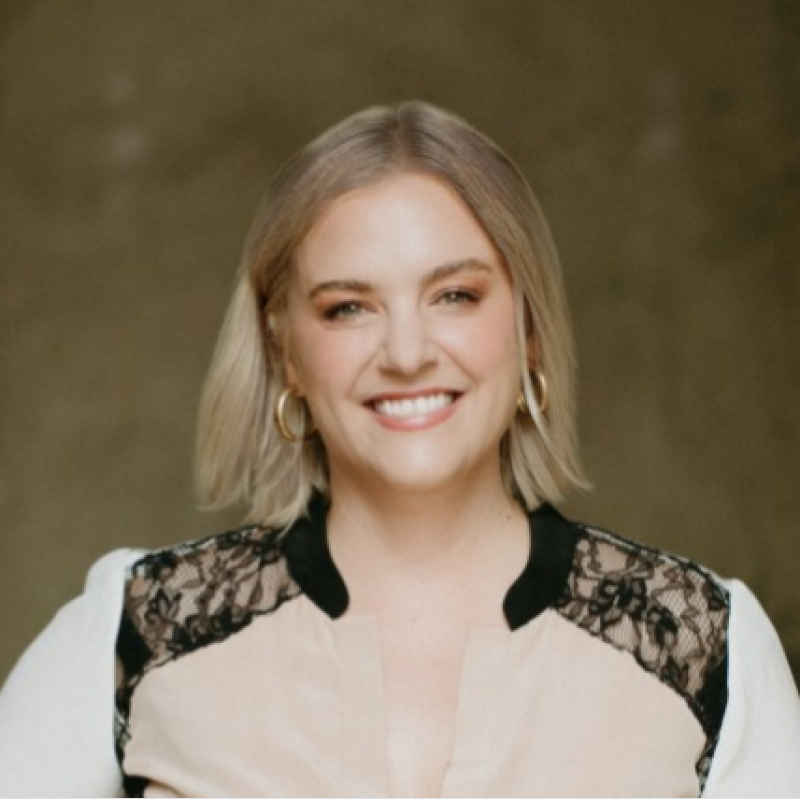
Connect with Adrienne here:
https://www.adriennepartridge.com/
About
Adrienne Partridge, Ph.D., is a Somatic Career & Leadership Coach and the creator of the YOUR INNATE EDGE™ Method—the only nervous system-based career and leadership development program designed specifically for high-achieving and heart-centered women who struggle with people-pleasing and perfectionism. She helps ambitious women—from emerging leaders to global executives—reconnect with their confidence and build fulfilling, successful careers that reflect who they truly are.
With a deep focus on nervous system health, Adrienne integrates neuroscience-backed strategies with somatic, trauma-informed practices to guide her clients toward meaningful transformation. A regular personal growth expert on Fox31 Denver’s Everyday Show, her expertise has also been featured in outlets like U.S. News & World Report, Inc. Magazine, The NY Post, and Thrive Global. Holding a Ph.D. in Organizational Psychology, Adrienne’s doctoral research examined women’s career decisions, transitional phases, and the influence of motherhood-related choices. Adrienne is also a Level 2 trained Rebloom Coach, a somatic and trauma-informed coaching modality.
An American who loves living abroad and immersing herself in different cultures, Adrienne has lived in San Miguel de Allende, Mexico and Mexico City, and now calls Paris home. She’s also active in improvisational theatre in Paris and is an avid skier, road biker, and adventure lover.
Transcript
Lisa Virtue (00:02.036)
Adrienne welcome to the podcast.
Adrienne Partridge (00:04.802)
Thank you, Lisa. I'm so excited to be here.
Lisa Virtue (00:07.882)
I am thrilled to have you. So to let the audience know, the way we originally met is I found you as a coach for women when I was in a promotion to an executive role. And I knew I needed a coach to help me be successful in that role, but I was I also knew that wasn't my forever job. And so you had such a beautiful message that really resonated with me. it's also funny to think back at that time, this was years ago, when I was looking specifically for a woman that understood women.
And it was actually hard to find. Now it feels like there's so many coaches, yeah, with that branding. so that was also beautiful. so you helped me with so many things back then. You're such an inspiration. I ended up wanting to pay it forward to other women as well and men and became a coach myself. So just so thrilled to have you here.
Adrienne Partridge (00:59.222)
Aw, thank you, Lisa. And just want to reflect back to you that you truly are, and I think I said this when we talked a couple weeks ago, like you're really living your purpose and using your greatest gifts. So it's really inspiring to see that you made that happen, you know. Yeah.
Lisa Virtue (01:16.399)
Thank you. You definitely helped me. I remember there was a moment of figuring out that I'm a creator and I went, yeah, those are the jobs I loved.
Adrienne Partridge (01:28.086)
And a totally like you're naturally wired for entrepreneurship. You're so innovative and fast, you know, like think on your feet. Those are some of your gifts. So this is such a but I'm not surprised you have like a few different things going on. You have to have you're in school, getting your masters in organizational development and you have your coaching business. So
Lisa Virtue (01:50.974)
Yeah. Yes, I have to be careful not to spread myself too thin. But yes, I also like to keep my eyes out and make sure I'm really understanding the world and learning. Yeah. Thank you. I love it. So now you're in France. So cool. Why don't you sorry, go ahead.
Adrienne Partridge (02:05.816)
Yeah.
No, no, I was just gonna say, Yeah, I've been in I've lived in Paris now for four and a half years. So yeah.
Lisa Virtue (02:15.01)
Very cool. And such a dream for so many people. So you're also living the dream.
Adrienne Partridge (02:20.354)
Yeah.
Lisa Virtue (02:22.062)
And we also connected during the pandemic when I did quit that job a few years later. We connected again and you were doing a program on somatic system and nervous-based nervous system-based coaching and loved that. So I'm excited to share all of your gifts with the audience today and what you do for people. So why don't you tell everybody a little bit about how you came to do this work and some of your background?
Adrienne Partridge (02:43.489)
Yeah, yeah.
Adrienne Partridge (02:50.646)
Yeah, so I've been in the business of developing humans for over 20 years. but I started as a speech language path pathologist and educational therapist. So I was developing little humans with neurodivergencies and loved that, really loved that career. It was very meaningful. And then when I was doing a master's in education, I got acquainted with a tool.
An assessment tool that is used in organizations, but they gave me a grant to do research in schools. And through that, I had to go get training and their methodology, and I got introduced into this whole world of organizational development and organizational psychology. And in my training group, you know, there were people like us and people working internally and in corporate roles doing training and development and that kind of thing. So I just got
Fascinated. And that drew me to organizational psychology. And so I did a career change. I went back, or maybe I would call it a career shift, because like I said in the beginning, the through line is that I've always been passionate and interested in developing people. So I went back and got a PhD in organizational psychology back to school and got a PhD in organizational psychology.
And very quickly after I found I had to study this more. And you know, while I was in school, I was working still as an educational therapist and and and doing school and then slowly or not, you know, shifted into more of this work. And then when I graduated with my PhD, you know, in nerd school, they don't you know, teach you how to run a business. So I thought, I like have a fancy website.
wasn't a fancy website, but it was a nice website. And people are just gonna find me and they're gonna want to work with me. So that was a rude awakening. So I would say, you know, probably the first two years it was really like a hobby. Not so much, you know, a moneymaker. I had to really figure out how to run a business and how to market and all of those things. So yeah, that's a little bit about my background. And then now gosh, it's been 11 years since I started my coaching
Adrienne Partridge (05:09.698)
Business, but I specialize in working with high-achieving women like yourself who are, you know, stuck in patterns of people pleasing or perfectionism, imposter syndrome, feeling disconnected to themselves, disconnected to their intuition, stuck in, you know, doing the shoulds as opposed to what they really want, whether that's career pathwise or how they show up as a leader.
And I, as you mentioned before, really integrate the nervous system and the somatic work, which I did not learn in my PhD program. And in most, I mean it was organizational psychology, but even in clinical psychology, you really don't learn that much about somatics in a traditional program. So I was inspired to get further training in somatic work. probably about
six or seven years ago, I was going through a hard time in my own life and I worked with some somatic methodologies and it was so transformational that I was like, I have to get training in order to do this or else the women I'm working with are gonna be missing out. So that's what led me to where I am today. Yeah.
Lisa Virtue (06:27.168)
Love it. So you really sit mostly in this H with the heartset framework that I've developed, which is really under be human, understand yourself, kind of get in touch with your own heart, right? As you go out and lead others and show up for other people. And I know you've got a method called your innate edge. Can you talk a little bit about what that includes?
Adrienne Partridge (06:50.934)
Yeah. So I really first of all love the heartset framework and especially the the first part as you noted. And it really like I like I just want to note like from my perspective and my work, it's like you can't fully embody each of those the what is it, be human, hold on, elevate, act, relate, and be transparent if you don't know how you feel in your body and you're not aware of your nervous system.
So so yeah, so that being said, my innate edge method is the foundational piece is the nervous system. So increasing your self-awareness about like most people don't realize that we actually feel in our body, not our mind, right? We cognitively cognitively label the feeling sad, happy with our cognitive mind, but the feeling, the information is coming from our body. And
So that's the foundational piece. And then looking at something I call your natural blueprint. So your natural career and leadership blueprint, who you are and your most natural essence, and how you can bring that into your work to really feel like you and that you're not having to pretend to be somebody that you're not. and getting really clear on I differentiate between strengths and gifts.
So getting really clear on what your gifts are so that you use those most of the time and not just a teeny bit of the time. And then, you know, if I'm doing career coaching with the innate edge method, it's really aligning your innate edge with your career. So maybe that's a career shift or a change. Or as a leader, you know, how can you use your gifts more frequently so that you make a bigger impact?
because when we're using our gifts, we're gonna make an impact. It's almost like we don't even have to try. We're just gonna make an impact, you know, like you can be doing hard work and challenging work, but you're gonna make an impact and not only that, with ease and flow and less stress and less like anxiety. So yeah, that's a brief overview of of my method, the innate edge method.
Lisa Virtue (09:05.934)
Yeah. Who doesn't want that?
Adrienne Partridge (09:07.97)
Right.
Lisa Virtue (09:13.87)
So I'm curious what you're seeing right now with leaders and their challenges and maybe where there's like a trigger where someone goes, Okay, I really should talk to Adrienne about this.
Adrienne Partridge (09:25.56)
Yeah, I mean I I feel like usually it's a a a few things, but some trends or some commonalities that I've seen lately, especially in the last year or two, is women coming to me feeling like they're surrounded by mediocrity and they have this internal value that they, you know, they just like have to strive for excellence. Not necessarily perfectionism, but just like
They want the things that they work on to be excellent and like want to make things better, want to continue to learn, you know, want to be challenged, but are finding that their surroundings are not aligned, like the people they're working with. And so there's like this frustration, even sadness of feeling. I think the deeper part is like feeling like you're not fully expressed to, or maybe like
you using your creativity to you know the utmost degree because you know when you're around other people that share that value of excellence you're going to be challenged. So that's one thing. And then I think, you know, I think well I know you work with heart-centered leaders leaders given your method methodology, but I have a lot of like all of my clients have this divine sense of empathy, like natural empathy. Like their team loves working for them.
You know, they get really great like three sixties. they're you know, trusted and respected and liked, yet at the same time they're overpersonalizing, you know, situations or if they have to deliver difficult feedback. Of course, no one likes to do that, but like, you know, over over over absorbing like how that other person is gonna feel, or you know, all of that. So that's you know what I call
When empathy gets dysregulated, it goes into like appeasing or people pleasing. so we don't want them to change, you know, their beautiful empathy that makes them who they are and makes them great leaders. But how can we make sure that stays in regulation so they're not burnt out by worrying so much about what's happening or how people are feeling around them or how you know things are affecting their team and things like that.
Adrienne Partridge (11:46.242)
So those are a few things. I would say also feeling disconnected to themselves, like who they really are. so I would say a lot of like the women come to me really wanting to do the internal work of like reconnecting with who they are and making sure they feel alive, right? And like have that spark, like missing that spark in their their career. so some of the those are some of the the challenges among many others that I've seen.
Lately. Lately. Yeah.
Lisa Virtue (12:19.286)
I see a lot too, and I'm curious if you are also seeing this trend of it's usually not just the workplace. There's also something in life most likely going on. Absolutely. Yeah, like a new season in life trying to figure out who you are now. Maybe who you were 10 years ago has changed, right? Or your needs have changed.
Adrienne Partridge (12:38.542)
Absolutely. And I think, you know, well, I'm in my mid forties and I tend to work with women kind of like 30, late 30s to 50s. So it's like that midlife transition too, where they're like, I am so over the BS. Like I am just like I like I don't care. Like I'm not gonna deal with this, these politics, these stupid off it office politics. And they're just like
Lisa Virtue (12:55.086)
Yes.
Adrienne Partridge (13:06.382)
ready for something different because they just can't they're just over it.
Lisa Virtue (13:10.862)
Yeah. Yeah. Getting back to center and also aligning where they're working. Yeah. something else that you said that resonates with me is the striving for excellence and looking around and going, am I the only one?
Adrienne Partridge (13:15.596)
Yeah.
Adrienne Partridge (13:26.218)
Yeah, do you hear that in your work?
Lisa Virtue (13:29.066)
Yes. And actually something my husband and I, because you know, we met originally in high school. So we go way back and we've got very deep conversations that we have. And he's very much a perfectionist as well and like really cares about his work and he works in government. And it can be difficult when people get into that stereotypical mindset, especially in like a government role where I'm here for the retirement. It's the long game. I'm gonna kinda go easy and he's
He doesn't have that gauge, right? So he'll spend late nights and I will I will literally say to him, You're a government worker, act like
Adrienne Partridge (14:03.502)
That's funny.
Lisa Virtue (14:06.326)
I'm like, you have to make this last, right? So I understand. That's not yeah, it's not who he is. Yeah. And so it can be very hard. And I've been in those situations too, where you look around at the team and you're like, wow, my level of expectation is not aligned right now. There's just and sometimes it's the environment, sometimes it's the team, sometimes it's just the sheer amount of change people have gone through. And so this team is like, I'm not ready to maybe it's AI now, like.
Adrienne Partridge (14:08.898)
Yeah. Right.
Lisa Virtue (14:34.486)
Slow down, guys. We don't want to adopt that. We're gonna resist. And so maybe there's a leader who's like, look at how cool this can be. And I have to bring you along because that's my KPI. Right. And then the team is like resisting. So I'm seeing a lot of that too, like this leadership versus individual contributors. it's feeling like a big clash in a lot of places because of just the nature and speed of how things are changing.
Adrienne Partridge (15:03.554)
Yeah, so quickly. Absolutely.
Lisa Virtue (15:05.294)
And then our bodies tend to tell before anything else, right?
Adrienne Partridge (15:10.988)
Yeah, exactly. Yeah. The stress or the discomfort of the the the fast changes can yeah, really show up in in how we feel in our body. Yeah.
Lisa Virtue (15:23.148)
Yeah. So a few things you've said that really have us stand out because part of what I like to message too is like the difference between showing up as a human leader when you're leading humans versus, you know, people are talking about AI is going to replace management, right? And it's one thing to replace management tasks or monotony. It's another to replace the human element and all the things you're talking about of like empathy, showing up with your heart, being heart centered.
Yeah. Having that energy that you bring people along. Like I just don't see it being a machine that's going to do those things.
Adrienne Partridge (16:03.054)
Well, yeah, absolutely. And from a nervous system perspective, there's something called co-regulation. And like our nervous system will attune for better or for worse to the people around us. So if you've ever, you know, come home, I don't know, maybe when you were in your former job, come home stressed from work and your husband or your daughter's like calm and you give them a hug and you suddenly feel like at least a little bit less tense, right?
That's co-regulation. And so, you know, when we have a leader who's grounded and centered and empathetic and you know isn't frantic, that really has such an effect. And it doesn't just have to be if you're in the physical space, like it can be on a Zoom conference, too. And like as humans, we need that co-regulation. And AI can't do that. Like it can't co-regulate. I mean, it can like.
cognitively work things out with us, but it can't it's it doesn't have a nervous system. So or a heart for that matter.
Lisa Virtue (17:02.336)
Yeah. Ooh. No heart. There's no heart in there and it yeah. It'll placate you or it'll match your energy. Yeah, supporting you. that's a powerful message right there. Co regulation.
Adrienne Partridge (17:10.462)
Yeah.
Adrienne Partridge (17:18.081)
Yeah, yeah.
Lisa Virtue (17:20.29)
Well, going on to more a little bit deeper into the work that you're doing right now with people, I know that you also have some of your own assessments and tools to help people figure out a little bit more about themselves and their own humanity and how they're showing up. Can you speak to that and what kind of assessments that you've been creating?
Adrienne Partridge (17:42.72)
Yeah, so there's one I use mostly most commonly, and it's just a nervous system assessment to look at different behaviors that probe for appeasing and perfectionism and comparison and a tendency to be a workaholic. And you know, I used to think of these as mindsets when I first started this work like eleven years ago.
But they're actually not. They're they're the root is a nervous system response. So when you experience a trigger for one of those, your body and your nervous system is gonna respond with fight, flight, freeze, or appease or a combination, right? And then your mind will kick in with like the thoughts and the plans of how you're gonna manage that. And so I have an assessment
that looks at that. And so that's like a starting place for the nervous system work so that we can target the different responses of the nervous system and start to transform them. Yeah. So that's one I love that I there, you know, is is very illuminating. I mean, most people can self-select, you know, into those categories of like perfectionism and people pleasing. But I find it's very helpful for them to see it.
You know, and like the different behaviors that go with it. And it's not like, you know, to judge any of these things. We're all human, right? and sometimes we're gonna continue to do these things to keep us like psychologically safe. Like we may not speak up in a meeting and we may not say anything because it doesn't feel safe to do so. And that's okay. So it's not like about eradicating these, but just building self-awareness and discerning, you know, when to turn it on and when to turn it off, so to speak.
Yeah.
Lisa Virtue (19:32.455)
Yeah, this is where I I find that coaching and programs like the Pepperdine Organization Development Program. I mean, we do intensives and we get to have it like a playground where we're experiencing a lot of these things, right? Where you can show up and it's it's low lift, it's not high stakes like at work. Exactly. And feel yeah. And coaching can help us with that too. And then there's also this concept of
Just the awareness right? So when I start working with people like just jotting it down, making a note of it, coming back and talking with someone in a safe space and going over possibilities and how can I navigate that next time. Yeah. So much stronger than just reading it in a book.
Adrienne Partridge (20:16.782)
Absolutely. Yeah. Experiencing it for yourself. Mm-hmm.
Lisa Virtue (20:20.63)
Mm-hmm. Yeah. And then dissecting it. Yeah. Yep. And we surprise ourselves, don't we? We think, that that I that rolls off my back.
Adrienne Partridge (20:31.362)
Right.
Lisa Virtue (20:33.622)
And then we go, why was I triggered there? Well, interesting. And these are the things I feel like ChatGPT can't help us with because we might not even be aware of it yet. So how can we prompt the AI a lack of awareness?
Adrienne Partridge (20:48.568)
Yeah, exactly. Exactly. You can't yeah, you can't use ChatGPT to build self awareness. Mm-hmm. Maybe in some areas, I don't know, but not in that area, that would be very difficult.
Lisa Virtue (20:59.706)
Yeah. Yeah. Yeah. Where else are you seeing your clients with AI on the scene where they're maybe utilizing it in ways that are helpful or the harm you see it could be bringing to teams? What is your perspective right now? I know it's changing rapidly. So by the time I this goes live, it maybe changes. But yeah, would you share a little bit with me?
Adrienne Partridge (21:22.302)
Yeah. So like obviously I think there's you know, of course there's benefits, but I do I am concerned about taking away the decis decision making and intuition piece. Like I hear some of my clients say, Well, I had a chat with Claude or had a chat with ChatGPT, you know, and I'm like, Okay, that's fine, but you know, what how do you feel? Like what is your intuition? So that because you know, your intuition is truly
your greatest leadership tool. And when you don't know exactly what path to take, you've done all the research and data, you know, diving and you've like weighed out the options and you, you know, sometimes you just can't know. That's when we really have to rely on our intuition. And intuition happens in the body. I mean it happens in the brain too, but the body is giving us that information.
you know, about whether or not, you know, we should go for that decision. And so that concerns me is that AI is could be, you know, is, I think, taking away our intuitive our connection to our intuition. However, maybe if you know, I'm just trying to think the counter to that. I suppose if you've weighed it out and you've gone through an intuitive process, maybe you could.
Once you've kind of come to a conclusion, maybe you could affirm that with AI, but I don't know. I just think that to lose that as humans, like what are we gonna do when we're in a real time situation, right? And we need to rely on our intuition. I mean, like, you know, you can't just ask ChatGPT at any moment. So yeah.
Lisa Virtue (23:09.25)
Yeah, you're also describing this interesting evolution of it it is a tool and where can we utilize it to help us, but not replace the human part? Because there's so much power to like we've got souls, we have hearts, we have intuition. Exactly. Yeah, and these tools, that's all they are. And maybe they're building and growing. I just had a conversation with someone this morning who said, I was just arguing with my AI. And I said and I said, Yeah, I do that too. And I
I'm have gotten to the point of like, I'll put it down, right? And this is where I get nervous is that people rely on it so heavily for that cognitive processing too, that it it makes you nervous when you think about how we're going to train our children and making sure. And this is what all the big AI leaders and experts are saying is like we still need to understand the human behavior before we use the tool.
We still need to understand what is the decision-making matrix before we put that in a tool. because again, if it if you're using it to replace your thinking, then what is your value also at the end of the day, right? What is your value?
Adrienne Partridge (24:20.984)
Right. And I mean, I know there's concerns about like Alzheimer's and dementia developing, you know, like earlier. right? If we're not exercising that part of our brain that we're using now for AI. like, yeah, I don't know, for example, like learning a new language that's so good for our brain health. But like, how do you really learn a new language with AI? Like, I mean, I know there are programs that can help and and all of that, but
Yeah. Let's just think of that as like a little example too. Yeah.
Lisa Virtue (24:53.422)
I like it. This is also the difference with human coaching versus I think it's a great tool to also kind of work through things, process something in the middle of the night if you're having a hard time sleeping or whatever, just to kind of get it out and maybe have and ask it to reflect in certain ways. Like if you need a tool or something else to argue back with you, right? Like check my thinking on this. You can prompt it. Yeah. And when you go and take that.
to a human coach because a lot of my clients will do this. They're like, okay, here's what I uncovered or I discovered. Yeah, using the tool. And I want to talk to you about it. I want to check it. And then you can ask questions like, okay, where are you feeling it in your body? Let's talk about that. Right. And go into that part. And that's those are the things I think just fall flat. We can pick up on all the little nuance, all the body language. Absolutely. These tools don't do that.
Adrienne Partridge (25:29.805)
Yeah.
Adrienne Partridge (25:47.2)
And like there is no replacement for like being seen and like seen for who you are from a like a practitioner or spaceholder like you or me. I mean, I know my own experience with like therapy or coaching and when I'm the the client, like I I can't imagine not having that if I needed that, you know, like having that human holding that space for me.
And mirroring and reflecting and affirming me or questioning me, but in a human way, right? Not in like a automated AI way.
Lisa Virtue (26:27.05)
Right. That authenticity really means something different nowadays, doesn't it? Yeah.
Adrienne Partridge (26:31.67)
Exactly, exactly. So I you know, when I when then like AI, I don't know, maybe it was like a year ago, I like, was like my job gonna be obsolete? You know, but then I was like, No, there's no nothing greater than like somebody holding space for you, you know? Yeah.
Lisa Virtue (26:47.618)
I agree. I I think one of the benefits in the coaching world is now people that were not able to access coaching for financial reasons or whatever. Yes. Now they've got a lower lift tool that might be able to unblock them in some things. Yeah.
Adrienne Partridge (27:02.104)
Definitely. Yeah. Very cool.
Lisa Virtue (27:05.47)
another thing that you are creating or have created, I should say, another I guess it's an assessment, right? Your archetypes.
Adrienne Partridge (27:15.566)
yes, yes, by different archetypes.
Lisa Virtue (27:19.491)
Yeah. So you have six leadership and career archetypes that you have your clients discover about themselves, right? Yep. Yeah. Let's talk about that.
Adrienne Partridge (27:26.338)
Yep, yep. Yes. So it's really based on on your natural blueprint. So maybe I should explain that first. So our natural blueprint is well, we're all born into this world with a natural blueprint. This is the philosophy. And I learned this from one of my teachers in somatics. Her name's Rachel Maddox. And like a house, we you know has a blueprint.
We have a blueprint, we come into this world with an essence, you know, who we are and our most natural self. And like a storm can destroy a house. there's always a blueprint to rebuild. And so as humans, we can have everything from big traumas to disappointments, experiencing, you know, just cultural conditioning from upbringing. And that takes us away from feeling like we can express our blueprint. So it
imprints our nervous system or our blueprint. So an example of that would be like maybe as a child you were really expressive and maybe you liked to dance and like put on shows and maybe you know when you were little you kind of like didn't wear much clothes, you know, kind of like was just very free and expressive. But then you know that got squashed like you're being too loud or, you know,
like give somebody else a turn or it just over time you got the message it's not okay to like be in the spotlight or to express myself right and so you at you know can just be stuck in a pattern of not feeling like you can express yourself if that's your nap not everybody is like that right but you know you can really it can it can stunt your blueprint and your nervous system and
And you know, it's interesting too because I think of like old friends, and maybe you can think of friends like I have some friends since I was in preschool actually. And so like two friends, and I've known them, you know, our whole life. And their essence is the same. Of course, we grow and we develop, but like, you know, I think of myself. I've always been like silly and playful right? And, you know, and they would say that about me, that like that I've always been like that. So that's really
Adrienne Partridge (29:52.184)
Who we are and our most natural essence, how the people like see us, you know, that have known us the longest. And it really stays with us over time, but like I said, it could get muted, right? And it could get like unexpressed or hidden. an example too, so I'll I'll share an example of a story about my grandmother. So my grandma lived 10 days after a hundredth birthday.
And so she died about five years ago. So she had a long, vibrant life. And towards the end of her life, like the last couple of years, she had dementia. And a little bit before she passed away, she was in the hospital sick with something, and I went to visit her. And on this day in particular, she didn't remember me as Adrienne. Like a few days before she knew I was her granddaughter Adrienne. This day she, you know, just thought I was like this nice lady coming to visit her.
And so I was sitting by her bed and we were chatting and she had a really great sense of humor. So I laughed at something that she said. And she looks at me and she goes, Huh, you remind me of a girl, Adrienne Partridge from Pasadena, where I grew up. And do you know her? And I was like, No, because I didn't want to confuse her. I don't know her. you oughta know her.
I was like, okay. So anyway, she continues telling me another story. And then she asked where I lived. And at that time I was living in Mexico City. And she goes, What do you know? That Adrienne Partridge, she moved to Mexico City. Have you met her? I was like, No. And she goes, That Adrienne Partridge, she just took off and and left. And no one understood why she went to Mexico. And that I don't know what else is like the family saying about me, you know?
It's, you know, that's like a perfect example I you know from my life and in Blueprint because she attuned to my laugh. I laugh a lot. I have a very distinctive laugh. I don't get a lot of c compliments, but I get a lot of comments. So she like attuned, you know, to my laugh, which is like, you know, I like that's something that I do a lot, right? Because that's like a part of my personality, humor and lightness and to my sense of adventure and doing my own thing. Like she remembered that too.
Adrienne Partridge (32:19.616)
So even at the you know end of her life, her memory wasn't completely intact. She still remembered my essence. And it was just such a like it's such a beautiful memory. And every time I tell that story, I get chills because I felt so seen by her, even though she didn't know me as Adrienne that day. And so, you know, for so that's the blueprint example and then getting into the archetypes. so we have like a blueprint part.
It's the real essence of us. So for example, I would say that like I'm a natural expressionista, like I really enjoy expressing myself. I don't mind, you know, talking in front of people, but only about like certain things. Like I don't need like to be center of attention just to be center of attention. But if I can, you know, talk about the nervous system and go on stage, like yes, please. But I think there, you know, there was an imprint for me, like don't.
you know, don't be too visible, don't be too big, like don't be too loud. And and so for me personally, like that's been a growth edge and it still is, right? To show up and be visible, especially in my work. And so that would be the archetype that personally I'm really working towards. And I have a lot of clients that also work toward like a couple right now that are natural, like what I call expressionistas that like
they come alive, you know, when they're visible and expressing themselves. then there's, you know, there's the the misaligned achiever. So somebody who's, you know, really achieved and achieved and achieved, but then they're like, wait, is this it? You know, am I achieving the thing I actually want to achieve? And so like realigning so that they're the aligned achiever. Like they're in like maybe it they, you know, it's a leadership position that's misaligned.
So those are a couple of examples of the different archetypes. Yeah. Yeah. I love that.
Lisa Virtue (34:23.595)
Really to all of them, I think.
Adrienne Partridge (34:25.611)
Yeah, me too. And a lot of people say that, like all five. Like, yeah, that sounds like me.
Lisa Virtue (34:31.008)
So you have to figure out really which one is taking priority right now, right? And like
Adrienne Partridge (34:35.65)
Yeah, exactly. That's how I approach it. Like which one is the most prominent for you that feels either like you want it to come forward more or feels like you just haven't had opportunities to like kind of move into that? So
Lisa Virtue (34:53.902)
Mm-hmm. Yeah. I love how it's it's so unique versus there's strengths finder in in so many different ways, right? So many different we'll call them all strengths finders, different assessments and figuring out where our natural tendency is. But I like this archetyped concept because it's more of where do you want to go? Where do you want what do you want to lean into more of? Yeah.
Adrienne Partridge (35:16.642)
Yeah. And like what is like want needing to come forward blueprint wise? You know, like another one is the the unexpressed or the hidden creative, right? Like, you know, it doesn't mean you need to quit your job and become an artist, but maybe. but how can you express your creativity? Because creativity doesn't have
be art, right? And maybe it is for you. So are you gonna do, you know, are you gonna engage in that as a hobby or as an interest? Or like can you bring more creativity into your work? because I think the work you know you and I do is very creative, right? It's not necessarily we're painting a painting painting something, but maybe we are metaphorically.
Lisa Virtue (36:03.564)
Yes, yeah. All those souls that we're helping to bring make brighter. I love that. Ooh, wonderful. Well, I know our time is coming up to an end today, Adrienne. I love talking to you, so it's hard for me to wrap us up. But what would you like to share with the audience about how they can get a hold of you? Anything that you might be offering right now.
Adrienne Partridge (36:08.992)
Yeah. Yeah.
Adrienne Partridge (36:29.014)
Yeah, you know, so this isn't a topic we got we didn't really get into, but I differentiate between strengths and gifts. So just really briefly, strengths I say are the things that you do really well because you're smart and you've learned how to do them and you've done them over and over, but they deplete your energy. Doing them depletes your energy. Whereas gifts are the things that you're naturally good at, that you naturally want to hone and develop, and that you get just as much.
energy back as you give when you're using them. And so that being said, I have I'm offering to your listeners a 30 minute gifts versus strengths clarity session. that I'm sure you'll put the link in the show notes or something. Send me the link. So yeah that people love like to uncover that it's one of my favorite things to do. It's really juicy and it's really fun to help people
start to figure out how to use your gifts more than just your strengths. Like of course we're all gonna have to do things like we have the category of things we have to do. Yep. And like, you know, show up at work so we can pay the mortgage or the rent. but then there's, you know, all the things we want to do and the gifts are really in that want category. Right. And then we have some things we we like just, you know, should or have to do just to like, you know,
Do our jobs. but yeah, the gifts really helps to like realign your energy too. Yeah.
Lisa Virtue (38:02.614)
Yeah. Beautiful. That's a great offer. I love it. So and how can people get a hold of you?
Adrienne Partridge (38:09.162)
my website Adrienne Partridge dot com, or they can email me at Adrienne at AdriennePartridge dot com too or on Instagram.
Lisa Virtue (38:17.582)
On Instagram too. Okay, perfect. So any of the place. Yeah. I love it. And we'll definitely have links in the show notes as well. Beautiful. Thank you so much for sharing today, Adrienne, and being part of my life and my journey and such an inspiration. I really appreciate you.
Adrienne Partridge (38:25.72)
Yeah. Yeah.
Adrienne Partridge (38:36.762)
Thank you, Lisa. It's such a full circle moment to be here with you. As I said in the beginning, following your purpose and using your greatest gifts to make a great impact. And yeah, it's just so fun to and I feel so inspired and energized talking to you. So I'm gonna go away today. It's evening here in Paris with a full heart and lots of energy.
Lisa Virtue (39:01.09)
Hmm, love it. Same. So this is definitely our gifts coming out, right? Or getting energized as much as we're giving. Well, thank you for helping me find my own heart alignment and being able to be creative.
Adrienne Partridge (39:06.478)
Yeah.
Adrienne Partridge (39:15.422)
thank you. Thank Lisa.