
HEARTset Leadership Podcast
Season 2
Ep 27: Scaling Culture: How to Scale a Culture of Values as You Scale Teams w/Noel Massie
Listen on any preferred podcast platform:
Episode Summary
Are you a leader seeking actionable insights on building trust, navigating ethical dilemmas, and leading with integrity—especially while stepping into a bigger role?
In this episode of the HEARTset Leadership Podcast, host Lisa Virtue sits down with guest Noel Massie, author and former UPS vice president, to get to the heart of what it takes to lead with values in organizations of every size. This conversation focused on the real-world challenges leaders face: promotions that bring far more responsibility than guidance, inheriting skeptical new teams, and ensuring that words like “integrity” and “respect” become tangible touchstones instead of empty slogans.
One concept discussed was the art and science of value-based leadership. Drawing from his 42-year rise from loading dock to executive boardroom, Noel Massie reveals the frameworks and habits that helped him—and thousands he mentored—to “walk the talk” of authentic leadership. The discussion explored the “great leadership transfer” currently transforming American business, and why mentorship, clear communication, and personal example matter now more than ever.
Several points were raised, including:
How to establish credibility and trust with a team you’ve just inherited
The dangers of “sink or swim” promotions
Frameworks for handling tough feedback and conflict with professionalism
The critical role of mentorship and actively seeking support
Practical steps for making values like dignity and fairness non-negotiable expectations
A key theme that emerged was that leadership is not just a career move—it's a holistic, public lifestyle. The episode grapples with the reality of imposter syndrome, peer dynamics, and generational hesitation around leadership responsibility. The conversation tackled pressing topics like the impact of AI on management and the enduring need for genuine, human-centered leaders.
Noel Massie and Lisa Virtue deliver wisdom you can act on:
Learn how to build trust and set expectations with new teams immediately
Hear stories that illustrate why your actions speak louder than your intentions
Discover why people support what they help create—and how to mobilize that in your teams
Understand why pay is not the #1 driver of engagement, and what truly motivates discretionary effort
Get practical frameworks for leadership development when organizational structure falls short
If you’re a leader, manager, or HR professional looking for a leadership podcast episode that goes beyond theory, delivers honest stories, and equips you with frameworks for real growth, tune in to hear Lisa Virtue and Noel Massie dig into what it means to lead with HEARTset.
Keywords: leadership podcast, Lisa Virtue, Noel Massie, new leader tips, small business owners, trust-building, value-based leadership, frontline management, mentorship, leader promotion, integrity at work, ethical leadership, organizational culture, team motivation, leadership development, heart-centered leadership, scaling values
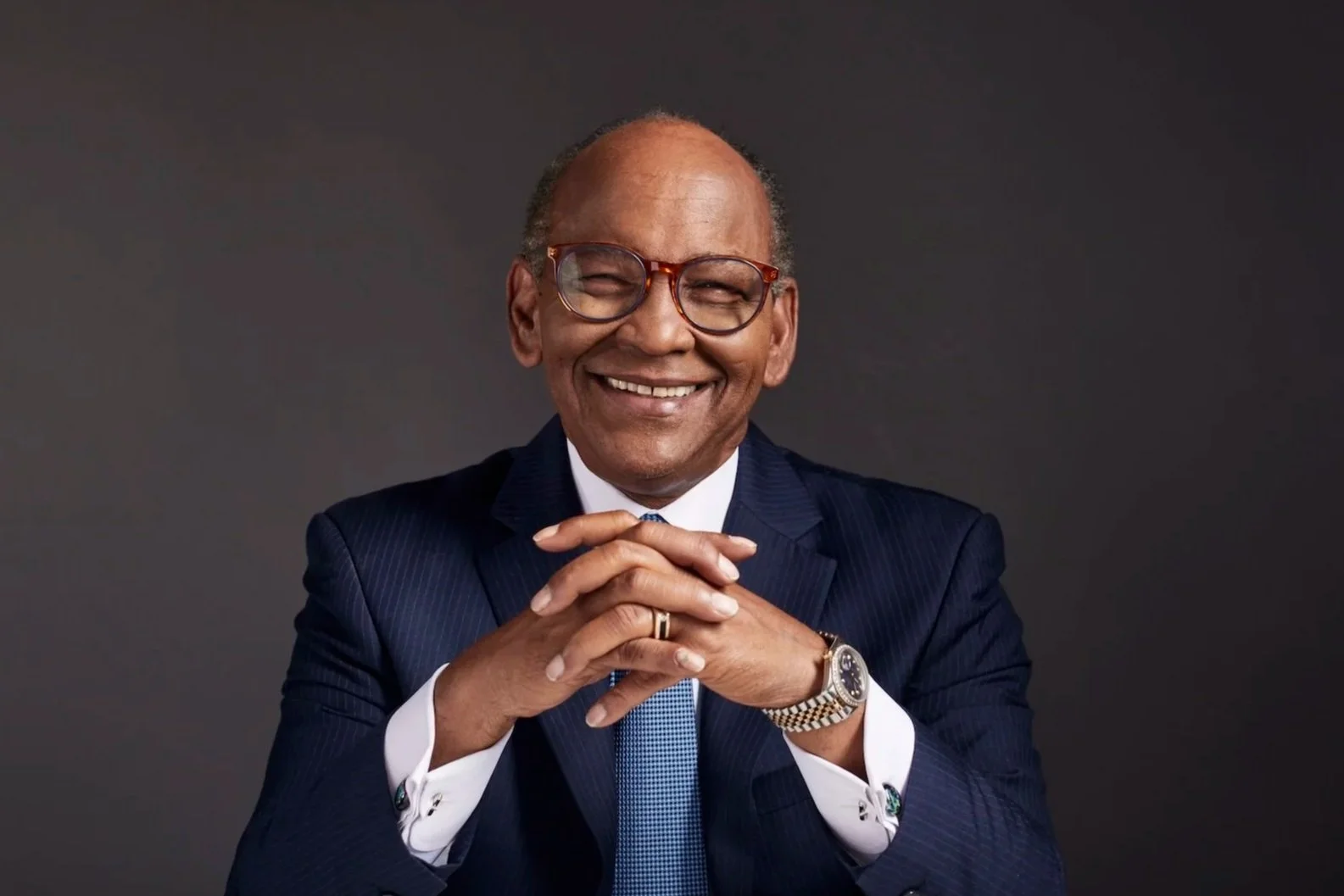
Connect with Noel here:
About
Born and raised in Oakland, CA, Noel Massie attended San Jose State University’s School of Engineering before receiving a bachelor’s degree in business management from La Salle University. Massie went on to serve as UPS’s U.S. Operations Manager, supporting and guiding all package delivery and logistics services in the United States before retiring from UPS.
Today, Massie spends his time consulting modern businesses, mentoring future leaders, and pursuing his passion as an advocate for early child education programs.
Transcript
Lisa Virtue [00:00:00]:
Welcome to the Heartset Leadership Podcast. I'm Lisa Virtue. Have you ever wondered how large enterprise organizations can be so successful and grow their teams to hundreds of thousands while still maintaining their values? Well, what I see in my coaching work and in the research is that it takes these organizations having a culture of developing leaders who know how to walk the talk. You can slap the word integrity on the wall, But what does it mean in a team huddle when you're already behind and you're about to ask more of your team? That's where it matters whether you've invested in developing your leaders. My guest today, Noel Massey, is one of those leaders. Noel started at UPS as a teenager and retired 42 years later as a vice president of US operations. His mentors invested in him from the beginning, and he subsequently invested in the leaders coming up behind him. Today, he's an author, speaker, and leadership coach who helps new managers make the shift from being responsible for their own work to being responsible for how a whole team does its work.
Lisa Virtue [00:01:03]:
His book, Congrats, You've Been Promoted, gets into the things you wish someone had pulled you aside to talk about before your first day as a manager. I know I do. And he dives into the areas that even organizations doing fairly well in the leadership development space, like UPS, Struggle. How do you earn trust with a team you've just inherited? How do you give feedback people can actually use? And how do you make it clear what you stand for before anyone has to find out the hard way? Noel tells me lots of stories, one about his first day as a supervisor, when he overheard his new team talking about the boss they were going to get. They had no idea it was him, and he stayed silent. He also takes us into the UPS floor and shares why, even as his responsibilities and teams grew, He made time to ask the people doing the work how things were really going. But don't let me spoil it. Let's listen into the conversation now, and you can hear Noel tell you those stories himself.
Lisa Virtue [00:02:00]:
This is the Heartset Leadership Podcast. We're here on the beat of modern leadership to help you crush your goals without crushing your soul or your teams. Noel, welcome. Thank you so much for coming to the Heartset Leadership Podcast. I'm thrilled to have you share your stories with my audience.
Noel Massie [00:02:21]:
I'm thrilled to be on your podcast today with you, Lisa, and hopefully your audience can get a thing or two out of our conversation.
Lisa Virtue [00:02:29]:
I think they'll get more than a thing or two, but yes, absolutely. Well, before we get started into some of the meat of what we want to talk about today for leaders, I'd love for you to share how you came to do the work that you did, and then also what you're doing today and why you're doing it. So go ahead and just start talking.
Noel Massie [00:02:46]:
Well, that's a lot. Candidly, the dimensions that came together that inspired me to write the book I wrote, Congrats, You've Been Promoted, for frontline leaders and their bosses, candidly, which is probably, I've had more responses from people who run small businesses and how the book has helped them do better at it. And I'm very humbled by the amount of sales that have happened. The book released in June of last year. Simon& Schuster is a publisher, Mission Driven Press. Uh, it's on audiobook now. Blackstone Publishing carries the audiobook. It's on Audible, uh, and it'll be released December, uh, on all the other audiobook platforms, Spotify, blah, blah, blah.
Noel Massie [00:03:32]:
The bottom line is I was the president of US delivery operations in the last role I had at UPS. So I was responsible for the US footprint. And prior to that, I had led 5 different business units as a president. And a typical business unit, at least the last one I had in Southern California, was around 30,000 people before I took over the US. But the thing that's easy for people to get their head around today with baby boomers retiring, Gen X and Y leaving the workplace is the great wealth transfer, right? You hear that a lot, that this generation coming up Alpha, Gen Z, millennials will not have the same level of opportunity financially as their parents, which is true because of industrialization and, you know, yada yada. But that being said, what's also happening at a rate that's just equally as quick is the great leadership transfer. And what that means is yesterday some senior leader like Noel Massey retires. from UPS after 42 years with the responsibility of 200,000 people.
Noel Massie [00:04:39]:
Well, someone's got to replace me. And that person got promoted. So congrats, you've been promoted to that person, right? And they were president and they got elevated to a level above president. But then someone had to replace them and they created 7 promotions.
Lisa Virtue [00:04:56]:
Wow.
Noel Massie [00:04:56]:
And that was really going on in our organization for the last, I'd say at a high velocity, probably in 5 or 6 years. And as leader of the US delivery operation with presidents and operations people around the country. The thing we talked about ad nauseam was development and promotions. And I was relocating people literally from New York to Oregon where you live, right? But the promotion of a person is the simplest part of the process. And the lower you go on the rung, the more difficult the process and transition is because yesterday some person was doing a great job. Whether it's a construction site, delivering a vehicle, driving a truck, doesn't matter. And working in a law firm, a young person was doing a great job, 30 years old. And then the firm says, you know what, we're going to make you the leader of the group you report to or work in.
Noel Massie [00:05:51]:
So congrats, you've been promoted. Well, okay. They don't know what's next. So, okay, great. The promotion isn't a pay increase. It's a responsibility.
Lisa Virtue [00:06:01]:
Mm-hmm.
Noel Massie [00:06:01]:
And who teaches that person how to navigate that responsibility? Well, typically it's sink or swim. Typically there's no one there. And I come from a very development-oriented background. I happen to work for an organization where development was a serious deal. It was a serious deal and we were having difficulty and we were, we were very, very focused on it and we were having trouble. So Before I left the organization and retired, I ideated out the idea to write the book because of what I was seeing. And then my peers in other corporations that were presidents were telling me the same story. I happened to be, for a while, the chairman of the board of the Los Angeles Urban League, as well as the Chamber of Commerce, both.
Noel Massie [00:06:46]:
And in both those capacities, I interfaced with a lot of presidents and executives. And we would all say the same things. So when a person is promoted, you don't promote your best people to lose your best people. But what happens is imposter syndrome is very, very, very, very prominent with young people. They get promoted, they're 27, 30, and yesterday they were doing a job and tomorrow they get promoted to lead a group of people and they're 27 or 30 and there's someone 50 or 60 in that group. And they say, hey, uh, John, I'm gonna put you on forklift number 12 today. And John goes, I'm not driving that forklift. No, put Sammy on that.
Noel Massie [00:07:25]:
I'm not doing it. And in that moment, they freeze and they don't know what to do. Mm-hmm. My book addresses that specifically. There's frameworks. It's not just talking. There are frameworks in the book that says, here's how you deescalate the moment, how you create a win-win out of that moment. And here's a framework to teach you how to do it, not just talk through it.
Noel Massie [00:07:48]:
There's a framework, the 4x5 method, the BEST principle, the 7 steps of effective training. Those are all foundational pieces of the book. But the first part of the book is 2 parts. Part 1 is value-based. And in part 1 of the book, what I want the new leader to understand is that values drive everything. You can have all the skills in the world, but if you don't have the right value level, forget about it. Warren Buffett said it the best when he said that when I hire people, I look for 3 things. I look for energy, intelligence, and integrity.
Noel Massie [00:08:24]:
If they don't have the third one, forget about the first 2. Mm-hmm. So I want the new leader to understand that they have to lead more importantly with integrity. So after a person reads the book, the stickiness that I want 'em to walk away from it with Is that the terms and conditions of value-based leadership are real. What does that mean? It means that the only thing with terms and conditions isn't an airline ticket when you agree to buy it, or a refrigerator warranty that you agree to, or a car warranty. Human beings have terms and conditions. Everyone has them. There are things that if they are not prevalent in a relationship, You will walk away from it, period.
Noel Massie [00:09:07]:
And those things are very tangible. Things like ethics, integrity, dignity, respect. Those things matter. And when a new leader gets promoted, it's really, really important that the baseline of their relationship with their team is professional. Always. They're not a social worker. Okay? They can have great relationships. with their people, but they are the leader.
Noel Massie [00:09:31]:
And as such, they have a responsibility to lead, and they need to lead with integrity, and they need to say it to the team. If it's not right, we're not doing it. If it's unethical, forget about it. If there's any question, there's no question, come talk to me. And when they do that, things go way better on the front end, as it does for the business owner who's promoting them, or corporation. That's really why I wrote the book, was to help the person navigate that first year to 3, uh, in their career.
Lisa Virtue [00:10:03]:
Love it. Oh, Noel. Okay. So many juicy topics and we won't have time to go into all of them, but I have a couple, um, couple things I wanna ask you. In our first conversation, we had talked about the terms and conditions that you just mentioned. And what really struck me was how There's a contract sometimes, or there's an employee handbook, there's a guidebook, there's things we agree to for a paycheck, right? You were saying that people will show up and they're, they're agreeing to help the organization succeed and they're selling you their time to do that, right? So that's the exchange. But then there's this underlying, like you just mentioned, dignity was one that really struck me as we were talking about. They're not selling you their dignity.
Noel Massie [00:10:50]:
No,
Lisa Virtue [00:10:50]:
we see this play out a lot, right?
Noel Massie [00:10:52]:
Yes. Right. You know, I ran into that early in my career, like most people do, especially when I was promoted to a newly promoted supervisor. And I happened to, first of all, just to level set that, I happened to work for some great managers. I happened to work for some great managers. I was really fortunate in the first few years of my career. They have some absolutely amazing leaders that I worked for. And the point of that comment is that they set the tone for me when I was promoted.
Noel Massie [00:11:23]:
Paul Favell, the mid-manager that promoted me, and this is my homage to him because he's since passed away. He sat me down. I'm 21 years old. And he goes, Noel, you have a lot of energy. I love the way you carry yourself. You're gonna have a great career in this organization. I'd already been at the company for 3 years as a part-time employee, part-time supervisor. He goes, but let me, let me just tell you this, kid.
Noel Massie [00:11:49]:
He goes, there's gonna be a lot of people that try to take your integrity. It's just the way it works. No company's perfect. We, we have a great company, but even ours has, you know, people in it that sometimes get off the rails. Just don't ever let 'em have it. He goes, once you give that away, it's not recoverable. Look me in the eye and tell me you will never give away your integrity. I looked him in the eye and said, that will never happen, Paul.
Noel Massie [00:12:14]:
And it never did. Now, that was a really important moment for me. It was a formative moment. And then my immediate manager, Glenn LeBrecht, likewise, was as prolific in his development-focused behaviors. And he would say to me and to the rest of us, not just to me, You know, I want all of you to always get this. There are no casual moments in leadership. That's in my book. You're always being evaluated all the time.
Noel Massie [00:12:42]:
There are no casual moments. Every action you do, your people see. They evaluate you on it. They judge you on it. And then, and if you expect them to give you their discretionary effort, effort at the highest level, you need to give them yours. Okay. So I had some great leaders. However, as my career went on, I ran into a few bumps and those helped me navigate through 'em.
Noel Massie [00:13:05]:
But I'll tell you a story about an individual who sells equipment for this construction company. Those cranes you see over the top of buildings, right? Them things are really expensive. And his manager had asked him to report sales on his sales report when he had a handshake. That wasn't a company policy. And when he was asked to do this, Russell, He gives me a call and he tells me, no, he says, no, can I run something by you? And I said, yeah, sure, Russell. And he tells me, my manager asked me to go outside company protocol when I report my sales. We're not making our quotas, blah, blah, blah. And I said, well, Russell, who was there to hear him ask you to do that? And he said, no one.
Noel Massie [00:13:45]:
I said, there's a reason for that, Russell. I said, because when there's a trial, you're going to be on trial, not him. Okay. And I've never seen a boss go, Well, it's my fault he did that. It's my fault that Russell lacked integrity. I've never seen it. Okay. Because it's not going to happen like that.
Lisa Virtue [00:14:03]:
Yeah.
Noel Massie [00:14:03]:
Here's what's going to happen. You're going to go outside the company's policies and you're going to pay the price. There are policies for a reason. Here's what you do, Russell. Go back to your boss. And the most important thing you need to say to him initially is, you know, the request you asked me, and do it professionally. I'm not comfortable with that. Is it in writing? Have we changed something? I said, do that.
Noel Massie [00:14:26]:
And then with your peers, ask them, have we changed something? Is something different? And because here's what's going to happen. You're going to flush it out. So Russell goes back and he does exactly what I asked him to do. And he calls me up literally the next day and he goes, my boss retracted the request. I said, I could have predicted that, Russell. The end of the day, There's only one person who owns your integrity. You. It doesn't belong to other people.
Noel Massie [00:14:50]:
But there will always be attempts by those who are lesser than, just to put it clearly, who don't accept the responsibility of leadership the way they need to, who lack integrity the way they should, where they want company. And they're gonna, they're gonna always be looking for partners in that dance. Do not participate When that dance is happening, don't get, don't get involved in it. So there, there's an example. And Russell at the time was 34, just some years ago. But, but he was so relieved that he was able to talk to me and get a pathway. And so that goes to mentorship. When I think mentorship is so critical to leadership development is everyone needs a coach.
Noel Massie [00:15:34]:
Everyone needs someone to guide them. It should be The person they work directly under, but it's not always. So when people are lacking guidance and they're in a toxic environment, my advice is always to my young mentees, and I have half a dozen that are under 45, get other people in the boat immediately. Never go it alone. That's the mistake most people make is they don't say, this doesn't feel right. I have some doubt about this. And what I'll say to them is, if there's any doubt, there's no doubt. Get other people involved, period.
Noel Massie [00:16:09]:
And that always wins. It just always does.
Lisa Virtue [00:16:11]:
I'm right there with you that I feel like we have that in common where I was very blessed with early mentors that helped me form a lot of those values and also just have someone to go back to if I was in a situation that you didn't have that mentorship. Yeah, for sure.
Noel Massie [00:16:28]:
But the thing is, like when you just mentioned, the other thing I say I have 2 millennial sons.
Lisa Virtue [00:16:33]:
Mm-hmm.
Noel Massie [00:16:34]:
So I've, I've had the, the, my sons are 33 today and 31. I have 2 millennial sons, right? So I've had the millennial story, right? My life through my life. Yeah. On a regular basis. Right. And they're both great, great young men. I'm extremely proud of, you know, I, what I'm proud of is I admire my sons.
Lisa Virtue [00:16:51]:
Mm-hmm.
Noel Massie [00:16:53]:
I admire their character. I really do. You know, I, I admire who they are, but Whenever they wanted to have a conversation with me, I would absorb what they were saying. Okay? And one of the things that I said to them is, whatever you're doing, whatever profession you're in, look for whoever you think is the best at it. Who do you think, who do you admire, who do you feel is great? Ask them to have a cup of coffee. They're going to say yes, right? So seek out the people you want in your life. When it comes to mentorship, mentorship could be twice a year, 2 cups of coffee twice a year. It doesn't need to be once a week.
Noel Massie [00:17:31]:
And, you know, all these frameworks that go around mentorship, I've, I've seen all of that in my career. Candidly,
Lisa Virtue [00:17:37]:
yeah.
Noel Massie [00:17:38]:
The most effective level of it is when the people you're sitting in front of have you in mind. And generally it's gonna be people that you're not around all the time. So reach out and choose them and ask if they'll have lunch with you or a cup of coffee. That's a really important point I want young people to get.
Lisa Virtue [00:17:55]:
I love that. I think, um, that's spot on too, because a lot of people think, woe is me, I don't have a mentor. It's like, well, have you tried to go get a mentor?
Noel Massie [00:18:04]:
That's exactly right. That's exactly right. You have to seek what you want, right?
Lisa Virtue [00:18:08]:
Yeah.
Noel Massie [00:18:08]:
You have to seek what you want.
Lisa Virtue [00:18:10]:
Yep. Going back to this integrity piece, but also emerging leaders, um, you shared a story with me that I want to make sure we get on the podcast, which is when you were a 19-year-old supervisor. And I can totally relate to this cuz I also was promoted early in my career into leadership roles. And there's this idea of, you said earlier, you are the leader, right? Yep.
Noel Massie [00:18:32]:
Yep.
Lisa Virtue [00:18:33]:
And especially when someone's promoted and they have friends that are now in their team that they're leading, um, or relationships that have been established and they feel a trust there. Um, you mentioned that there is one small decision that caused your team to question whether they could trust you. When you got promoted.
Noel Massie [00:18:49]:
Yes.
Lisa Virtue [00:18:50]:
Can you share that story?
Noel Massie [00:18:52]:
Sure. So when I was promoted the first time at UPS, I didn't know I was getting promoted, right? So I come to work, typical day, and my supervisor goes, Noel, what are you, what are you doing here? And I'm like, I'm at work. What do you mean? What am I doing here? He goes, well, you've been promoted. Okay. You're, you're now in area number 12 or whatever. Right. It was, I'll just say it that way because of the terminology internally to the company. So I go over there and I stand in the area and I'm waiting for my supervisor to introduce me to the team.
Noel Massie [00:19:26]:
Well, there were already team members in the area, about half a dozen of them, and they were chattering about, oh, we're getting a new supervisor. They thought I was over there to cover someone's
Lisa Virtue [00:19:35]:
absence. Mm-hmm.
Noel Massie [00:19:36]:
So they were chattering about, oh, we're gonna get a new person. You know, that person thinks we're gonna blah, blah, blah, blah, blah. We're gonna show them, 'cause the person that they had worked for, they were really close to. So they were very anxious about who was gonna replace the person that, that was their previous leader, right? So I'm sitting there listening to 'em, you know, and I'm kind of nervous, number one, but I just stood there for like 5 minutes listening to 'em have this conversation. And listen, 5 minutes is an eternity. Yeah. When you're sitting there standing with a group. So the, so my new supervisor comes over and he introduces me to them.
Noel Massie [00:20:11]:
And they look at me and their eyes get as big as 50 cents because I hadn't introduced myself. I hadn't said a word. I just stood there and listened. And so one of the more influential people in the group, when the work assignments were handed out and now it's time to start work, walks over to me and goes, so you like to be sneaky? And that sat with them for months. My ability to gain their confidence. went out the door in the blink of an eye, and I hadn't even met him yet. Right. And the point, the point of that is that in the, in the book where I talk about there are no casual moments in leadership, that's a prime example that I said nothing for 5 minutes, but it mattered.
Noel Massie [00:20:51]:
It made an impression. Even saying nothing is saying something. And I want leaders to understand that every action they take, there's a message behind it. Right. And ultimately, as a leader, you have an objective. Right? And your objective is to be evaluated by the work of other people. I'm gonna let that sit.
Lisa Virtue [00:21:11]:
Yeah.
Noel Massie [00:21:12]:
You, you, when you get promoted, you're saying, I am willing to be assessed on how, on how well I can get other people to do work. You're not being promoted to become a human memo. Okay? They don't just give you a list and say, here's today's orders, go get, hand them out. A lot of leaders operate like that. They do, and they pay the consequence of operating like that. People are evaluating your behavior, what you say, what you do. And if you say nothing, it's saying something. And in that moment, it took me months.
Noel Massie [00:21:44]:
Ultimately, I ended up with a great relationship with that team, but a lot of that was because people leave jobs and new people come in. Yeah. And so over time, I think I turned over probably 60% That team left and went on to other things and I, but I was able to do it, but it was a consequence for me to stand there and say nothing for 5 minutes. I tell that story in the book for a reason, because leaders need to meet their people immediately when they get promoted. They need to put their people first. People work for people, not logos. People work for people, not company logos, not companies. When you get assigned a group of 9 people, you're their CEO.
Noel Massie [00:22:25]:
The CEO of the company never even meets them.
Lisa Virtue [00:22:27]:
Mm-hmm.
Noel Massie [00:22:27]:
Okay. Probably the president, it's a mid-manager. You are the CEO to them. What you do is a reflection of the organization. End of story. Stop the presses. What you do, they work for you. So meet them.
Noel Massie [00:22:41]:
They wanna know you. And so in the first iteration of your relationship, you need to plan and schedule mm-hmm, a 30-minute time Sit down with each person and just have a conversation to set the terms and conditions of the relationship, that there will always be professionalism. You can always count on me. All of these things matter, and that needs to be done first. Think about when people apply for credit, they get nervous, they put their best foot forward. When they meet the parents of their partner, they get nervous, they put their best foot forward. When you get promoted, amplify it. Okay? Amplify it.
Noel Massie [00:23:23]:
It's more important. Put your best foot forward. They wanna meet you.
Lisa Virtue [00:23:27]:
Yeah.
Noel Massie [00:23:28]:
They wanna know you. If you walk in the door with the attitude that I've been promoted, I'm the boss, so I must be good. Okay, you're done. Your team will behave like you did. Like your team's gonna behave like you did all that stuff.
Lisa Virtue [00:23:43]:
Mm-hmm.
Noel Massie [00:23:44]:
Okay. That's not going to inspire them to give you everything they have.
Lisa Virtue [00:23:49]:
Yeah, absolutely. All that time spent is so worth it later. Um, I love this. Okay. So when you were going from leading, I think it was 10 people on a loading dock, and then you were influencing operation of 200,000 people.
Noel Massie [00:24:06]:
Yeah.
Lisa Virtue [00:24:07]:
Woo! Let's amplify that leadership a little bit. How do you keep that integrity, the respect? The care, instead of it being words on the wall, right? We've got these espoused values that the company pushes and that even as leaders, sometimes we put up on the wall or we hand out messaging. Um, especially if you, you personally, 200,000 people, I imagine you couldn't spend personally a lot of time. So you are influencing the leaders of those teams like you were just talking about and making sure that your security was trickling down, right? So how are you making sure that that was getting to the frontline? What were you doing at that level of leadership?
Noel Massie [00:24:46]:
So I'll say this, a couple of things. So I mentioned earlier, before I became vice president of US operations, I was a president, business unit. You know, I was a president in Illinois and Indiana. I had that group that was like 10,000 people. I had Virginia, Southern California, Hawaii, Nevada. Right. And so I lived on the floor. And what I mean by that is I didn't come in and start looking at reports and There was always time in the day to go look at numbers.
Noel Massie [00:25:13]:
The one thing that never happened in my life when I was a manager, president, didn't matter, was time to look at numbers. There was, when I was a supervisor, there was time to look at numbers. Okay. But the time to spend with individuals was very limited, right? Because they have jobs to do.
Lisa Virtue [00:25:27]:
Hmm.
Noel Massie [00:25:28]:
Okay. If you have people that are welders, their job is to weld. If you have people putting up houses, their job is to construct a home. If you have people doing law work, their job is to do legal work. Right? The hospital is to take care of patients. You generally, most leaders have a very limited amount of time, of personal time with their people, and it's most often in the morning when they show up. Okay? So that's your short period of time to embed messaging and values in your team. It's a really important point.
Noel Massie [00:26:01]:
So I was never willing to give that time away. to nonsense, right?
Lisa Virtue [00:26:06]:
Mm-hmm.
Noel Massie [00:26:07]:
So I would go down on the floor, talk to managers. I'd go with the mid-manager, uh, I'd have 'em, uh, walk me around their operations, whatever. And I would talk to employees and that was taking the pulse of, of how things are going. Be honest with me. You know, here, here's the thing that's funny is that we'll sit there and go, hey Lisa, let's talk about something. Lisa, be honest with me. Right? Well, I literally would do that with drivers and Be honest with me, right? And they would not hold back. They don't have a political agenda, right? They, they would be honest with me.
Lisa Virtue [00:26:38]:
I had the same experience. Yes.
Noel Massie [00:26:39]:
They would be honest. But, but what that allows you to do as a leader is to understand where you stand, particularly on the value equation. Because what I would say is the thing most often missed by leaders in business, leaders in small business, whether it's a donut shop or a Fortune 500 company, Is understanding that only one person drives the behavior of the organization, the leader, right? The group, the team, the division, the department, the leaders. Okay? And if you want your team to have integrity, you need to be intentional about driving it. What do I mean by that? Just because you don't lie, cheat, and steal, don't think your people say, well, we're not gonna do it either. Okay? Mm-hmm. No, you have to intentionally embed That is a value in your team. How do you do that? It's really easy.
Noel Massie [00:27:31]:
You don't have a meeting, you don't have an integrity conference call, you don't have a Zoom. That's not necessary. But what is necessary is how you walk the talk daily. You can walk in the door and go, here's what's important, team, yada, yada, yada. Got a lot going on today. We're gonna have a hard day, long day, tough day. We never having a day that lacks integrity. I want everybody to be clear.
Noel Massie [00:27:56]:
Remember, and that needs to be something you say as part of your language, not because something's going on, right? We're never having an unethical day. We're never having a day that lacks integrity. Those need to just become the way you speak.
Lisa Virtue [00:28:09]:
Mm-hmm.
Noel Massie [00:28:09]:
And when you speak like that, it holds you accountable and them. And understand, when people are in their moment of truth, meaning you're not watching them, mm-hmm, you can't see 'em all the time.
Lisa Virtue [00:28:19]:
Mm-hmm.
Noel Massie [00:28:19]:
They're gonna hear you in their head. And when there's a funny moment, they're gonna treat that moment the way you led it. They're gonna treat it with integrity, with ethics. They're gonna appreciate that they work for a company or an organization that says those things, but they have to be announced. They can't be implied. You can't imply integrity. Mm-hmm. You can't imply ethics.
Noel Massie [00:28:42]:
You have to actualize it, say it. Make it part of your language, and then it becomes part of the culture of the business. And you know, it's funny to me, I work with small business owners, a lot of 'em. And one of the companies actually recently, I just spoke to one of their presidents yesterday. They, they own that market, uh, on lactose-free cottage cheese, lactose-free milk, blah, blah.
Lisa Virtue [00:29:05]:
Mm-hmm.
Noel Massie [00:29:05]:
When you go in the supermarket and you see Lactaid, the company that makes that product is called Hood, H-O-O-D. They own that market. And I, I was their keynote speaker earlier this year at their leadership conference, and they brought in all their vice presidents, blah, blah, blah. And, and I'll go around the room and I'll, and I'll say, close your eyes. And they close their eyes. And I, I'd do it with you. As a matter of fact, I'm gonna ask you to do it. Close your eyes.
Noel Massie [00:29:30]:
Close your eyes. I want you to see a person that has been the most impactful on your development In your life. Now open. That person, I assure you, is value-based and they made you feel important. And what I say to the people in the room is I go, if I ask your people to close their eyes, will they see you? And so if they don't see you, why? And if you want 'em to see you, you need to lead a value-based group. You need to lead a group where you say, we're gonna have a long day. It's gonna be tough today, TD. You know, I'm gonna ask a lot of you today, but here's the day we're never having, one that lacks ethics and integrity.
Noel Massie [00:30:10]:
Everything we do needs to be there. Mm-hmm. Because we're gonna make mistakes. There's gonna be errors. You don't make an error on your values. Those errors don't happen in our business. And when, when you lead intentionally, because it's funny to me when I, when I'll go listen to someone speak and they'll say, well, intentional leadership. I'll go, tell me how you operationalize it.
Noel Massie [00:30:30]:
And they'll be kind of lost on what that means. I'll say, well, it's simple. You lead that way. You go, in our group, fairness is part of the deal. We don't have favorites. We don't have favorites. Everybody's sweating the same. We got the same amount of sweat coming outta every pore, right? So there's no, there's no favorites on this team.
Noel Massie [00:30:49]:
And when I was a young leader, I had a mentor. Here's the point. Teach me that. I had a mentor say, no, You getting a new assignment, 60 drivers. First thing you need to do is make sure you establish the terms and conditions. They didn't say it that way. Make sure you establish the foundation with them. I call it terms and conditions.
Noel Massie [00:31:10]:
And I would say it, here's one thing you can count on me, and you have my word on this team. We don't have favorites. I'll never have favorites. You are all my favorites. All 50, all 60 of you are my favorites. You all sweat the same. You all put in the same effort. That's how this works.
Noel Massie [00:31:27]:
Okay. There are no advantages given to one at the expense of another. And it really matters. It really matters when you say it. You have to say it. You can't hope it just materializes because it holds people to a standard and that's really important to establish.
Lisa Virtue [00:31:45]:
Yeah. Say it. Oh, name it. Say it out loud. Yep. Like you were saying at the beginning of the conversation about when you're first promoted, there's no playbook typically, right? And the mentorship, if you're not seeking it out, I mean, leaders, even those that are well-intentioned, they're busy too. And so it takes us reaching out, it takes us naming it, it takes us saying it. And so there's, it's a career change, right? When you get promoted, when you're into go from individual contributor to leader.
Lisa Virtue [00:32:13]:
Yeah. You're really shifting up your career.
Noel Massie [00:32:16]:
Well, it, yeah, it's really beyond that. It's a life change. Leadership's a lifestyle. You know, talk to someone who's a doctor. They're a doctor when they're at home.
Lisa Virtue [00:32:25]:
Yeah.
Noel Massie [00:32:25]:
Right. Reading the newspaper.
Lisa Virtue [00:32:27]:
Okay.
Noel Massie [00:32:28]:
When you're a leader and you're at the park on Saturday with your friends, you're the leader at the park on Saturday with your friends. And if your people see you, that's who you are.
Lisa Virtue [00:32:38]:
Mm-hmm.
Noel Massie [00:32:38]:
And if they see you in the park, with your friends and you're drunk. You're the drunk leader in the park with your friends. Sure. Okay. Think about what we're seeing in our society today. We live in a microwave world. Yeah. Quick, fast now, right? No one wants to cook anything.
Noel Massie [00:32:51]:
They wanna stick it in there, microwave, boom, 1 minute.
Lisa Virtue [00:32:53]:
Mm-hmm.
Noel Massie [00:32:54]:
Right? Information travels quick. What's the word on the street today? Jensen Huang.
Lisa Virtue [00:32:59]:
I know.
Noel Massie [00:32:59]:
Nvidia CEO.
Lisa Virtue [00:33:00]:
Yes.
Noel Massie [00:33:01]:
Right? A year ago it was the Coldplay concert and the CEO and the HR director.
Lisa Virtue [00:33:06]:
Yep.
Noel Massie [00:33:06]:
Okay. I could go on and on. Mm-hmm. The CEO of Uber was fired. Why did they fire the founder of Uber from the company he built? He had a behavior problem. Mm-hmm. He was partying night and day and the board was like, no, no, you are not a reflection of what we want. And the same thing with Papa John's CEO.
Noel Massie [00:33:25]:
He was fired. He founded the company. No one's immune to assessment, evaluation, and judgment. No one's immune to it. Mm-hmm. So when you're the leader and you raise your hand, there was a job open.
Lisa Virtue [00:33:35]:
Mm-hmm.
Noel Massie [00:33:35]:
It was a position open for a leader. You raised your hand, you went, pick me, pick me. Well, you know what? You got picked. Because you got picked, you're saying, I accept the responsibility of what being picked means. And the minute you lose sight of that, you'll end up like those examples I just gave of individuals who did something in a moment that cost them and their team. Mm-hmm. Their reputation, which you don't get back. The quality of work in the organization changes dramatically.
Noel Massie [00:34:05]:
So it's a lifestyle change. When you get promoted, it's not a pay increase. You are accepting a massive— and it doesn't matter, you get promoted, you have 5 people, you are accepting a massive responsibility for those 5 people's lives.
Lisa Virtue [00:34:20]:
Mm-hmm.
Noel Massie [00:34:20]:
It really is important that leaders see it that way.
Lisa Virtue [00:34:24]:
Yeah, I agree. And I'm wondering what you're thinking of this pushback that a lot of younger generations rising through the ranks are having where they don't want that responsibility. Have you been seeing this yourself and experiencing that?
Noel Massie [00:34:38]:
Oh my goodness. Yes. You know, I hear that a lot. We can't get people to take these jobs. Literally, I had that comment come from me a couple of weeks ago. And I said, well, it's because it's unattractive. How many times do people turn down attractive things? They don't. So whatever you're doing in your organization is making it really unattractive.
Noel Massie [00:35:01]:
And pay ranks like number 6, right, on why people take a job. It's not top 5, right? It's like number 6 or 7. Many surveys you're gonna see. Here's what is never in surveys. Number 1. Okay. It's always, that's like important, the day you get hired, and then it's unimportant after. I use an example of an NBA basketball player in my book named Ben Simmons.
Noel Massie [00:35:25]:
And I put it in the book because it's a true story, right? It's public information. He played for the Philadelphia 76ers, and Ben Simmons was making $20 million a year. Wow. He decided to just not come to work. He was so unhappy with the way he was being treated. Literally. And it was public information that he would, I'm just not coming to work. I'm not gonna play basketball.
Noel Massie [00:35:48]:
Trade me. I don't wanna play for you anymore. Okay? The way I'm being treated as a human being is just not okay with me. So that's like the most amplified, and he's a millennial.
Lisa Virtue [00:35:59]:
Okay? Mm-hmm.
Noel Massie [00:36:01]:
That's the most amplified example I could find at the time that I wanted in the book to distill the, the point. That money won't do it.
Lisa Virtue [00:36:10]:
Right.
Noel Massie [00:36:10]:
Okay. That money won't do it. That treatment is everything to a person. Ultimately, how they feel when they walk through your door will determine what every company wants from every employee. And that is extra effort. I haven't met one company, if I say, hey, you want extra effort from your people? They go, nope. I've never met that company. Do you want, hey, do you want extra effort from your people? No, no.
Noel Massie [00:36:34]:
I just, I just, I wanna give 'em a paycheck and let 'em— If they— No, everybody wants more than they paid for. When you go to a restaurant, you know what you want? You want more than you paid for. Mm-hmm. You wanna be treated really, really well. You want 'em to bend over backwards for you. As human beings, we always want more and we respond positively when we get more than we paid for. Employees are no different. When, when the company is treating them well, they give that company more than they paid for.
Noel Massie [00:37:09]:
That's when people go home and open the laptop at night. And that can't be done through any other reason than they care about the organization. If it's done through fear, that's short-lived.
Lisa Virtue [00:37:19]:
Mm-hmm.
Noel Massie [00:37:20]:
They won't last. Okay. Companies always want more than they pay for because I worked in a union environment. for many years. Okay. You don't intimidate Teamsters. Okay.
Lisa Virtue [00:37:31]:
Right. That's true. Okay.
Noel Massie [00:37:33]:
You don't, you don't. Okay. Yeah. So if you're gonna lead a group of union employees and you want them to run through a wall for you, you need to care about them. You need to invest in them. You need to spend time with them like my manager did with me. Right? So the point of this is, is this, every company wants Employees that will give 'em more than they paid for. Every company wants employees that'll run through a wall for 'em.
Noel Massie [00:38:02]:
Well, when I was young, I'd run through a wall for my manager. Why? Because Glenn LeBrecht, he invested in me. He invested in us.
Lisa Virtue [00:38:10]:
Yeah.
Noel Massie [00:38:11]:
Right? And so when Glenn took a vacation, he knew that the amount of sweat coming out of our pores would look exactly the same, maybe more. than when he was on vacation because he invested in us. Because people are like a bank. Go to a bank and say, I want to make a withdrawal. They say, okay, great, Lisa. How much money you got in here? Nothing. They're going to go, the loan department is, the loan department's over, over there. Okay.
Noel Massie [00:38:35]:
People are the same way. If you made no investment, meaning if you didn't sit down with Lisa and say, Lisa, what are you good at? I'm good at this stuff. What can I help you be better at? Well, no, I think you can help me be better at this. Okay, great. How do you want that to look? When leaders do that consistently with the Lisas that work for them, then Lisa comes in and Lisa will eventually run through a wall for Nolan. Why? Because he invested in Lisa. He cares about Lisa, right? And so companies that put in reports and marketing numbers and competition and yada yada. ahead of the team, they never build good teams.
Noel Massie [00:39:16]:
They just don't. Yeah. They're always dealing with drama and noise. Okay. But when they're investing in their team and including their team, and the team is helping them create the future, the teams do better. Because here's another natural law I want your listeners to have as a takeaway. People support the things they help to create. When people help create something, They support that something.
Noel Massie [00:39:42]:
And I've allowed teams to create bad answers and I let 'em run with it because they had to arrive at the point where they said, this is a bad answer. Okay. Don't let us do this, but this is a really bad answer. We need to re-ideate this out. It happened a million times, right? Man, I didn't allow 'em to create casualties or calamity. Don't get me wrong. Okay. But there are a lot of opportunities to involve people in solutions, and it may not be your solution.
Noel Massie [00:40:11]:
What you care about is the outcome. Here's what we need to accomplish. How we get the journey accomplished should include your team members who actually do the work.
Lisa Virtue [00:40:21]:
Mm-hmm. How
Noel Massie [00:40:22]:
about that?
Lisa Virtue [00:40:23]:
Right?
Noel Massie [00:40:24]:
They actually do it. They actually do the job.
Lisa Virtue [00:40:26]:
Yeah.
Noel Massie [00:40:26]:
Right. I didn't come in and deliver one package. Okay. When I was the president. I didn't come in and unload and sort one package. Okay. My sales team met with customers. I would go out and meet with 100, 150 a year, but they were meeting with tens of thousands.
Noel Massie [00:40:42]:
Right. Okay. Shame on me if I didn't allow the people who actually do it to have input on how we were going to do it. Why would I think that was? So I would invest heavily in conversations with them and involve them. And steer them, of course, and develop them. But people support things they help to create 100% of the time.
Lisa Virtue [00:41:05]:
Yeah. And back to the, um, point about the resistance to leadership, I'm also hearing you say that when we invest in the development and their inclusion in decision-making early on, then that will help form them as those next generation leaders and will show them that we're not going to throw you sink or swim into this leadership role, right? If there's a culture built around We'll support you. We've got mentorship. We've got development that we're going to invest in you. I had mentors that encouraged coaching and that's how I ended up learning about how beautiful coaching can be. Because then you have that neutral party that helps you. Um, yeah, that was a big breakthrough of me going, oh, okay, I can take on this higher level role because I feel like I have support. I think that's very key.
Noel Massie [00:41:49]:
And when a, when a person works in an environment where they see that kind of support, You'll have people raising their hand all the time to be leaders.
Lisa Virtue [00:41:56]:
Yeah.
Noel Massie [00:41:58]:
And, and the other thing that I wanna make sure gets into our conversation is AI, right? That's the thing. AI, AI, AI. Everything's like, AI is, AI is great. I use it, you know, for the things that it can do. Tasks, right? Mm-hmm. It can help me shorten time span on tasks. Leadership, to be clear, is not a task. Leadership is not a task.
Noel Massie [00:42:22]:
Leadership will never go away. If we think we're going to run into a world where all of the Fortune 500 CEOs will be AI, where the president of the United States will be AI, where every congressman and senator will be AI, and where Sam Altman of AI is going to be replaced by AI, and where Tim Cook, who had Apple, will be replaced by AI, we're not going to live in a world void of leaders. There will not be Someone, when you walk in a hospital, there won't be zero people in it and just AI guiding every activity, right? Maybe in 100 years, but today there will be a leader of the nurses.
Lisa Virtue [00:43:02]:
Yeah.
Noel Massie [00:43:02]:
There will be a leader of the junior lawyers. There will be a leader on the construction site. There will be a leader coaching Amazon drivers to do their jobs. So leadership is not at risk. Leadership is not going away. And the companies going down this road where they're ignoring that are gonna find out real fast the consequences. You may, you may be able to do a lot of things with less people, no question. You know, I think that the financial services industry will see a really big impact on how many people need their financial advice that they can't get from AI.
Noel Massie [00:43:39]:
Honestly, you know, I sit on an investment board. I'm on the Annenberg Foundation. I'm on the investment committee. We make investment decisions and they know the advisors. We have 20 of them. All of them are worried we're going to replace them with AI. Well, they have a legitimate concern. They're not laying, they're not laying 2x4s.
Noel Massie [00:43:58]:
Okay.
Lisa Virtue [00:44:00]:
Right.
Noel Massie [00:44:00]:
Okay. But when someone puts a roof on a house, there'll be a person leading and supervising that team. So leadership as an investment, Is important and it's not going away. So when people try to roll AI up into a leadership conversation, I go, I think a body shop's still gonna need people doing bodywork. Okay.
Lisa Virtue [00:44:23]:
Oh, preach it.
Noel Massie [00:44:24]:
I think that when you take, when you take your car to have it serviced at your dealership, I think a mechanic's gonna be doing that work, not AI. So I think a leader will be in that shop with 12 mechanics working for 'em. So, You know, there's my 2 cents on leadership and AI.
Lisa Virtue [00:44:40]:
Preach it, Noel. I'm right there with you. It's again, a pendulum and we're already seeing it coming back, right? This investment in AI and oops, maybe we went too far on some areas. A lot of my guests too, um, but a lot of people and even professors I've talked to, the, the management tasks like running payroll and some other things may get replaced with some automations, but Like you said, people work for people. People aren't gonna show up and if there's no heart and soul in that machine, so you're not gonna run through that wall for that AI bot, right? So,
Noel Massie [00:45:14]:
no, you're not.
Lisa Virtue [00:45:15]:
Yeah.
Noel Massie [00:45:16]:
Yeah. Your work is gonna reflect if you walk in and there's a Google or an Alexa telling you what your job is today.
Lisa Virtue [00:45:23]:
Yeah. The motivation's gonna be wrong.
Noel Massie [00:45:25]:
Not very motivating. Yeah, that's right.
Lisa Virtue [00:45:27]:
Yeah, for sure. Oh, I love it. Well, thank you for, uh, hitting all the heart set. Frameworks as well, including, I can't wait to have leaders get ahold of your book, especially emerging leaders, because I do think that just having some of that context, those frameworks to help them get started, especially if they are lacking that leadership development in their organization or they don't have that mentorship, I think that's really going to help, but it also can supplement all of that, right? So having another is fantastic. So thank you for writing that with all of your wisdom. And I have one more question for you as we wrap up today, and that is, what do you think the word heartset means when it comes to a leader? If they show up with their heartset, we've got skillset and mindset that leaders bring to the table, but when it comes to having a heartset as they come into work, what does that mean to you?
Noel Massie [00:46:17]:
That they always see their people as people, not things. That they understand they accepted the responsibility for those human beings and their livelihoods, that behind each person that works for them are other people, a family, right? People counting on them, counting on their success in that job. So as you make your team successful, you really are impacting your community and you're impacting your, their families and you're impacting their wellbeing. And if your intention isn't to make other people better, Then you are not well intended. As a leader, you should not accept a leadership role if you don't expect to make other people better in their lives, because it's not about you. You got promoted. Okay, great. Someone promoted you to make your life better.
Noel Massie [00:47:12]:
Okay, but at the end of the day, how are you going to make? How are you going to pass that to your team and make other people better? Because ultimately, one of the most foundational. Things I raised my 2 sons to understand was this. It's because I was taught it. The founder of UPS, who was a great man, James E. Casey, founded the company in 1907, and he founded a value-based company. Why did he found a company that was not me, me, me, me? Why did he start in Seattle, Washington, 1907 with 6 messenger boys? He was 19, by the way. And why did that grow into 500,000 people? in 220 countries worldwide. Because at UPS, there's no widget being sold.
Lisa Virtue [00:47:52]:
Right.
Noel Massie [00:47:53]:
If I say, what product does UPS sell? You say, well, no, they do, they deliver stuff, right? They do stuff for people. They take something from one spot and move it to another. That's it. Okay. Not putting on roofs, not laying 2x4s. The organization just does a task for people. But why did people say, we love you doing this task. So much, you went from 6 people to 500,000 globally.
Noel Massie [00:48:20]:
It's because it was a value-based and is a value-based platform. You don't see UPS delivery drivers slouching and lazing around. Okay. Most people I talk to know the name of their driver.
Lisa Virtue [00:48:32]:
Yeah. I love my driver.
Noel Massie [00:48:33]:
I've talked to, right, right. Well, it's because it's embedded in the company. I'm not saying it's a perfect organization, but here's what James E. Casey understood. That if you don't lead with values, you have nothing. And integrity was always number one. So as I raised my sons, that obviously influenced them a lot. And if you were to sit with my 2 sons today and say, gimme something your dad taught you, I'm going to tell you the first thing they would say is you can't hope to get more than you give.
Lisa Virtue [00:49:02]:
Hmm.
Noel Massie [00:49:04]:
That if you want support, you have to give it. If you want To save money, you have to do it. You can't expect an outcome if you didn't make an investment in that person, that thing. You have to be able to look yourself in the eye and go, I gave that everything I had. And so I did the best I could with that. And that, that has to be good enough. But you have to be honest with yourself. You can't hope to get more than you give.
Noel Massie [00:49:29]:
If you give nothing, expect nothing. If you operate from a self-centered perspective, expect people to recognize that. The most corrosive thing a leader can do is lead with their ego.
Lisa Virtue [00:49:40]:
Mm-hmm. Mm-hmm.
Noel Massie [00:49:42]:
It's corrosive, you know, and I actually give a talk about that, uh, in a way that I think penetrates on how salt is corrosive and the ego is the salt of leadership.
Lisa Virtue [00:49:54]:
Mm-hmm. Okay.
Noel Massie [00:49:55]:
You need a little bit of ego to be successful and have confidence. But take a whole can of salt and throw it on your entire meal. You won't want to eat it. Okay? Leadership is like that. Is that a little bit of ego is good, but when you lead with it, it's like taking a, an entire can of salt and throwing it on your entire meal and saying, now asking your people to, to eat that. They're not gonna want to eat that. A little bit of ego is okay. Confidence bleeds.
Noel Massie [00:50:21]:
But when you are ego-driven and self-centered, That's what the outcome looks like. It's corrosive and the meal tastes awful when you douse it with salt.
Lisa Virtue [00:50:32]:
Great analogy. Love that. Amazing. Noel, I'm going to have to wrap us up. Unfortunately, I could listen to you all day. I know you are happy to talk, um, for organizations too. And you have your book that we want to make sure is in the show notes, but is there anything else you want to tell the audience as far as getting ahold of you and how they can maybe work with you?
Noel Massie [00:50:53]:
Yeah, the audience can, can go to noelmassie.com. My website is very comprehensive on how to reach my assistant, Kaylah, K-A-Y-L-A-H, at noelmassie.com. She responds very quickly. She's excellent. And we'll do discounts when people buy more than a couple of books, 20% or so. We do Zoom webinars, conferences. There's a workbook. There's a workbook that the person can download for nothing that accompanies the book, cuz the book is a teaching book.
Noel Massie [00:51:26]:
But that's where they can reach me on LinkedIn, YouTube channel. We have all that, that stuff. And, uh, I'm happy to, uh, have a conversation with anyone that wants to have more dialogue around this topic.
Lisa Virtue [00:51:40]:
Amazing. Well, we'll make sure that's all in the show notes. And yeah, Kayla is fantastic. I've interacted with her too, so. Thank you so much, Noel. I appreciate you. And, um, from my heart to yours, keep doing what you're doing. I think you're making such a great difference.
Noel Massie [00:51:53]:
Hey, Lisa, thanks for having me. I appreciate being on your show.
Lisa Virtue [00:51:56]:
Absolutely. Thank you so much for joining today's conversation. Before you go, don't forget to hit that subscribe button and to leave us a 5-star review in support. If you would like to take this conversation further and continue strengthening your leadership heartset, check out heartset heartsetstudio.com and subscribe to our Heartwire newsletter. Heartset Studio is also available to connect on your leadership development goals and initiatives for you and the other leaders in your organization. Contact us today through the website. And most importantly, thank you so much for all you do for the other humans in your life. We know that you show up with heart time and again, and it is most appreciated.