
HEARTset Leadership Podcast
Season 2
Ep 29: Beyond IQ and EQ: Exploring VQ, Vibrational Intelligence, for Modern Leaders w/Michael Kass
Listen on any preferred podcast platform:
Episode Summary
What if your leadership potential lies beyond intelligence and emotional awareness, tapping into capacities even AI can't reach?
Join Lisa Virtue and special guest Michael, founder of vibrationalintelligence.org, as they dive into a revolutionary theme: Beyond IQ and EQ—Harnessing Vibrational Intelligence in Modern Leadership.
Episode Overview
Are you a leader feeling overwhelmed by technology's rapid pace and the rising pressure to deliver results—without burning out yourself or your team? This episode offers a transformative perspective. Lisa Virtue and Michael explore a radically human approach, going beyond cognitive and emotional intelligence into the often-overlooked realm of vibrational intelligence—a capacity for attuning, sensing, and acting from information that traditional AI and data-driven management simply can't access.
The conversation unpacks:
Why AI can't replace true human connection and intuition
Michael shares how AI excels at linear tasks, but falls short on metaphor, creativity, and the deep resonance only humans bring.What is Vibrational Intelligence & Why Leaders Need It Now
Learn how tuning into your body, sensations, and the “unseen” supports harmony and resilience in teams.Science & Indigenous Wisdom Converge
Discover research and cross-cultural insights into human abilities to sense, connect, and access profound sources of intelligence.Practical Strategies for Leaders
Hear lived examples of how slowing down—through breathwork, sound, or even time in nature—leads to accelerated clarity, wellbeing, and innovative breakthroughs.How to Discern Intuition from Fear
Get concrete tips on building discernment so you reliably harness intuition, not anxiety, in key decisions.
Why Listen?
Move from Burnout to Resonance:
Find out how to protect your health and energy as a leader, recognizing that relentless data-chasing leads to isolation and fatigue—not sustainable high performance.Upgrade Your Leadership Toolbox:
Get actionable micro-practices to integrate vibrational intelligence into your daily leadership—starting with a guided breathwork exercise you can use right now.Unlock Deeper Team Engagement:
Learn how showing up centered, present, and attuned to unseen cues catalyzes stronger connections and more meaningful impact for your team.
Ideal For
Purpose-driven leaders and executives wanting to future-proof their leadership approach
Professionals seeking science-backed, practical mindfulness methods
Anyone interested in human-AI collaboration, team culture, and workplace wellbeing
Ready to redefine what's possible in leadership?
Subscribe, leave a 5-star review, and explore more tools for cultivating your leadership heartset at heartsetstudio.com. For a deeper dive into vibrational intelligence, visit vibrationalintelligence.org for a free book and guided experiences.
Keywords: modern leadership, vibrational intelligence, workplace wellbeing, avoid burnout, human-AI connection, intuitive decision-making, team harmony, mindful leadership, leadership podcast, leader development, heart-centered leadership, resonance, breathwork, executive presence
Listen now and discover how to lead beyond the limits of IQ, EQ and AI.
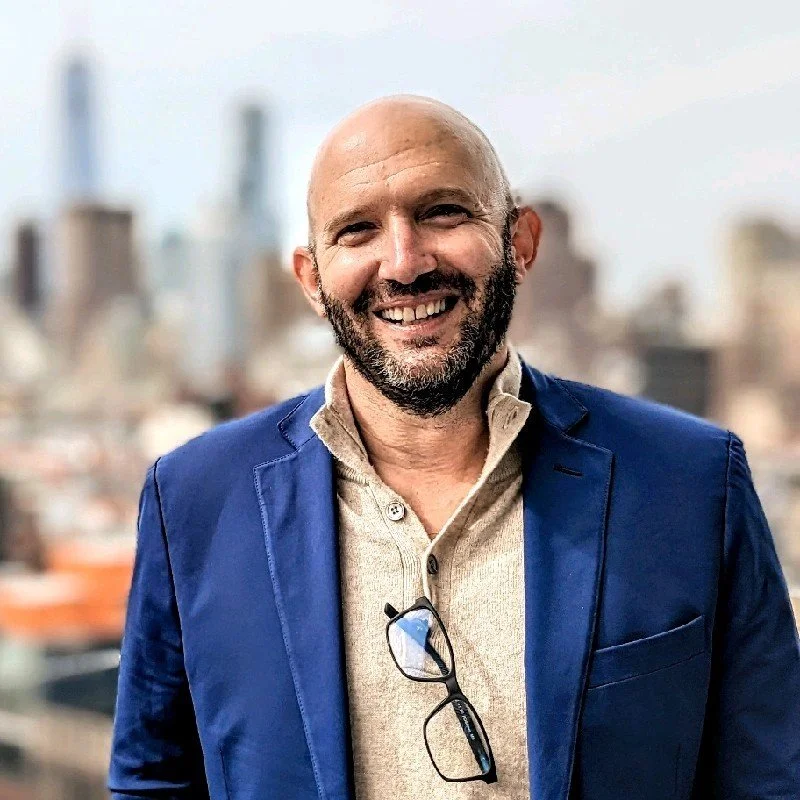
Connect with Michael here:
www.vibrationalintelligence.org
About
Michael Kass is a leadership coach, facilitator, storyteller, and the author of VQ: Remembering What You Already Know. Over the past 15 years, he has worked alongside leaders navigating high-stakes financial, organizational, and narrative strategy across the nonprofit and social impact sectors—with clients including the Wikimedia Foundation, Nonprofit Finance Fund, Opportunity Collaboration, SOCAP, and Google, alongside serving on the advisory board of Dignified Storytelling.
For years, Michael lived a quiet split. By day, he guided organizations through complex strategy and executive coaching; in parallel, he spent decades practicing breathwork, energy work, and other forms of transformational practice. Vibrational Intelligence (VQ) emerged as the bridge: a practical, five-part framework and shared language for bringing soul, intuition, non-linear ways of knowing, embodiment, and strategy into the same room without requiring a particular religion or cosmology.
His work grows from a simple premise: human beings have not lost intuition, embodied knowing, or sensitivity to the energy of people and places—modern culture has simply trained us not to trust them. As AI accelerates the analytical capacities Western culture already overvalues, Michael’s work invites a timely question for impact leaders: what forms of intelligence do we need to remember to meet this moment?
Transcript
Lisa Virtue [00:00:00]:
This is the Heartset Leadership Podcast. We're here on the beat of modern leadership to help you crush your goals without crushing your soul or your teams. Michael, welcome to the podcast. Thank you so much for being here.
Michael Kass [00:00:17]:
Absolutely. Thanks for having me.
Lisa Virtue [00:00:19]:
I'm really excited about our topic today, but before we get into that, why don't you go ahead and just introduce yourself to the audience?
Michael Kass [00:00:26]:
Hi friends. I'm Michael. I'm the founder of vibrationalintelligence.org. And I'm really excited for this conversation. When Lisa and I had our little intro call, we realized that if we didn't keep things fairly structured, we could go off in all sorts of different fun directions. So I'm excited to see where this conversation goes.
Lisa Virtue [00:00:47]:
Yeah, me too. We think we have a direction, but we will see. Yeah. We really connected on that. We're both so curious about the human experience and how we navigate this thing called work and life and how it all comes together and where we could do better as humans. And then of course, technology, and then we're both curious about that. And then the interaction with the technology and the human. So yeah, I'm really excited.
Lisa Virtue [00:01:13]:
What our theme is today is Beyond IQ and EQ. And so most people know IQ and the intelligence quotient that we all have. And then there's the EQ, emotional intelligence. So why don't you start by just explaining what human intelligence that AI can't replace and what vibrational intelligence means? Let's just start getting into that.
Michael Kass [00:01:37]:
Let's get into it. So I was an early adopter of AI. I got really excited about it because I've been working with nonprofits for over 20 years and immediately saw and like 2022, 2023, that this could be a game changer for capacity-strapped leaders and organizations. And even early on, I went, wait a minute, this is going to be incredibly pervasive and it's going to be really, really good at a lot of the things that we've trained our human brains to be good at, like linear things. My early jobs in nonprofit were all data management. Well, AI can do that. AI can do linear strategy. AI can synthesize massive amounts of information.
Michael Kass [00:02:21]:
And as I was exploring it and talking with people and leaders, one of the questions that kept coming up is like, what are we needed for? What do we do? And what surfaced was, well, AI can't really connect with anything other than itself, right? And as humans, we co-evolved with this incredible living world. We co-evolved with each other, with trees, with the earth. And this innate capacity that we all have that we've been separated from culturally is the ability to tap into this wide field of information. Like an infinite data stream is one way of thinking about it all around us. And so vibrational intelligence really is a way of naming that capacity to attune to, discern between, and act from all of these different layers of information from our own bodies to, you know, the whole world around us.
Lisa Virtue [00:03:17]:
You know, I liken this to dimensional. It's almost like dimensional intelligence. And I'm having a hard time as I'm saying that out loud, thinking people are going to take it for like, we're in a different dimension.
Michael Kass [00:03:28]:
Well,
Lisa Virtue [00:03:28]:
maybe there are different dimensions to our realities, right? Like we say 3D, 3-dimensional. And then I kept saying, oh, it's so nice to see people in 4D when I can touch them out of Zoom after the pandemic. Right. And what you're speaking to is those things that we can feel. But we can't necessarily see, right?
Michael Kass [00:03:47]:
Yeah. The unseen world. And I talk a lot about the difference between thin information and thick information, where thin information is what AI works with. It can, it can synthesize, it can make sense of a lot of really complicated elements, but it can't do metaphor. It can't write a poem that does anything other than put random words together. And so when we tap into that kind of multidimensional layer of intelligence. Sometimes we'll get information that's a sensation in the body. Sometimes it'll be an image.
Michael Kass [00:04:21]:
But if we stick with that sensation, we stick with that image, and we unpack it, we realize, oh, there's linear information in there. There's strategic insight. There's insights that can lead us to a really aligned way of deepening our impact as leaders. It just doesn't look like we've been told information looks. It doesn't look like a spreadsheet. It looks like something different. And so when you had that reaction right now of like, yeah, dimensional, I don't, I don't know if that's the right word. I think one of the challenges that we run into is everybody knows, has had some sort of experience of this type of information that's been useful, but we don't have a language for it that's friendly to the professional world.
Michael Kass [00:05:06]:
The language we have is spiritual in nature.
Lisa Virtue [00:05:08]:
Exactly.
Michael Kass [00:05:08]:
So what does it mean to be able to talk about it openly and deepen our capacity for it in an intentional, open way? And that's where I think vibrational intelligence has a role to play.
Lisa Virtue [00:05:21]:
Yes. That's where I was going to go next is that the workplace has become such an anti-religion, anti-spirituality setting for so many. And then academia as well. Like we need to have a process to be able to prove And be able to see things in action. Even, you know, of course there's the phrase of like, well, do you believe in gravity? Right? That's a big one that comes up when people are having spiritual conversations. And those are the things that you can measure. And what we've gotten really good at is measuring the data, seeing the facts and figures. And like you said, because we've worked so hard in the workplace, put so much money behind it and war and all sorts of places where innovation happens, right? All of those resources have been geared towards that.
Lisa Virtue [00:06:07]:
But since the dawn of time, humans have been trying to sense-make what this other dimension, vibrational intelligence, what are these things that we can't really explain? And those get so ingrained in people that it becomes a source of conflict instead of a source of bringing people together, which I find fascinating. And now with my work with Heartset, which is a whole nother kind of intelligence quotient, right? It's just a framework to kind of sense-make and put all these different pieces together. When you show up for other people, what are those intangibles? What are those things that you can't see and prove? And what does the science say? Because the science is evolving rapidly. I'm really excited. I think we talked about this the other day. You and I were both saying like, this is such an opportunity now with AI taking those other burdens off. Okay, we figured this out as humans. Let's give that to the AI to do.
Lisa Virtue [00:07:00]:
Now let's go figure out these other things that we haven't been able to prove or have data to put behind it, right? If we could apply some resources to that, wouldn't that be incredible?
Michael Kass [00:07:11]:
Even a little bit. I think what we were talking about is if they took 0.5% of the capital being directed towards AI and directed it not even towards proving these capacities, I think of it as remembering them because our culture is an outlier. Every indigenous culture everywhere in the world has had a highly refined version of heart intelligence, vibrational intelligence, and has made beautiful sense of the world using those capacities. So it's only really in the past couple of hundred years since Descartes said, I think therefore I am. And we went like, oh, okay, sure. Nothing else matters except thought, the quality of our thought, that, that we've been in this place. And like, to your point, Western science is finally starting to catch up. And there's peer-reviewed research around some of these capacities we're talking about.
Michael Kass [00:08:01]:
The trap that I think folks fall into, including myself sometimes, is needing the proof before having an experience. And what I've found is when people have the experience first and it's undeniable, right? They discover something, a new insight, something they couldn't have arrived at through linear analysis. Well, that opens up curiosity and then they go, okay, wait a minute. That was pretty easy and it felt good in my body in a way that reading a spreadsheet doesn't. Well, who else is doing this? How can I do more of it? What research is out there? Right. So allow the experience to spur the curiosity instead of needing proof before doing the thing.
Lisa Virtue [00:08:41]:
Yes. Oh, okay. I want to talk about leaders in this and my own experience a bit too. I remember being a pretty young leader and just realizing, oh, I feel, therefore I am, is basically where I was at, right? I went, I see what's happening. I feel it first. And then I go find the data to either prove myself right or wrong, right? Like, is this a me problem or is this a group dynamics challenge that we need to look into more and maybe fix or figure out what to do with? And I would do that work exactly how you're saying it, kind of the opposite direction. And I saw my peers and even my, my older self, like if I was to go with just the pure logic. just the black and white in the moment and kept moving forward, we would lose so much capacity and capability as a team.
Lisa Virtue [00:09:34]:
And even that human connection as a team, because we were just pushing forward. And this, I do see with my work with my clients now too, when they ignore that feeling or that vibration and they just go with the data and they keep pushing forward, which I think is happening so so much right now with all this technology, right? Then that is when we have those failures and we have people burning out and we have things that are not in harmony in the workplace. Is that your experience as well?
Michael Kass [00:10:03]:
Absolutely. I think that word harmony, and I would also use the word resonance, is so key. So, oftentimes I've had very similar experiences working with leaders and they'll present a strategy that looks exactly right on paper.
Lisa Virtue [00:10:17]:
Yeah.
Michael Kass [00:10:17]:
And yet it's not right. It's not the right strategy for that moment, for that organization, for that team, because they followed the linear path. Sometimes they'll even say, oh, ChatGPT said this. And I'm like, oh boy. All right, let's start from zero and come to a place of coherence and resonance first and see what wants to emerge. And there's, you know, Adrienne Maree Brown does beautiful work around this with her work around emergent strategy. Which is all about tuning into what wants to come out of the unique set of circumstances and resonating with it, allowing it to lead us. I think one of the things when I work with leaders that they often say is, oh, it's all on me, right? It's so stressful to have to be out on front.
Michael Kass [00:11:01]:
And what vibrational intelligence opens up is actually you can get guidance from the work itself. And it, it's beautiful to watch sometimes. I was working with somebody a couple weeks ago and I had her connect with the frequency, the consciousness of her organization. And I watched her whole body relax as she got information that immediately cleared a lot of kind of buzzy interference and confusion that she was navigating. And the whole thing took 7 minutes.
Lisa Virtue [00:11:33]:
Mm. It
Michael Kass [00:11:33]:
was so fast. And this, so this idea, I think burnout a lot of times comes from that sense of isolation and pressure. And this way of working can reconnect us, especially leaders, and take some of the pressure off and say, okay, I actually have a partner and that partner is the work itself.
Lisa Virtue [00:11:52]:
Yes. And tuning your instrument, right? This whole self as instrument, as leaders, especially our being and how we're showing up for others is a huge part of the work. And which is why I think you and I both in agreement as well. Like AI might replace some of the management tasks and some of the supervision, but it will never replace leadership.
Michael Kass [00:12:13]:
That's right. Yeah. And it, it kind of raises a beautiful question that's an invitation is what does leadership want to look like when a lot of those linear capacities are being handled? And it wants to look like what we're talking about, which is focusing on relationship, really taking time to recognize that the body is not just a popsicle stick propping up a brain. It's a rich source of attunement and information that when we can slow down enough to sense it and to learn from it, then it completely shifts the way we move and connect and lead.
Lisa Virtue [00:12:54]:
Yep. There's data. There's data right there.
Michael Kass [00:12:56]:
There's data. Rich. There's this beautiful research. I can't remember exactly where it comes from that says that like, you know, we're constantly in a stream of sensory data and only 5% of it ever makes it to the cognitive brain. The rest of it is living in the body and we've been trained to ignore it, right? That it doesn't matter. And let's say of that 95%, if even a quarter of that is useful, because some of it's probably like the breeze is going 5 miles an hour, but if even a quarter of it is useful, what a rich source of data and information that can help guide us, especially when the world around us is often chaotic right now.
Lisa Virtue [00:13:35]:
And unfortunately, we hear so often that leaders get to that place of burnout and just, I have to quit because my health is taking a toll because we weren't doing that tuning in and also giving ourselves grace and listening to those data points. So it is such a rich source of data for our longevity too, as not just as leaders, but just our human lives, right?
Michael Kass [00:13:57]:
As humans. And the more that we ignore our body and move at the pace of technology with, with, with AI, it's moving faster than our body can certainly keep up with, then it goes beyond burnout. You know, there's a lot of health stuff that comes up. I have so many clients who, by the time they come to me, maybe they're in burnout, maybe they're not, but they're experiencing these inflammatory symptoms in their body. There's pain that doesn't have a linear cause. And when we start to gently reconnect the body, Mysteriously, oftentimes those symptoms will start to clear up because they're slowing down. They're paying attention and the body goes like, oh, you're paying attention to me. Cool.
Michael Kass [00:14:40]:
I'm going to chill out a little bit.
Lisa Virtue [00:14:43]:
Right. So when we're told, Michael, in your experience, I'm so curious about this part. When we're told like to trust our gut, there's also this fine line, right? To where there could be, and I was saying it earlier where we could also just be moving out of fear. It could be something else coming up that's affecting us and giving us those data points. So how do we know when we're experiencing genuine intuition and like we need to listen to it versus fear, anxiety, those other things? What is your experience and the research show?
Michael Kass [00:15:15]:
First of all, that is so tricky, right? Because when people say trust your gut, it's for most of us, most of the time, that's terrible advice because of exactly what you're pointing to, which is that anxiety, fear, trauma, whether our own lived experience or that, that's maybe epigenetic, right, in our lineage, feels physiologically a lot like intuition. It'll be kind of a gut, a literal gut feeling in the lower belly. And so the capacity to train around that is discernment, is to really get to know in the same way that when you tune a radio, sometimes it's fuzzy and staticky, sometimes it's that station you hate, sometimes it's one you love. It's all the same radio. We're just learning to tune into different frequencies. The same thing is something we can build with our gut feeling to recognize, okay, I've slowed down enough. I'm in my body enough to discern that this feeling is a genuine moment of intuitive guidance or deep knowing versus, okay, I'm dysregulated. I'm out of resonance with myself.
Michael Kass [00:16:25]:
And this feeling is actually anxiety. This feeling is fear. The kind of core skill of that, which is so simple, but very, very hard, is slowing down because we can't reach that discernment from our normal day-to-day pace. Right. We're moving too quickly to be able to tune into those signals. So, and there's so many, there's like almost infinite ways to develop that discernment, but that would be the core, the core skill of it.
Lisa Virtue [00:16:54]:
Yeah. My experience too, I've seen that the more experience you have, the more you can understand, but it's experience while being present, right? It's not just flying through and saying, I have X number of years of experience. It's how many years of experience have you been noticing your triggers and understanding what that gut and intuition is telling you and then acted on it and learned one way or the other if you were correct, right?
Michael Kass [00:17:19]:
Well, and you're bringing in the element of trust. If somebody says to someone, okay, just trust your gut and they're rushing, And they get a sense and then they trust their gut and it goes poorly, they will never trust their gut again.
Lisa Virtue [00:17:30]:
Mm-hmm.
Michael Kass [00:17:32]:
As opposed to slowly building the capacity. What I, when I'm working with leaders and they're very disconnected, I'll invite them to first work with things that don't matter. Like you're at a street corner, ask your intuition or your gut, your deep knowing, whatever you wanna call it, left or right, and start to get to know, you'll feel a pull. You don't need to know why. You just listen to it and do it. And you're slowly, in the same way that we build trust with another human, we're building trust with our own knowing. I was doing a workshop once and somebody referred to it as every time we do that, we're putting a little marble in a jar. So we're just creating a trust bank, right? So little.
Michael Kass [00:18:09]:
Then when something does come up that's in a high-pressure situation, you've built the language with your own knowing and can listen to it.
Lisa Virtue [00:18:18]:
And you mentioned earlier, there's a lot of indigenous cultures in particular that have done a lot of that work and then they pass it down and then there's kind of an evolutionary component that comes up too. And so right now, that's, again, this is a very fascinating time because in my opinion, evolution hasn't caught up to the technology for us as humans, right? Technology is just going and our evolution is like, doo doo doo doo doo doo doo. So you're also talking about this practice, this work that we're discussing today can accelerate us at a faster pace than just, again, going through the motions, right? And the day-to-day. So this is about if you want to do, if you want to become a leader and be healthier at work faster, this is what we're talking about, right?
Michael Kass [00:19:07]:
And it's so counterintuitive, right? Because what we're saying is, hey, everybody, slow down.
Lisa Virtue [00:19:12]:
Yeah.
Michael Kass [00:19:13]:
And because what's happening is we're trying to keep pace with a technology that does linear better than we will ever do, better than, like you're saying, our nervous systems, our bodies evolved over 10,000 years ago. AI has been around, mass market AI, for 4 years. So there's no way we can keep up with it on its terms. But if we slow down and reconnect with the nonlinear, then we can actually go much, much faster. And that's a really hard case to make for leaders who are just in the spin of it. who are in urgency all the time. I don't want to discount that. Like, that's a real pressure.
Michael Kass [00:19:50]:
And the way forward is actually to do the opposite of what your nervous system might be telling you to do.
Lisa Virtue [00:19:58]:
Yep. I call it the slingshot effect. When you pull back, slow down in order to accelerate, right? That's what we're talking about. Yeah. Michael, how did you get into this work? What caused you to start Vibrational intelligence.
Michael Kass [00:20:13]:
Yeah, I think it was a series, a few things. One was a series of conversations that I'd had with leaders who had done all of the, like these people have had all of the leadership development. There is not another emotional intelligence course or communication course that they could take. And the question that was coming up was like, I get it. I'm a very skilled leader. The world is on fire. Everything's in chaos. How do we even find steady ground to lead from? And to speak from.
Michael Kass [00:20:42]:
Recognizing that even the most developed leaders haven't been given the tools to meet this moment really, right? That they're in this place of, of reacting instead of responding. And then the other was recognizing that, yeah, I've been doing strategic work, financial management consulting, story consulting with nonprofits forever. And also I've been facilitating breathwork and meditation and nonlinear healing work for almost as long. But there's no bridge between the two. The folks I'd worked with in breathwork had no idea about the nonprofit work and vice versa. And I started to recognize that that bridge is actually the answer to what the leaders were asking.
Lisa Virtue [00:21:20]:
It's
Michael Kass [00:21:21]:
like, oh, we need the skills to go beneath the chaos of this moment. That's where the solidity that they were craving comes from. And so I started to work with people on it. And the response was, it's like you were saying, They immediately, you would just watch color return to faces and this new sense of like, oh, I haven't felt solid ground beneath me for months. And so out of that work came this term in this field of practice that is vibrational intelligence as a way of helping leaders and organizations, particularly in the impact space, meet the times that we're in. We haven't been given the tools to do it well.
Lisa Virtue [00:21:59]:
You're making me think of a sound bath too, and the vibrations of the sound. It's like my favorite thing to do. Be still, let it vibrate.
Michael Kass [00:22:07]:
So I did a retreat for a team like 3 months ago, and they wanted a sound bath for wellbeing. And I was like, no, I won't do it for wellbeing. 'Cause I have crystal bowls, I have all that stuff. I will do it as a precursor to your strategic conversation.
Lisa Virtue [00:22:21]:
Yes.
Michael Kass [00:22:21]:
As part of the same session. And they were like, what? And we did it. And all of a sudden they're having all of these creative insights. They're not sure where they're coming from. They're like, what, what did you do to us? That's vibrational intelligence, right? You connected at that deep level. You came into resonance and then started to talk strategy. They're not separate. They're part of the same breath, the same impulse.
Lisa Virtue [00:22:45]:
That's beautiful. I'm so excited for more and more leaders to be adopting these practices so that they trickle down and they mentor others and they tell them about how powerful it can be so that that evolution does catch up a little bit, hopefully. So that's one example. That was a great example, a sound bath, because that's way we can get vibration into our soul really, and into our body. What other tools and what does it look like when you work with people on getting in tune with vibrational intelligence? What does it look like?
Michael Kass [00:23:16]:
Sometimes it looks as simple as tuning into the breath. If you think about the breath, not just as, oh, it's bringing oxygen into the body, the breath connects our inner world with everything living on the planet right now. Like the breath that we're breathing was in one of the trees outside. It was in an elephant. It was— so the idea that if we bring consciousness and awareness to the breath, it helps our system slow down. It helps our brainwave state shift into one where we can access different types of information. So often it will look like tuning into the breath and then accessing imagination. Because if you think of everything around us as a massive database of totally chaotic, disorganized information, when we slow down and work with our imagination, essentially we're helping that chaos organize for us.
Michael Kass [00:24:11]:
It's like submitting a query to a database, except it's an infinitely complex database. So it often looks like a lot of stillness and slowness. Mm-hmm. And play and imagination. Sometimes it looks like a more structured kind of breathwork practice if we're working with something more intense, sometimes working with sound and music and frequency, again, to help spur creativity. But the idea behind all of it is we're accessing layers and dimensions of information that normally are kept out of leadership and boardrooms and those types of conversations. If you were to look at it from outside, it might not look like much, but you'd feel it. You'd feel the energy of it and go like, okay, there's something going on here that's interesting.
Michael Kass [00:25:01]:
Even if you wouldn't have language for it.
Lisa Virtue [00:25:03]:
That's beautiful. I even do sometimes like 1 minute of breathwork at the beginning of a resume conversation with a job seeker I might be working with. Right. It's amazing how it gets you into the headspace and presence and even just 1 minute, people get incredible results.
Michael Kass [00:25:22]:
Well, I do a thing often if somebody's coming in and, you know, I'm sure you've had this, somebody's coming in hot. Like they just got off a call and they're frustrated.
Lisa Virtue [00:25:31]:
You can tell when they start, their eyes are like jumping around the screen.
Michael Kass [00:25:34]:
You hear their breath is up in their chest. You're like, oh boy, I can't, I can't. There's so much. Even inviting people, one of my favorite things to say, like, hey, before we start, let's just take 3 breaths. And with each one, Just imagine that you're calling your attention and your energy back into your body from wherever it is. Like maybe your kid made you mad. Maybe your dog just threw up in the corner, like whatever it is, just call that focus back and you actually watch them become more solid.
Lisa Virtue [00:26:02]:
Yeah. It's amazing. Even through the computer, even a virtual session, you can see it. Yeah.
Michael Kass [00:26:08]:
What's cool about energy and vibration is it has no respect for physical distance. So Right. The computer is just another way of being in space together.
Lisa Virtue [00:26:18]:
Well said. That is brilliant. Yeah. Love this. You were making me think too, I'm such a water girl. Like I had a license plate in college that said water girl on it. Cause I was a water polo player and swimmer and taught lessons, all these things. And water for me is such a healer and I always want to be in or around water.
Lisa Virtue [00:26:36]:
Water and air, to your point, is You don't produce new, right? It's just constantly building intelligence, as you were saying. So to access those things and bring them into a practice, such a beautiful way to kind of absorb what it already has learned by moving through this world.
Michael Kass [00:26:56]:
And asking or working with— I had a beautiful experience with a leader a couple of years ago at a convening that happened to be at a beach. There was a beach right there. And They were really kind of grappling with a big strategic challenge, kind of existential for their organization. And she was like, can you do some coaching? Yeah, sure. We went to the ocean and just allowed the ocean to be at our feet and went into it together up to our knees. And it was like, great, let go. Just let the ocean hold the question with you. And as the tide, as the waves come in, they're bringing information like this ocean's been around a long time.
Michael Kass [00:27:33]:
There's a, in yourselves, like we started at the bottom of the ocean. So we know that information. And within about 5 minutes, she was like, got it. It was so fast and so clear in a way that no amount of, you know, traditional ontological leadership coaching would have been able to get to so quickly. But yet, just to your point, that water carries wisdom and information. that we can access anytime, whether we're there physically or not.
Lisa Virtue [00:28:03]:
Yes. We just have to pay attention to that data.
Michael Kass [00:28:05]:
Yeah, exactly.
Lisa Virtue [00:28:07]:
Beautiful. Well, as we wrap up today, Michael, how can people get ahold of you and explore the work with you and any tips that you want to leave leaders? What can they start tomorrow as they're listening?
Michael Kass [00:28:18]:
Yeah, absolutely. So to learn more, just go to vibrationalintelligence.org. There's a lot there that you'll find. There's a book there that you can either purchase or just read it for free online. There's also a free 45-minute experience that people can have. If you want to have the experience that Lisa and I are talking about, like, check it out. It's there for you. And if you want something to try, like, today, right now, try that exercise of just sitting or standing in a centered way and take 3 breaths.
Michael Kass [00:28:52]:
And with each one, really imagine it's almost like reeling in fishing line. You're just with each breath, with each inhale, you're calling parts of your scattered focus and attention back. Notice what your experience of that is. And once you have that noticing, that's a doorway. And then go to vibrationalintelligence.org and find out what happens when you can go through that doorway.
Lisa Virtue [00:29:15]:
Well, let's do it right now. Are you game?
Michael Kass [00:29:18]:
Let's do
Lisa Virtue [00:29:19]:
it. Okay. Why don't you— I feel like I would love this right now. My body's telling me do it. Okay. Why don't you lead me through?
Michael Kass [00:29:25]:
Let's do it. Okay. So sit in a way that feels centered and comfortable, and you can close your eyes. And the first thing to do, and we'll do a little bit of a longer version, is just notice your breath. So notice as you're breathing in that you're breathing in, and as you're breathing out that you're breathing out. And we'll just take a breath together. And when we do this, just imagine the breath sinking a little bit more deeply into the body, pretty close to the lower belly. So here we go.
Michael Kass [00:30:05]:
Nice slow breath in, and then just release it with a sigh. Allow that sigh to just let your body get heavier on the chair. And now, as you breathe, with each breath, just imagine that as you inhale, you're calling back your attention, your energy, your power from wherever it might be. You don't have to know where it is. It's a little bit like ringing a dinner bell. So wherever these parts of your focus and energy are, they just come back to the body and come back to the breath. So we'll just do A couple breaths like this together. So breathing in, inviting all those parts of ourselves that are scattered, our focus that's scattered into this moment, this breath, and then just letting the exhale go.
Michael Kass [00:30:59]:
And one more, just sending out this gentle invitation. Maybe it's parts of you that are still thinking about something from 2 or 3 days ago. Just inviting as much of yourself as available to this moment and this breath, breathing in and releasing. And then just taking a moment to notice anything that might have shifted over the past minute or so in The way that you experience gravity and your breathing and your heart rate. And then when you're ready, you can come on back. Now we can start our podcast recording.
Lisa Virtue [00:31:49]:
Didn't put you on the spot earlier. Thank you. That was beautiful. I felt very full, rich roundness at the end is what came up for me sensationally. And you know, anyone that participated, you know, unless they were driving, you can still breathe.
Michael Kass [00:32:05]:
Do that. You could do it. Just don't close your eyes when you're driving. I'll
Lisa Virtue [00:32:09]:
have to remember to do that disclaimer in the future. Thank you. I totally put you on the spot. We did not plan that.
Michael Kass [00:32:15]:
Happy to do that. You would do brilliant.
Lisa Virtue [00:32:18]:
Good. Amazing. Michael, thank you so much. We'll have all of your links in the show notes so people can just click right through and get ahold of you and try out anything that they're being called to try with you and Thank you so much for being here. I know it's late for you. You're gallivanting around the world as a digital nomad. And so I'm living vicariously through you right now.
Michael Kass [00:32:40]:
Yeah, no, you're welcome. This is so fun. Like what a, what a pleasure to geek out on this and explore some, some of the dimensions of this work.
Lisa Virtue [00:32:48]:
Yes. Thank you so much. Yes. Dimensions. I'm not shy of that word. Dimensional work. Yes. Thank you again and have a great night.
Michael Kass [00:32:57]:
You too. Thanks, Lisa.
Lisa Virtue [00:32:59]:
Thank you so much for joining today's conversation. Before you go, don't forget to hit that subscribe button and to leave us a 5-star review in support. If you would like to take this conversation further and continue strengthening your leadership heartset, check out heartsetstudio.com and subscribe to our Heartwire newsletter. Heartset Studio is also available to connect on your leadership development goals and initiatives for you and the other leaders in your organization. Contact us today through the website. And most importantly, thank you so much for all you do for the other humans in your life. We know that you show up with heart time and again, and it is most appreciated.